Specifications serve a lot of important purposes in food manufacturing. Most obviously, they’re used to establish quality expectations for suppliers and customers exchanging food products – but more broadly, specifications can be a vehicle for transmitting information about food products along the supply chain.
Specifications literally specify attributes and criteria about food products, packaging materials, and their intended use conditions. Functionally, a specification is a document that allows producers and customers to be specific about what is, and what isn’t, acceptable quality for any given item.
Specifications are technically complex documents and require a certain amount of expertise to write and interpret. Many professionals in the food industry look at specifications-writing as a career-defining skill. It wouldn’t be feasible to condense the topic into a single post, so this is intended to be an introductory guide to the major features of food specifications.
What Are Specifications?

Specifications are a detailed description of products, including their composition, quality, and expected performance. They’re needed by food manufacturers as they help in communicating the intended use, safety measures, and regulatory compliance of a product. Specifications serve as a guide to ensure that every aspect of a product is consistent with its intended purpose.
Having clear specifications ensures that food products are safe and consistent in quality. Specifications serve as a contract between the food manufacturer and their customers, ensuring that they receive products that meet their expectations. Specifications also play an important role in risk management by identifying potential hazards associated with specific ingredients or production methods.
Raw Material Specifications
These specifications outline the requirements and standards that raw materials must meet.
Raw material specifications serve the dual purpose of providing food manufacturers with information pertaining to the nature and characteristics of raw materials, as well as defining acceptable quality standards.
Raw material specifications influence a range of processes governed by the quality management system, from the inclusion of a raw material in an NPD trial product, HACCP review, determination of acceptance criteria for receipt of consignments, input into specification parameters for finished products, etc. In practical terms, this enables food manufacturers to risk-assess raw materials, establish suitability for use, and formulate challenges for conformity of consignments received from the supplier.
Practically, a food manufacturer might take acceptance criteria from each of their raw material specifications and populate controlled documents that make up the quality management system with that same information. Examples would by the acceptance criteria reference sheet used at goods intake, or a summary of allergens present across all materials handled on site. In this way, raw material specification parameters have a direct contribution into the site’s food safety and quality management system.
Similarly if a food manufacturer has cause to raise a supplier non-conformance due to raw material defect, it is the raw material specification that will substantiate the legitimacy of the complaint.
Specifications for Packaging Materials
Packaging material specifications are similar to food specifications, but distinct in that they refer to packaging items rather than food materials.
Materials intended to come into contact with food are subject to regulatory constraints that may not apply to non-food-contact materials, so it’s important to be mindful of the intended use. By way of example, food contact packaging may have regulatory limits that apply to migration of chemical constituents from the packaging material into a food simulant such as oil, ethanol, or acid.
One of the most important considerations is that packaging materials should be non-toxic, and free from any harmful substances that could contaminate the food product. Often, packaging materials need to be resistant to moisture, oxygen, and other factors that could affect the shelf life of the product.
Another key consideration when evaluating packaging material specifications is the ability of the packaging material to maintain product integrity during transportation and storage. This includes factors such as puncture resistance, tear resistance, and overall durability. Additionally, packaging materials should be compatible with the product being packaged – for example, certain types of plastic may not be suitable for use with acidic foods or beverages.
Ultimately, proper selection and specification of packaging materials can help ensure both consumer safety and product quality – which is why packaging material specifications are so important.
Packaging material specifications are often supplemented with evidence of suitability for the intended use, which can include things like food contact statements, migration analyses, and recycling data.

Finished Product Specifications
Finished product specifications serve to establish an agreement between a food manufacturer and its customers as to the nature and quality of products. When customers make purchases, they look to the product specification to determine the standards that they can expect from delivered material; and can reject any consignments that fall short of those standards. Just as with raw material specifications, finished products specifications are used to exchange information about products as well as forming a shared agreement as to accept/reject levels.
Food manufacturers rely on finished product specifications to validate that their products meet the expectations of their customers based on measurable criteria. These specifications provide a detailed description of the various attributes and characteristics of a food product, including its ingredients, nutritional content, flavour and aroma, texture, shelf life, packaging and labelling requirements.
By establishing clear specifications for their products, food manufacturers can reduce the risk of customer complaints, because there is a common understanding of acceptable and unacceptable quality.
Regulatory Standards

The Codex Alimentarius Commission sets internationally recognised standards, codes of practice and guidelines for foods to protect consumer health and promote fair practices in food trade. For specific foods, such as milk and dairy products, chocolate and cacao products, fruits, vegetables and their derived products, there are specific Codex Standards that manufacturers must comply with.
For instance, under the Codex Standard for Milk and Milk Products, it specifies requirements on the composition of milk-based ingredients used in food manufacturing. It also outlines hygiene practices during production to ensure that it meets appropriate safety levels. Similarly, the codex standard for chocolates covers product characteristics such as cocoa content requirements, labelling information among others.
While Codex standards do not directly form part of specifications for raw materials or products, they do present minimum criteria for food materials placed onto the market where these standards are used to standardise expectations held by customers and suppliers.
Different markets are governed by different regulatory frameworks – so for example, if a product described as ‘chocolate’ were to be traded in Europe, the applicable European regulation would mandate the definitional standards as opposed to the analogous Codex standard.
With global supply chains, it’s useful to think of The Codex Standards as one of many similar regulatory frameworks that apply to particular markets. For specifications in the food industry, this is helpful because formalised standards are established by the market regulator, which serves to establish a technical language that suppliers and customers can use to communicate their respective expectations to each other in a detailed and objective way.
Regulations like these also help to define expectations of certain products, which introduces a sense of certainty and reliability for consumers. As a consumer, you have an established expectation from certain designations of food; and that expectation is based on consistent experiences of being presented with similar food products repeatedly associated with names or descriptors. Whether you put semi-skimmed or whole milk in your coffee, you have expectations and preferences based on the regulatory framework that defines compositional standards for those products.
Conformity with legally mandated market standards does not, by itself, fulfil the entire purpose of a food specification; but reference to these standards creates a structure that allows specification parameters to substantiate legal compliance, as well as facilitating a shared agreement over standards/grades/qualities that will apply to certain designations of food.
Online and Offline Specifications
Online specifications are those that can be accessed through online platforms such as websites or electronic data interchange (EDI) systems. Offline specifications, on the other hand, are documents that provide similar information, but are accessed offline rather than via web services.
Online specifications typically include details about ingredients, packaging materials, net weight or volume, allergens, nutritional information and shelf life of the products. They may also contain information about the manufacturing process, or any certifications held by the manufacturer. The advantage of having these specifications online is that they can be easily updated and accessed by all parties involved in the supply chain.
Offline specifications usually come in hard copy format or as electronic documents (such as MS Word) and serve the same purpose to their online counterparts. They are used for internal quality control processes such as criteria for conformity challenge tests at goods intake and as input information for quality systems like the HACCP risk assessment.
The use of online or offline specifications generally depends on the size of an organisation (and the resources it has allocated into technical service functions), and its position in the supply chain. In general, smaller organisations with relatively few suppliers and customers are more likely to use offline specifications, and larger organisations with more complex supply chain interactions are more likely to use online specifications. Also of note, any food manufacturer supplying own-brand into the major retailers are almost universally obliged to use the retailer’s online specification system – irrespective of any other format of specifications they may use.
Whether it’s online or offline specifications – accuracy is key to ensuring food safety and maintaining quality standards in the industry. Manufacturers must take care when creating these documents and make sure they’re up to date at all times so everyone involved has access to reliable information about their products.
Retailer Specification Systems
Retailer systems play an important role in shaping the standards of products entered onto the market for consumption – including composition, defect and foreign body tolerances, consistency across batches, microbiological activity, amongst others. With the help of these systems, food manufacturers can provide accurate information about their products and processes while maintaining transparency with retailers.
Retailer systems often include software solutions that aid in data collection, monitoring and reporting. The software can be customised to suit the specific needs of each retailer and supplier. Food manufacturers can also use retailer systems to identify key trends in consumer behaviour and adjust their production standards accordingly.
Content of a Food Specification
The particular content of a specification will depend on the type of food product, manufacturing process conditions, intended market, customer demands, regulatory constraints, and a range of other factors – so the content of one product specification may be quite different to another. A specification for a bakery product will be quite different to the specification for a condensed milk product, for example, and especially if the two products are sold into markets subject to different regulatory frameworks.
Food manufacturers are legally required to provide their customers with sufficient product information to allow subsequent processors or food service operators to convey mandatory labelling particulars to the end consumer. The specific requirements for mandatory product information will depend on the market and governance bodies, and food manufacturers are legally compelled to distribute accurate product information that does not mislead.
The variation in applicability of specific parameters and legal requirements necessitate a high degree of sector- and product-specific knowledge; which goes a long way toward explaining why specifications writing can present a career-defining technical discipline for food technologists. For this reason, a universally applicable list of parameters wouldn’t be practical or even helpful. With that in mind, the below is intended to outline common parameters that are likely to be relevant in the majority of cases.
Specification Parameters:
Supplier and Manufacture Site Details
Supplier and manufacture site details are important specification parameters for supply chain visibility. Suppliers must provide clear information on their company name, address, contact details, and any relevant certifications or accreditations they hold.
Manufacture site details should include information on where the product is made, including location and quality assurance systems upheld by the facility. This is important as it allows manufacturers to ensure that all necessary quality assurance measures are in place to prevent contamination or other issues that may affect the safety or quality of the product. Manufacturers should also check if their suppliers have appropriate systems in place for managing risks associated with raw material procurement.
Supplier and manufacture site details help to ensure that ingredients used in production meet the required standards while minimising potential risks associated with sourcing materials from unreliable sources or manufacturing sites without proper controls. Ultimately this leads to better-quality products for consumers while reducing liability risk for businesses.

Specification Parameters:
Additives (E Numbers), Their Primary Function, and Concentration in the Food
Additives, commonly referred to as E numbers in the food industry, are used extensively in food production to enhance the taste, texture, shelf life, or appearance of a product. These additives can be natural or synthetic, and are categorised according to their functional properties. Emulsifiers and stabilisers, for example, help to form emulsions and prevent separation in colloidal suspensions, while preservatives delay spoiling during storage.
The maximum concentration of additives used in the manufacture of certain foods is regulated by legislation that defines how much of a specific additive can be added per kilogram or litre of product. Regulatory limits are based in large part on perceived risk of toxicity. For instance, some additives like colouring agents may have limits on the amount that can be used due to potential health risks if consumed excessively. Maximum levels depend on the category of food, additive function, and regulatory framework in the applicable market.
Manufacturers must abide by strict regulations regarding the concentration and usage limits of these substances while also ensuring consumers are aware of their presence through accurate labelling information.

Specification Parameters:
Ethical and Sustainability Information
In food production, ethical and sustainability considerations are becoming increasingly important for both manufacturers and consumers. Ethical parameters may include measures such as fair-trade policies or animal welfare standards, while sustainability factors can refer to things like deforestation or over-fishing.
Ethical and sustainability parameters present an added value selling point for food products, as consumers may base purchase decisions in part on the perceived virtues of these attributes. Conformance with sustainability schemes such as The Round Table on Sustainable Palm Oil (RSPO) can also present a mandatory approval factor for supply into retailers – effectively making them non-optional.
Including ethical and sustainability information in specifications not only helps manufacturers meet consumer demand for more responsible products but also ensures that suppliers are held accountable for their practices. By working together to establish clear specification parameters, the entire food industry can move towards a more sustainable future.

Specification Parameters:
Applicability of Specific Legislation
The regulatory landscape for food products is complex and constantly evolving, making it essential for manufacturers to stay up to date with relevant laws and regulations. For instance, certain ingredients or additives used in food products may be prohibited or restricted under specific legislation. Failure to comply with these regulations can result in costly fines and legal repercussions.
Specifications parameters also play a crucial role in ensuring compliance with laws relating to issues such as labelling, packaging, and marketing claims. For example, there are strict rules governing the use of health claims on food packaging; a manufacturer must ensure that any claim made about the nutritional benefits of its product is supported by scientific evidence that meets legislative requirements.
Understanding applicable legislation is fundamental when developing specifications for food products. It not only ensures compliance but also helps manufacturers avoid potential legal liabilities while providing consumers with safe and quality products.
Some regulations are particular to certain types of food products. For example, chocolate regulations exist in many countries that outline the minimum amount of cocoa solids and/or butter required for a product to be labelled as “chocolate.” Failure to adhere to these regulations can result in penalties.
Specification Parameters:
Genetically Modified Organisms (GMOs)

GMOs (Genetically Modified Organisms) is a topic of high debate and discussion among food manufacturers globally. The use of GMOs in food production has been criticised for decades, with concerns that GMOs could be harmful to human health or introduce hazards into the ecosystem.
Different markets adopt different stances toward genetically modified organisms, as a reflection of consumer attitudes and regulatory compliance. In general, food specifications should detail the presence or absence of GMOs, and whether or not GMOs have been used in any stage of the manufacture process.
Specification Parameters:
Nutritional Information
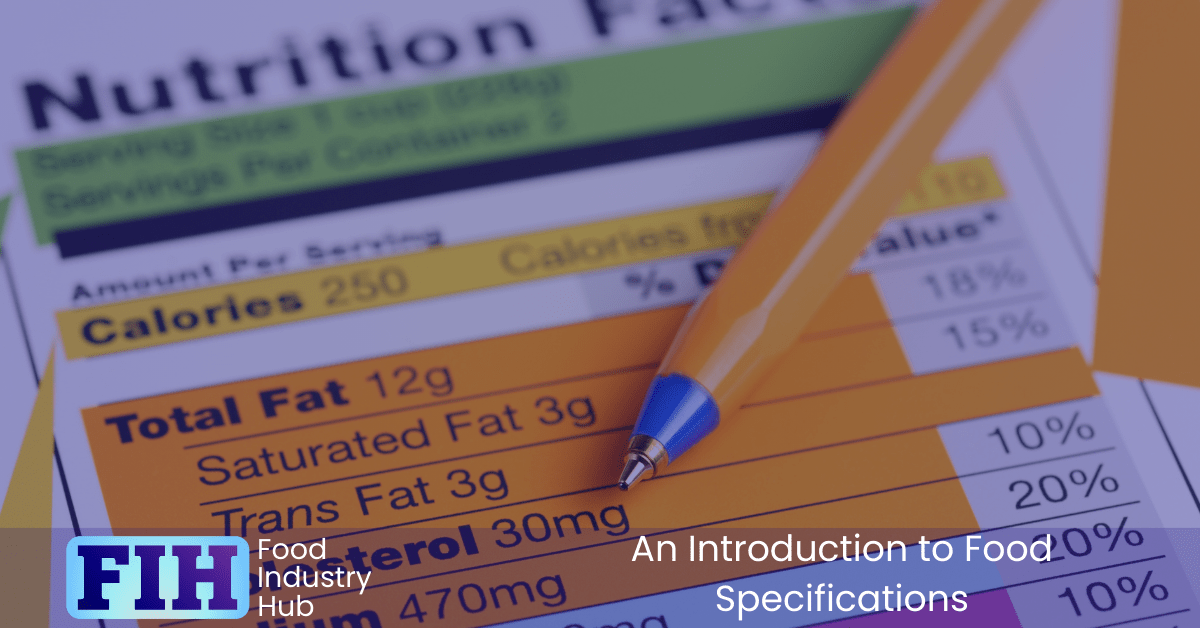
For nutritional information, there are several key specification parameters that food manufacturers need to consider. These include the serving size, calories per serving, total fat, saturated fat, trans fat, cholesterol, sodium, total carbohydrates, protein, dietary fibre, and sugars. Each of these parameters must be clearly defined.
Food manufacturers also need to ensure that the nutritional information is accurate and up to date. This requires regular testing of products to ensure that they meet the stated specifications. In addition, any changes made to a product’s recipe or ingredients must be reflected in its nutritional information.
Providing clear and accurate nutritional information is not only a legal requirement but also an important aspect of building consumer trust. By providing detailed specifications about their products’ nutritional content and ensuring that these specifications are accurate and up-to-date, food manufacturers can demonstrate their commitment to transparency and consumer health.
Specification Parameters:
Flavourings and Their Designation
It is important for manufacturers to understand the different types of flavouring designations and specifications parameters.
Flavourings fall into different categories or designations, primarily as a factor of their production methods. To illustrate, ‘natural flavouring’ must be composed of flavour-active constituents derived from natural sources – e.g., by extracting and purifying flavour-intensive chemicals from fermentations, or using solvents to leach flavour-intensive chemicals from source material prior to concentration and purification. Flavourings whose designations include a particular food – for example, ‘natural strawberry flavouring’ or ‘natural strawberry flavouring with other natural flavourings’ are required to derive some or all of their flavouring constituents from the named food. By contrast, artificial or synthetic flavourings may derive their flavour-active components as a product of reactions between reactants – such as the production of ethyl butyrate from ethyl alcohol and butyric acid.
Along with the regulations that determine flavouring designation, there can be regulatory limits that apply to the solvents used in flavourings as raw materials. For example, mono propylene glycol may be used as a solvent/carrier in a flavouring, with a maximum use-rate legally prescribed for different applications such as food or beverage. The implications for product labelling and maximum use rates make flavouring information an important specification parameter.
Specification Parameters:
Allergen Exposure

Allergens are substances that can cause an allergic reaction in some people, and the presence of allergens in food can pose a serious health risk to consumers. It is essential for manufacturers to identify potential allergens in their ingredients, processing equipment, and production processes to minimise the risk of cross-contamination.
Allergen exposure is a critical specification parameter for food manufacturers to consider. The labelling of allergens in food has become more important due to an increase in allergic reactions, which can cause severe health problems. The four key terms used to describe the presence or absence of allergens are “contains,” “may contain,” “does not contain,” and “validated free-from.”
When a product label states that it contains an allergen, it means that the allergen is intentionally added as an ingredient during production. This information is vital for individuals with allergies or dietary restrictions. On the other hand, when a label says that a product may contain an allergen, it means that traces of the ingredient could be present due to cross-contamination during production. Manufacturers must take measures to prevent such contamination, as well as clearly communicate this information on their labels.
If a specification states that a product does not contain an allergen, then there should be no appreciable risk of the allergen being present in the product. Lastly, if a manufacturer claims their product is validated free-from an allergen, they have undergone rigorous testing procedures by accredited laboratories to confirm its absence at detectable levels. By accurately representing allergen exposure as specification parameters and labelling their products’ ingredients and potential risks of exposure, manufacturers can ensure customer safety while also maintaining regulatory compliance.
Specification Parameters:
Accept/Reject Standards for Quality Attributes
Specification parameters are essential in the food industry as they guide food manufacturers on what to accept or reject in their products. These standards for quality attributes ensure that consumers receive safe, nutritious, and high-quality food products. In the food manufacturing industry, defect tolerances refer to acceptable levels of imperfections or irregularities in the final product. These defects can be physical, such as a bruised piece of fruit or an insect in a packaged food item. Quality characteristics/defects can also refer to organoleptic properties such as aroma or mouthfeel.
It is important for food manufacturers to carefully consider defect tolerance guidelines and make informed decisions about their own internal standards in order to maintain consumer trust and safety while also remaining competitive in the market.
Quality characteristics are the attributes of a product that contribute to its overall quality and appeal. Quality characteristics can include appearance, texture, flavour, and nutritional content (which might alternatively be considered a chemical parameter). For food manufacturers, retailers, and food service operators, these factors are important because they help determine whether a consumer will purchase the product again. Acceptance and rejection standards are established within the specification and used to determine conformance or non-conformance of a particular batch.
Ultimately, attention to quality characteristics is crucial in maintaining customer satisfaction and building brand loyalty. By carefully controlling factors like appearance and taste through detailed specifications and rigorous testing processes, food manufacturers can ensure that their products meet consumers’ expectations every time they purchase them.
Specification Parameters:
Microbiological (Spoilage and Pathogenic) Standards

The microbiological quality of food products is crucial to ensure that it is safe for human consumption and free from pathogenic microorganisms that could cause foodborne illness. Food manufacturers need to establish the acceptable limits of microbial counts in their products, which must adhere to limits specified by different regulatory bodies around the world. The microbiological quality of food products is crucial to ensure that it is safe for human consumption.
Food manufacturers must establish and monitor microbiological specifications for their products. These specifications identify acceptable levels of spoilage microorganisms in the final product, as well as limits on the presence of specific pathogens and/or indicator organisms associated with poor hygiene.
By regularly testing their products for microbiological parameters, food manufacturers can detect potential issues early and take corrective action before contaminated products reach consumers. This not only ensures public safety but also protects the reputation of the manufacturer and helps maintain consumer confidence in their brand.
The primary microbiological parameters that must be monitored closely are spoilage and pathogenic bacteria. Spoilage bacteria can cause food to go bad, affecting its appearance, taste, texture and smell; while pathogenic bacteria have the potential to cause illness or disease when consumed by humans. Hence, limiting their presence within a product is critical for ensuring consumer safety.
Effective monitoring and control of microbiological specifications can help reduce the likelihood of foodborne illnesses resulting from pathogens present in contaminated foods. As such, adhering to appropriate specification parameters has become increasingly important in maintaining good manufacturing practices for food manufacturers worldwide.
Specification Parameters:
Chemical Parameters
These parameters refer to the amount of specific chemicals or substances present in a food product, and they are essential for ensuring that the final product is safe for consumption.
Chemical parameters are an essential part of specification parameters in the food manufacturing industry. Moisture, water activity, free fatty acids (FFA), peroxide value (PV), pH, and Brix are some of the critical chemical parameters that need to be monitored continually during food processing. Moisture content is one of the most commonly measured parameters in the industry because it affects product quality and shelf life. Most foods have a specific moisture range that must be maintained for optimal quality, texture, and safety.
Water activity is an important parameter that determines how much water is available for microbial growth in a food product. It measures how much water is free or available in a particular food product at any given time. Free fatty acids (FFA) help indicate fat hydrolysis or lipid oxidation processes during food processing which can cause rancidity and off-flavours if not controlled effectively. Peroxide value (PV) indicates oxidation levels within fats and oils used in food products while pH measures acidity levels which affect both sensory characteristics such as taste and texture as well as preservation potential against microbes such as bacteria or fungi. Finally, Brix measures sugar content which helps determine sweetness levels in certain products such as fruit juices or jams where sugar plays an important role in their production process.
Chemical toxins, such as Ochratoxin A, pose significant risks to human health and can cause severe illness or death. Ochratoxin A is a mycotoxin produced by several species of fungi that grow on food and feed crops. It has been detected in various food products, including cereals, coffee beans, nuts, dried fruits, spices and wine. To prevent the growth of fungi and the production of mycotoxins like Ochratoxin A in food and feed crops, food manufacturers must implement strict control measures at all stages of the supply chain. This includes proper storage conditions to avoid moisture build-up that can promote fungal growth; regular testing to detect any contamination early; effective cleaning procedures for equipment used during processing; and compliance with regulatory standards for maximum levels of mycotoxins.
Food manufacturers must be aware of heavy metals such as lead or arsenic that may exist in their products. These metals can be found in various food sources, including grains, vegetables, and seafood. Exposure to these metals can have detrimental health effects on consumers. It is important for food manufacturers to follow guidelines and regulations set by government agencies to ensure safe levels of these metals are not exceeded. Manufacturers should also monitor their raw ingredients and finished products regularly using specialised testing methods.
Overall, monitoring these chemical parameters ensures consistent quality control throughout the entire manufacturing process guaranteeing safe products with longer shelf life that meet customer expectations every time they purchase them from supermarket shelves or online retailers alike. Properly addressing these factors in specifications can better enable food manufacturers to be aware of risks and ensure both quality and safety of products.
Specification Parameters:
Product Safety Criteria
To ensure food safety for consumers, manufacturers must consider certain specification parameters when formulating their products.
One of the important specification parameters that food manufacturers must adhere to is product stability criteria – which is predictive of microbiological growth. This includes minimum salt content, heat treatment, water activity, and other factors that can shape predictions about the safety and stability of a product over time. In pickled products, the pH helps prevent bacterial growth and ensures the shelf life of the product.
Heat treatment is another factor as it reduces the viability of harmful microorganisms present in the food. The temperature and duration of heat treatment vary depending on the type of food being processed.
Water activity refers to how much moisture is available in a particular food product, which affects the growth rate for bacteria or other microorganisms.
Food safety is a critical concern for both manufacturers and consumers. In order to ensure that food products are safe for consumption, product stability should be considered in an evidence-based and scientifically justified way. Different foods will be subject to different stability determinants – such as pickling or brining. Including these factors as specification criteria can provide assurance to supply chain participants that food materials will remain safe to consume over its intended lifecycle.
Specification Parameters:
Release Criteria
Release criteria refers to a set of standards that must be met before a product can be released for sale or distribution. These standards include factors such as microbial counts, chemical analysis, and physical attributes like texture or colour.
Certificates of analysis provide documentation that confirms a product meets its specification. This documentation is frequently required by regulatory agencies (at import/export) and customers alike to verify the safety and quality of food products. Certificates of conformance are similar but typically apply to lower-risk materials.
These criteria determine when a product is deemed safe and ready to be released into the market. Release criteria can include sensory, chemical, and microbiological tests to ensure that a product meets specific quality standards. Sensory testing involves evaluating the appearance, taste, texture, and smell of a product. Chemical testing identifies any contaminants or additives present in the product that may pose a health risk to consumers. Microbiological testing examines the presence of bacteria or other microorganisms that could cause spoilage or illness.
Releasing products without meeting these specifications can have severe consequences for both consumers and manufacturers. Therefore, it is crucial to establish clear release criteria before releasing any products into the market. By doing so, food manufacturers can maintain their reputation while ensuring consumer safety and satisfaction.
Release criteria, certificates of analysis, and certificates of conformance are integral specification parameters that help ensure consistent quality standards across product batches. Food manufacturers should prioritise these parameters when developing specifications for their products as they play an essential role in maintaining customer trust and compliance with regulations governing food production and distribution.
Specification Parameters:
Pack Format

The pack format influences the way the product is presented to customers and how it is stored.
Quantity control refers to the net weight (as minimum or average weight), volume, or unit count presented in a pack. Modified atmosphere involves adjusting the air composition inside a package to extend shelf life without adding preservatives or other chemicals. Staple-free packaging has become increasingly popular as it eliminates the risk of metal contamination of the food from staples present in packaging.
When selecting a pack format, manufacturers should think about the intended use of their product and how it will be consumed. For example, if the product is meant for on-the-go consumption, smaller individual packs may be more appropriate. On the other hand, if the product will be used for cooking or baking purposes, larger packs may be preferred. Packaging materials also play a role in determining pack format specifications. Manufacturers must ensure that their chosen packaging material is suitable for contact with food and meets necessary safety and quality standards. Overall, choosing an appropriate pack format is vital to ensuring that products are delivered to consumers safely and efficiently while meeting consumer needs and preferences.
Food manufacturers often design factory-scale recipes around multiples of the quantity of material contained in a trade unit of raw materials. For instance, a bakery may scale-up a recipe so that each mix of dough uses 5x 16kg sacks of flour, rather than using a recipe that would result in part-used sacks at the end of a production run. For this reason, pack format can be a deceptively important specification parameter; fulfilment of an order of raw cannot normally be achieved using a variation of pack size – even if the total order quantity is met.
Specification Parameters:
Shelf Life and Storage Conditions
Shelf life, storage conditions and residual life are crucial specification parameters for food manufacturers. Shelf life is the period during which a product can be stored without losing its quality or becoming unsafe for consumption. It is determined by conducting various tests such as microbial testing and sensory evaluation to determine changes in taste, colour, texture, and aroma of the food. This information helps manufacturers to determine expiry dates and storage recommendations.
Storage conditions refer to the environment in which a product needs to be kept before it’s opened or after opening. It includes factors such as temperature, humidity, light exposure, packaging material used etc. Proper storage conditions help maintain the freshness of foods while preventing any bacterial growth that could lead to spoilage.
Residual life refers to the fraction of total shelf life remaining on receipt by the customer. By convention, many customers will request that at least 75% of a material’s total life remain, to account for downstream storage, processing, and distribution.
Specification Parameters:
Composition
Composition is a critical specification parameter in food manufacturing. It refers to the ingredients used in the product and their respective quantities. This information helps manufacturers ensure consistency and quality of the final product. The amount of each ingredient affects the taste, texture, and colour of the finished product. It’s essential to maintain accurate measurements throughout production.
Aside from composition and quantities, countries of origin and manufacture also play a significant role in food production specifications. These parameters help identify where raw materials come from, as well as where they are processed into finished products. This can be important in relation to geographical risk assessment and any claims made about origin or provenance.
Compound ingredients refer to combinations of two or more substances that work together synergistically or as a mixture. Components refer to individual parts or constituents that make up a compound material.
When it comes to creating food products, knowing the proper composition and quantities of ingredients is crucial. This information not only ensures that the product meets regulatory requirements but also impacts its taste, texture, and overall quality. As such, food manufacturers must adhere to specific specifications regarding composition and quantities.
One of the most critical elements in creating a successful food product is understanding how ingredients interact with one another. For example, certain combinations of ingredients may result in an undesirable texture or flavour. By following strict guidelines for ingredient ratios and proportions, food manufacturers can ensure consistency across batches while also producing high-quality products.
Quantitative Ingredient Declaration (QUID) is an important aspect of food labelling that requires manufacturers to list the amount of certain ingredients present in their products. The aim of QUID is to help consumers make informed choices about what they eat – especially where a purchase decision is based in part on the amount of a particular ingredient in the finished product (e.g., the amount of chicken present in a chicken pie). Accurate provision of composition information positions food manufacturers to be transparent about the ingredients they use and helps them comply with regulations on food labelling. By making it mandatory for manufacturers to declare the amounts of certain ingredients present in their products, QUID facilitates better communication between producers and consumers, which ultimately leads to increased trust and loyalty towards brands.
Specification Parameters:
Ingredient Declaration
There is a legal requirement to list all the ingredients used in a food product on its label. The ingredient declaration should be accurate and complete, including any allergens present in the product. The order of ingredients listed should be based on their weight, with the largest quantity listed first.
The ingredient declaration also includes any additives used in the product, such as preservatives or colourings. These must have specific names and codes assigned to them by regulatory bodies such as the Food Standards Agency (FSA). Additionally, it is important to ensure that no undeclared ingredients are present in a product due to cross-contamination during manufacturing processes.
The ingredient declaration is a mandatory labelling particular, which results in its inclusion on product specifications. This is to facilitate provision of information to consumers downstream in the supply chain, as well as an outlet for food manufacturers to make recommendations as to the expression of ingredients on finished product packaging.
In Summary
In the food industry, specifications play a significant role in ensuring quality and safety. Specifications are detailed descriptions of the ingredients, packaging materials, and finished products used in food manufacturing. They outline critical parameters such as physical characteristics, chemical composition, microbiological levels, and sensory attributes that must be met for the product to be considered acceptable.
Specifications serve as a reference point for manufacturers to evaluate incoming raw materials against predetermined standards. This helps to ensure consistency in product quality and prevent any contamination or adulteration issues that could arise from using substandard ingredients. Additionally, specifications provide guidance on how products should be handled during processing and storage.
It is important for food manufacturers to regularly review their specifications to ensure they remain up to date with current regulations and industry best practices. As part of this process, manufacturers may need to collaborate with suppliers or engage third-party laboratories for testing and validation purposes. Ultimately, maintaining robust specification systems can help protect both consumers’ health and a company’s brand reputation in today’s competitive marketplace.