Best Practices for Food Manufacturers: An Easy Guide to Record Maintenance

The Food Industry Hub Blog

Food Industry Hub blog

The Food Industry Hub blog includes practical discussion for food manufacturing professionals across technical, cultural, management and professional themes.

This post is part of the category:

Introduction

Maintaining good records is one of the most important practices for food manufacturing businesses. It is essential to have accurate, legible, and properly formatted records that are in good condition and preserved from loss or damage. In this post, we will discuss the importance of record maintenance for food manufacturers, as well as some of the challenges associated with maintaining such records. We will provide insight on different system types such as paper copies versus digital storage and cloud-based backups. We’ll also talk about record retention policies, how to ensure compliance with legal and customer requirements, and ways to maintain a complete set of documents which should help any food manufacturer better manage their business operations.

As we dive into the topic, you’ll be interested to know that Food Industry Hub offers integrated management systems for food manufacturers, which you can use to strengthen your assurance processes.

Table of Contents

The Importance of Record Maintenance: Why Is It Important for Food Manufacturers to Keep Accurate Records?

The importance of record maintenance for food manufacturers cannot be overstated. Keeping accurate records is essential to ensure compliance with legal and customer requirements, as well as to maintain a comprehensive set of documents that can help businesses manage their day-to-day operations. Proper record keeping also helps protect against potential risks such as product recalls, which can have devastating financial implications for any business. Having good records enables better decision-making by providing an easily accessible source of information on production processes and performance metrics. For these reasons, it is absolutely critical that all food manufacturing companies dedicate resources towards properly storing and maintaining their records in order to ensure the success of their operations moving forward.
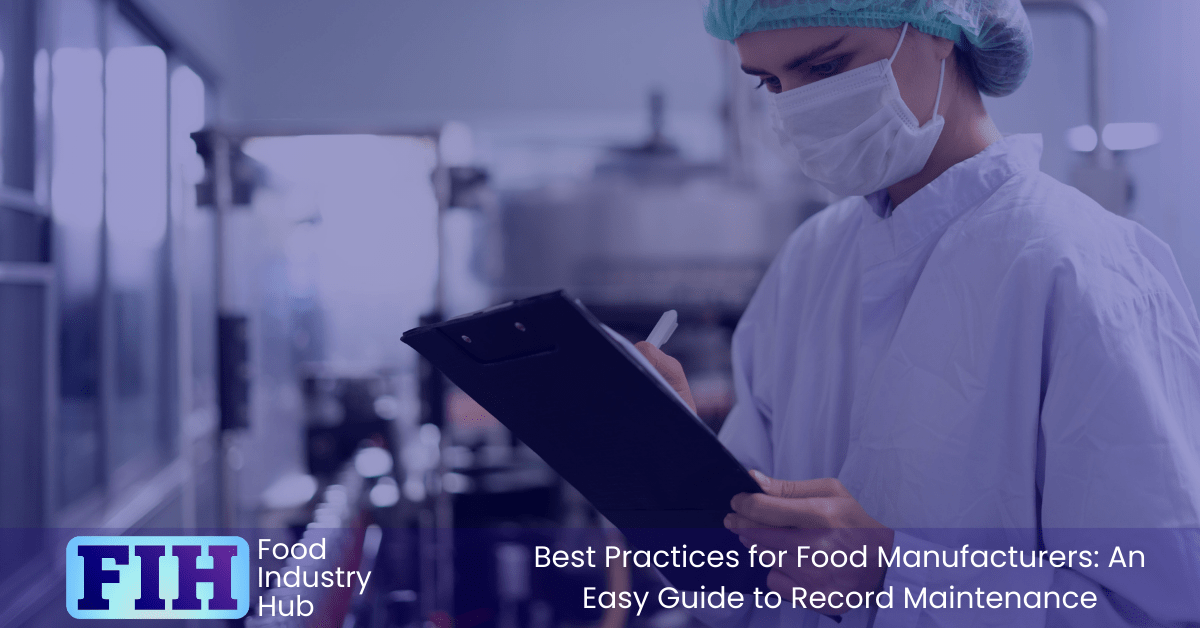
Keeping accurate records should be a priority for every food manufacturer

The Challenges of Record Maintenance: What Are the Challenges That Food Manufacturers Face When Trying to Maintain Accurate Records?

Maintaining accurate records is an important part of any food manufacturing business, but it can also be a challenge. One of the most significant challenges is having the right systems in place to store and organise data. Paper copies are still commonly used by many businesses; however, they require manual input and can become disorganised over time. Digital storage solutions such as cloud-based backups offer more secure alternatives that allow for better organisation and easier access to information when needed. Additionally, there are compliance issues related to record retention policies that must be taken into consideration, as well as customer requirements which may vary depending on the sector or product type being manufactured. Finally, ensuring that all documents are up to date with current regulations and standards can also be difficult for some food manufacturers who don’t have regular processes in place for reviewing their records on a regular basis.

Challenges in record-keeping can be readily overcome with a systematic approach

Record Legibility – Process Records Are Only Useful If They Can Be Read and Understood

Record legibility is an important aspect of record maintenance for food manufacturers. It’s imperative that all records are in a format that allows them to be read and understood, as process records can only be useful if they can be interpreted accurately. Legible records also help ensure compliance with legal and customer requirements, as well as providing accurate information which is essential for businesses to make informed decisions. Poorly written or illegible documents can lead to misunderstandings which could result in costly errors or missteps down the line. To prevent this from happening, it’s important for food manufacturers to use good handwriting, language, and presentation when generating process records so that everyone involved will have a good understanding of what has been documented.
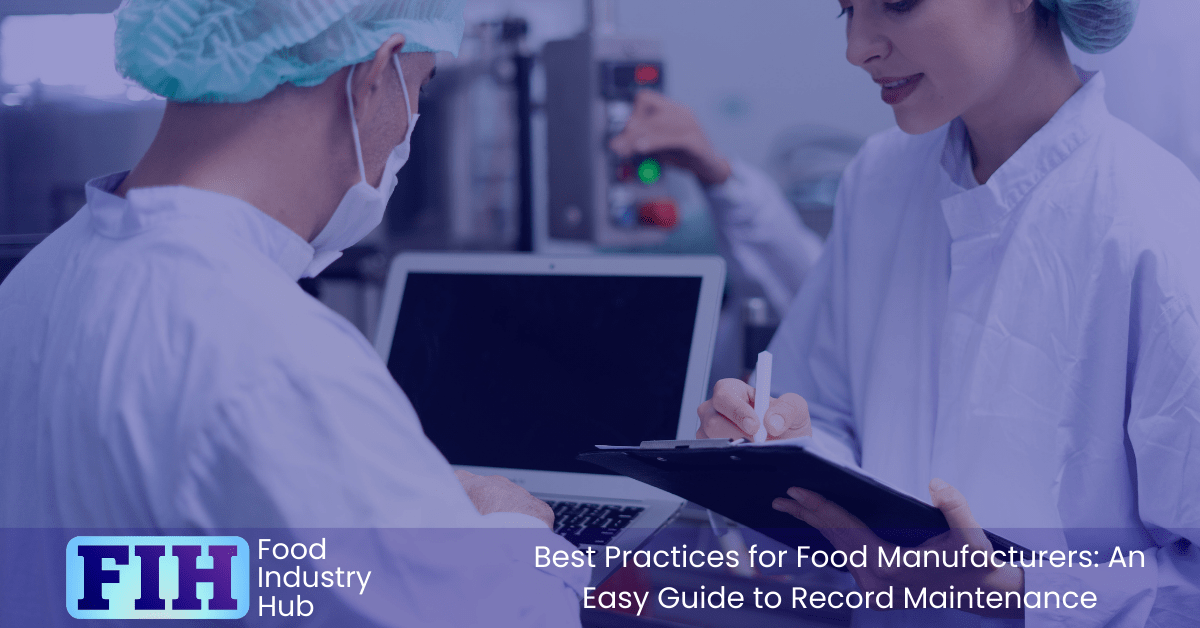
Handwriting and legibility are important for proper record-keeping

Sign up for the Food Industry Hub Mail Service

Receive Food Industry Hub updates, resources, articles, tools and service developments direct to your inbox.

Each update helps you stay connected with new and relevant Food Industry Hub content, with links back to resources you may want to read, use or revisit.

Maintaining Records in Good Condition, Free from Loss, Degradation, And Damage

Maintaining records in good condition is essential for food manufacturers. Records must be kept free from loss, degradation, and damage to ensure accuracy and compliance with legal and customer requirements. It’s important for food manufacturers to have systems in place for properly storing documents so that they remain intact over time. This includes using secure digital storage solutions such as cloud-based backups, as well as having a record retention policy which outlines how long certain documents should be stored before being destroyed or archived. Proper consideration should be given to risks from fire, water damage, discolouration and light damage, and any other process that could lead to loss of data. Properly maintaining records can help protect against potential risks such as product recalls while also providing accurate information which is essential for businesses to make informed managerial decisions.

Systematic Filing and Administration for Access and Retrieval

Systematic filing and administration are essential for managing records in any food business. It’s important to have a system in place which allows for quick and easy access and retrieval of documents when needed. This can be achieved by organising files into categories, such as date created or customer name, so that they can be quickly located. Additionally, it’s a good idea to create an index which lists all the different types of documents available and provides details on where each one is stored within the filing system. This will make it easier to retrieve information whenever it is required. Additionally, having digital copies of important documents also ensures that data remains secure even if there are issues with physical storage systems such as fires or floods. By implementing systematic filing and administration processes for their records, businesses can ensure that information remains accessible while helping protect against potential risks down the line.

After records are taken, they should be filed for accessibility and retrieval

Justification And Authorisation for Any Alterations to Records

Justification and authorisation for any alterations to records is an important step in the record keeping process. Without it, food manufacturers are at risk of making changes that could lead to costly mistakes or even regulatory fines. To ensure that all changes are properly documented and authorised, it’s essential for businesses to have a system in place which includes clear documentation on why certain modifications were made as well as who approved them. This should include details such as dates and times when the change was requested and/or authorised, what specific alteration was made, and who signed off on it. Having this information readily available can help protect against potential risks while also providing a transparent audit trail if needed in the future. Many food manufacturing companies make it a rule that if an alteration is made, a single strikethrough is applied and the change initialled by the person making the change.

It’s also important for food manufacturers to make sure that their staff members understand the importance of justification and authorisation when making changes to documents or records. Employees should be aware of any relevant policies or procedures related to document alterations so they can follow proper protocol whenever necessary. Additionally, having regular training sessions dedicated towards informing staff about these processes will help ensure everyone involved understands how they should go about requesting permission before making any adjustments which could potentially impact compliance with legal requirements or customer expectations.
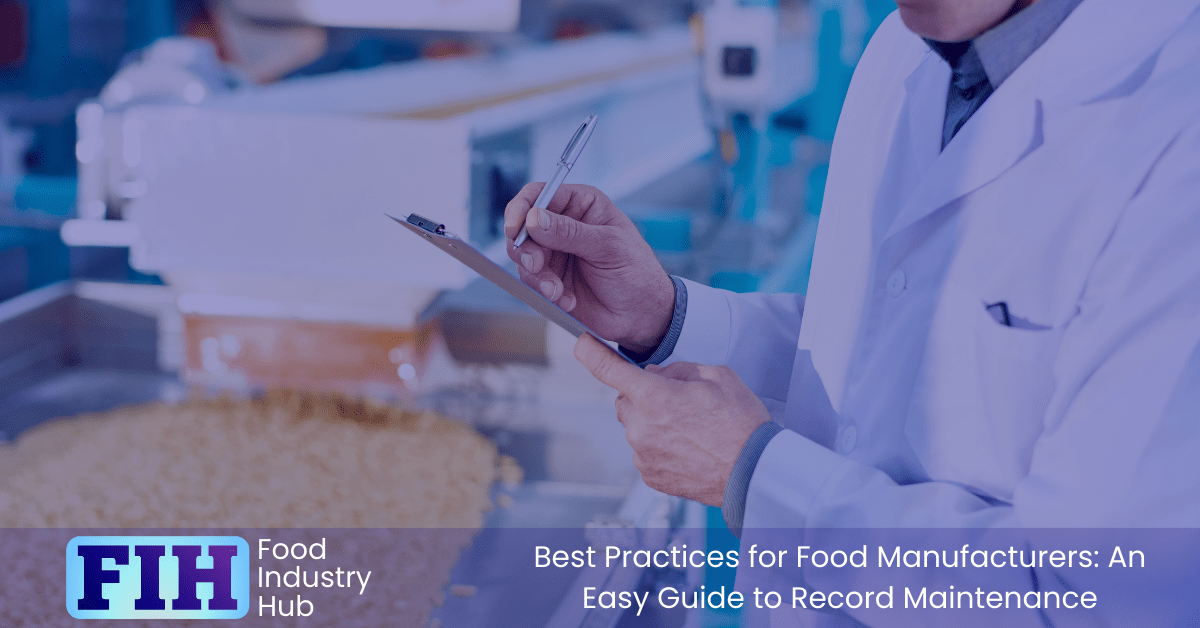
Any alterations should be properly authorised

Electronic Records Versus Paper Copies – Why You Should Go Digital

In today’s digital world, it’s becoming increasingly common for businesses to store records electronically instead of relying on paper copies. Going digital can offer a number of benefits over traditional methods such as improved data security, faster access times and greater accuracy. Electronic records are also easier to store and manage since they don’t take up physical space like paper documents do. Additionally, with the right software in place, businesses can quickly create automated backups so that important information is never lost or corrupted due to computer failure or other issues. It’s also much simpler for multiple users to collaborate when working with electronic documents compared to having multiple versions of a paper document floating around an office.

The switch from paper records to electronic ones may seem daunting at first, but the long-term advantages make it well worth considering. For one thing, electronic files tend to be far more secure than their hard copy counterparts which makes them ideal for storing sensitive data such as customer details or processing information without fear of unauthorised access. In addition, going digital helps eliminate manual errors associated with relaying data from hard copies which can help improve accuracy and efficiency when dealing with large amounts of information. Finally, companies that go digital often find themselves saving money since they no longer need to purchase physical storage systems or pay staff members overtime hours just because they are trying desperately trying keep track of dozens upon dozens of different paperwork stacks!
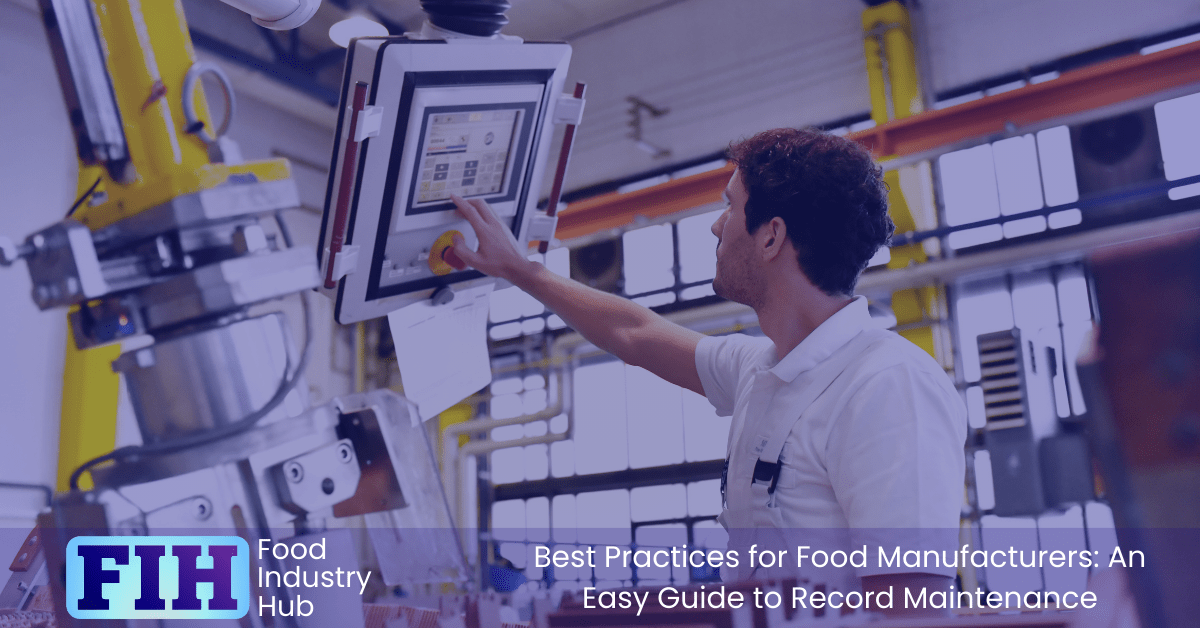
Electronic process records are efficiently retained and offer analytical benefits

Advantages Of Cloud Storage – Secure Storage, Access Controls, and Backup Protection

The advantages of cloud storage are becoming more and more apparent to food businesses. With the ability to store large amounts of data securely, access controls allowing only authorised personnel to view or manipulate information, and backup protection ensuring that data is never lost in the event of a system failure or other issue, cloud storage can provide an incredibly useful service for any business. Not only does it provide a secure environment for sensitive data but also offers an easy way for employees across multiple locations to collaborate on projects since all files are stored in one central place with no need for physical copies. Cloud technologies often come with powerful analytics capabilities which allow companies to gain valuable insights into their operations.

Cloud storage also provides added peace of mind by offering superior levels of security compared to traditional methods such as hard drives or USB sticks. By using encryption techniques and other safeguards against unauthorised access, businesses can rest assured that their most important documents remain safe from prying eyes even if they were somehow stolen or otherwise compromised. Furthermore, many cloud services now offer additional layers of protection like two-factor authentication which help ensure that only those who should have access get it while keeping everyone else out! Finally, thanks to its automated backup features, users can be sure that their critical data is always protected regardless of what happens – something no physical device could ever guarantee.

Record Retention – What Legal or Customer Requirements Should You Consider?

When it comes to record retention, there are a number of legal and customer requirements that need to be taken into consideration. Depending on the nature of your business, you may be obligated to keep certain records for a minimum amount of time in order to comply with local laws or industry regulations. Customers themselves often have expectations regarding how long their data will be kept on file, so it’s important to make sure these needs are met as well.

Businesses should also think carefully about what sort of records they need to maintain and how long they should be stored for. It is generally accepted practice that only documents relevant to operations or transactions should be retained – any unnecessary paperwork can quickly become cumbersome and difficult (not to mention expensive) for companies trying store large volumes over extended periods of time. Ultimately, the best way for a business ensure compliance with all applicable legal requirements while meeting customer expectations is by creating an effective document management system which allows them easy access their records whenever needed without taking up too much space or resources.
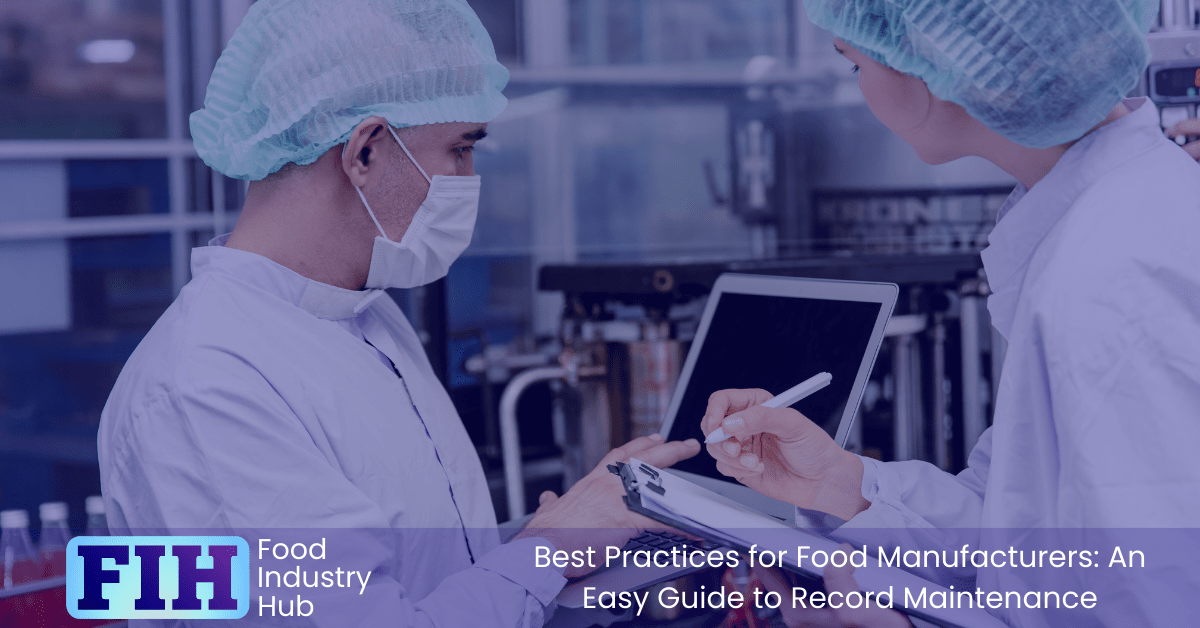
It's easy to access electronically-held records

In Summary

In summary, record completion and maintenance are essential for any food manufacturing business. Regularly completed records provide important information on the safety of products, customer complaints and operational assurance and compliance, allowing businesses to easily meet regulatory requirements. Furthermore, well-maintained records help ensure that management is aware of all potential risks associated with their operations. By using cloud storage solutions as a secure repository for these documents, companies can quickly access them whenever needed while also significantly reducing the amount of physical space required to house paper files. Finally, by utilising analytics capabilities offered by many cloud providers today businesses can gain valuable insights into customer behaviour which could lead to improved processes and better overall performance in the long run.

Many challenges can be faced when trying to maintain accurate records – from legibility issues to systematic filing and authorisation of changes. The advantages of digital record keeping with cloud storage are numerous, most notably in terms of safety and secure backups. Lastly, it is important to consider customer or legal requirements when it comes to record retention. Although challenging at first glance, accurate records are a cornerstone for successful food manufacturing businesses.

Further Resources

Food Industry Hub serves the food industry with a range of digital resources for the benefit of both commercial food manufacturers and food industry professionals.

For food manufacturers, we offer integrated management systems that give every user a direct interface with your QMS.

For food industry professionals, we provide an extensive signposting service in addition to informational content we hope you’ll find useful as you face new professional challenges. We have very ambitious plans to expand the range of services offered, and currently present informational content on management, safety and quality, and professional success.
Site Standards for Food Manufacturing Facilities

Site Standards for Food Manufacturing Facilities

When it comes to food manufacturing, site standards are the foundation of food safety, quality, and legal compliance. Every aspect of your facility—from pest control to storage conditions and transportation—plays a crucial role in protecting products from contamination, deterioration, or security risks. A well-maintained site isn’t just about meeting audit expectations; it’s about safeguarding consumer trust and ensuring that every product leaving your facility is safe, authentic, and of the highest quality. Without robust site standards, even the most well-designed food safety systems can be undermined by poor environmental controls, inadequate maintenance, or overlooked risks in handling and transport.

This post takes a deep dive into the key requirements for site standards in food manufacturing facilities, offering practical insights into how each area contributes to overall food safety. From pest management and storage conditions to dispatch and transport, every detail matters when it comes to protecting your products and your business. Whether you’re refining your existing site standards or establishing them from the ground up, understanding these elements will help you build a facility that meets the highest industry expectations and operates with efficiency, security, and confidence.

Food Raw Material Risk-Assessment

Food Raw Material Risk-Assessment

IntroductionIn food manufacturing, raw materials form the foundation of your finished products, making their safety, quality, and compliance critical to your operations. A raw material risk assessment is a proactive tool that enables you to identify, evaluate, and...

The Food Safety and Quality Management System

The Food Safety and Quality Management System

You’re probably aware that ensuring food safety is a complex process. It’s not just about selecting the freshest ingredients; it’s also about implementing a robust Food Safety and Quality Management System. This system is a comprehensive guide, detailing responsibilities, procedures, and checks to produce safe and high-quality food. It’s about maintaining clear records, conducting internal audits, and upholding transparency with consumers. Sounds detailed and intricate, doesn’t it? Well, you might be curious about how this system actually works in practice and how it contributes to public health. Let’s explore this further.

The Food Safety Plan – HACCP

The Food Safety Plan – HACCP

IntroductionHave you ever considered how crucial the Food Safety Plan - HACCP is in preventing foodborne illnesses? By implementing a systematic approach that identifies and controls food safety hazards, it's possible to significantly reduce the risks of biological,...

Senior Management Commitment and Food Safety and Quality Management

Senior Management Commitment and Food Safety and Quality Management

IntroductionConsider the role of senior management in your organisation's food safety and quality management. Senior management commitment isn't just a formality; it's the backbone of establishing and maintaining a culture of accountability and excellence. They're not...

Non-Conforming Product Controls

Non-Conforming Product Controls

Maintaining strict controls over non-conforming products is crucial for upholding quality standards. Imagine the impact a single oversight could have on your brand’s reputation and customer trust. By implementing robust measures to identify, manage, and document non-conforming materials, you not only safeguard your business but also safeguard the safety of those who consume your products. But what happens when the unexpected occurs, and a non-conforming product slips through the cracks? How do you ensure swift and effective responses that protect both your customers and your bottom line?

Sources of Incidents and Non-Conformities Arising in Food Manufacturing Operations, and How to Respond

Sources of Incidents and Non-Conformities Arising in Food Manufacturing Operations, and How to Respond

When looking at the sources of incidents and non-conformities in food manufacturing operations, it’s crucial to understand the multifaceted nature of these occurrences – and how the source of the non-conformity can indicate underlying weaknesses in the QMS.

From analytical testing revealing potential issues to customer complaints shedding light on quality concerns, each aspect provides valuable insight. Proactive reporting and the intricacies of processing/manufacturing operations also play pivotal roles. By delving into these origins and crafting effective responses for ongoing improvements, you can proactively address challenges and elevate your operational standards to ensure long-term success across your operations.

Risk-Assessing Raw Materials for Food Fraud

Risk-Assessing Raw Materials for Food Fraud

Are you looking for a comprehensive guide to conducting a simple and effective vulnerability assessment for raw materials? If so, you’ve come to the right place! This post will provide an overview of why it is important to conduct a vulnerability assessment and shed light on best practices.

We’ll discuss historical evidence of, and economic factors that can encourage substitution, adulteration, and fraudulent activity related to raw materials. Additionally, we will take a closer look at ease of access within the supply chain, sophistication in routine testing practices along with identifying potential adulterants in the raw material itself.

Finally, we’ll cover potential outcomes and actions resulting from the assessment as well as how authenticity verification testing can help mitigate risks associated with fraud or adulteration.

Stay tuned to uncover the secrets of risk-assessing raw materials for food fraud – your business’s reputation may depend on it.

The Importance of Effective Quality Assurance Processes for Food Manufacturers

The Importance of Effective Quality Assurance Processes for Food Manufacturers

Do you ever think about how likely consumers are to switch brands if they experienced a quality or safety issue with a food product?
It’s commercially essential for food manufacturers to prioritise brand protection and customer satisfaction. Effective quality assurance processes play a vital role in ensuring the safety and consistent quality of food products.
From mitigating the risks of contamination to meeting compliance standards, these processes are essential for protecting brand reputation and improving customer satisfaction.

Threat Mitigation For Your QMS

Threat Mitigation For Your QMS

Imagine a scenario where a food manufacturer’s reputation is tarnished due to a product tampering incident that could have been prevented.

How can you safeguard your company from such threats? By implementing stringent threat mitigation strategies, you can proactively protect your brand, consumers, and bottom line.

Food Authenticity: How Food Manufacturers Can Combat Food Fraud

Food Authenticity: How Food Manufacturers Can Combat Food Fraud

In a world where food fraud has become increasingly prevalent, the integrity of our food supply chain hangs in the balance.
As a food manufacturer, you hold the power to combat this deception and restore trust in the products you produce.
But how can you ensure the authenticity of your food? How can you protect consumers from unknowingly consuming fraudulent goods?
In this post, we will explore the strategies and measures that food manufacturers can employ to fight against food fraud, safeguarding both their reputation and the well-being of those who rely on their products.

Handling Customer Complaints for Quality Improvement: A Guide for Food Manufacturers

Handling Customer Complaints for Quality Improvement: A Guide for Food Manufacturers

As a food manufacturer, you understand the importance of delivering high-quality products to your customers. However, no matter how meticulous your processes are, there will inevitably be instances where complaints arise.
But worry not, for in this guide, we will explore the process of constructively handling customer complaints for quality improvement.

Unpacking Traceability through Every Stage of Food Manufacturing

Unpacking Traceability through Every Stage of Food Manufacturing

Having full traceability over food manufacturing and production can be a complex process. Every stage needs special consideration to ensure accurate record-keeping, help manage incidents and understand where things come from. This post looks at traceability through every stage of food manufacturing, ranging from raw materials to dispatch records and mass balance reconciliation. Join us as we explore how traceability can be used to guarantee the safety and quality of your products throughout the supply chain.

Quality Management Systems (QMS): An Introductory Guide for Food Manufacturers

Quality Management Systems (QMS): An Introductory Guide for Food Manufacturers

The quality management system (QMS) is an extensive management structure of key importance to food manufacturing, but is often regarded as being highly technical and inaccessible.

In this explanatory guide, we will explore the key components of the QMS and how they are applied in the context of food manufacturing.

This post is intended to provide a brief introduction to the different facets of the quality management system in a way that’s accessible, without being overly technical.

Operational Risk Profiling for Food Manufacturers

Operational Risk Profiling for Food Manufacturers

All businesses are subject to risk, with categories of risk including competition, reputational risks, financial, economic, and political hazards. The scope of this blog is limited to food safety, quality, legality, and authenticity risks, and we’ll look at a range of hazards that all food manufacturers should be conscious of when evaluating the risk profile for operations. We’ll address food safety, quality, authenticity, and legality risks – and the way those risks can be introduced through product and process.

Non-Conformance, Process Deviations, and Quality Incidents in Food Manufacturing

Non-Conformance, Process Deviations, and Quality Incidents in Food Manufacturing

Understanding and properly addressing non-conformance, process deviations, and quality incidents is fundamental to continuous improvement and risk mitigation. In this blog post, we will take a comprehensive look at these quality events, their causes and documentation processes – before delving deeper into how food businesses should assess the risk associated with non-conformities followed by corrective actions to be taken. We will discuss root cause analysis as a method for determining contributing factors before running through timescales for corrective and preventative actions in order to manage the allocation of responsibilities for measures taken towards consistent improvement and prevention of recurrence.

Evaluation Of Raw Material Suppliers – Supplier Approval Explained

Evaluation Of Raw Material Suppliers – Supplier Approval Explained

Supplier assurance processes form an important area of diligence for food manufacturers. The quality and safety or raw materials received from suppliers has a direct impact on the products manufactured from them, so evaluation of suppliers has a marked influence on the risk exposure of the receiving company. In this post, we’ll explore some of the considerations food manufactures should keep front-of-mind when approaching supplier approval decisions.

Food Safety and Quality Assurance Improvement for Food Manufacturers

Food Safety and Quality Assurance Improvement for Food Manufacturers

Every food manufacturer intends to implement the best possible food safety and quality assurance systems and adopt a stance of continuous improvement. The particular ways you achieve that will depend on a massive range of variables – depending on your process and the nature of the materials you handle. There is no one size fits all approach, so professionals and management teams should optimise for problem-solving and ongoing improvement in order to adapt to technological, legal, supply-chain developments.

In this post, we’ll look at a few methodologies that you can apply to situations you encounter – so that you have a framework for proactive improvements and deviations-handling.

Food Law and Regulatory Compliance

Food Law and Regulatory Compliance

Every food manufacturer has an obligation to maintain an awareness of – and comply with – applicable regulations. To support, we’ve brought together a range of informational resources which either facilitate regulatory awareness or can be used in support of legal compliance. In this post, we’ll also provide a brief commentary on how some of these resources can be used to incorporate legal compliance into your operations.

Supplier Assurance in Food Manufacturing

Supplier Assurance in Food Manufacturing

Supplier assurance updates can fairly time-consuming, but maintaining proper oversight of your supply chain is a key mitigation process against raw material processing risks – so well worth the effort.

We’ve signposted to a collection of resources that will be helpful in quickly alternating between assurance platforms. In this post, we also make some observations about assurance schemes, and their role in supply chain risk mitigation.

Food Authenticity and Mitigating Food Fraud Risks

Food Authenticity and Mitigating Food Fraud Risks

Risk assessment, analytical testing, and horizon scanning are the best tools available for fraud risk control, and this post is intended to support horizon scanning and food fraud risk awareness. We’ve brought together a range of resources for supply chain risk visibility, as well as tangentially related information providers such as Mintec Global Food Commodity Prices and the RASFF Database (of whose reports, only a fraction are authenticity-related). In this post, we’ll offer a little bit of guidance around food fraud risk awareness and monitoring for emerging supply chain risks.

Implementing a Robust Food Safety and Quality Manual

Implementing a Robust Food Safety and Quality Manual

The food safety and quality manual represents the documented system of management for a food manufacturer. It is the framework of management that governs all operational processes. In this post, we’ll explore the composition of a food safety and quality manual and how to make sure it is properly integrated into operational processes.

An Introduction to Food Specifications

An Introduction to Food Specifications

Specifications serve a lot of important purposes in food manufacturing. Most obviously, they’re used to establish quality expectations for suppliers and customers exchanging food products – but more broadly, specifications can be a vehicle for transmitting information...

Everything You Need to Know About Record Completion and Maintenance

Everything You Need to Know About Record Completion and Maintenance

In the food industry, record completion and maintenance is an essential part of compliance and diligence. Records provide a valuable defence of evidence for companies in the event of a legal dispute. Aside from providing evidence of diligence and process control,...

Maximising The Benefits from Internal Audits in Food Manufacturing

Maximising The Benefits from Internal Audits in Food Manufacturing

Internal audits in food manufacturing are a valuable tool when it comes to identifying areas of improvement and increasing efficiency. They can help to identify weaknesses, strengths, and discrepancies in compliance, while also providing an opportunity to discover...

Food Industry Hub blog

The Food Industry Hub blog includes practical discussion for food manufacturing professionals across technical, cultural, management and professional themes.

This post is part of the category:

Stay connected with Food Industry Hub

Receive Food Industry Hub updates, resources and practical content for food manufacturing businesses and professionals.

Stay informed about new resources, articles, tools and Food Industry Hub service developments.