Introduction
When looking at the sources of incidents and non-conformities in food manufacturing operations, it’s crucial to understand the multifaceted nature of these occurrences – and how the source of the non-conformity can indicate underlying weaknesses in the QMS.
From analytical testing revealing potential issues to customer complaints shedding light on quality concerns, each aspect provides valuable insight. Proactive reporting and the intricacies of processing/manufacturing operations also play pivotal roles. By delving into these origins and crafting effective responses for ongoing improvements, you can proactively address challenges and elevate your operational standards to ensure long-term success across your operations.
As we dive into the topic, you’ll be interested to know that Food Industry Hub offers integrated management systems for food manufacturers, which you can use to strengthen your assurance processes.
Table of Contents
Key Takeaways
- Analytical testing on raw materials can identify non-conforming material.
- Customer complaints reveal potential issues for improvements.
- Proactive reporting can alert you to risks and procedural deficits early.
- Address behaviour, equipment maintenance, and process control promptly.
- Maintain quality standards through inspections and corrective actions.
Using Incidents and Non-Conformities Arising in Food Manufacturing Operations for Ongoing Improvements
Regularly assessing and addressing incidents and non-conformities in food manufacturing operations is essential for facilitating ongoing improvements in quality and safety standards. By actively monitoring and responding to these issues, you can identify root causes, implement corrective actions, and prevent similar occurrences in the future.
When an incident arises, it should lead to a thorough investigation to determine the underlying factors contributing to the non-conformity. This could involve reviewing production processes, equipment maintenance records, and employee training records. Once the cause has been pinpointed, swift action must be taken to rectify the situation and prevent any potential risks to product quality or consumer safety.
Utilising incident and non-conformity data as a learning tool can drive continuous improvement within your food manufacturing operations. By analysing trends and patterns in reported incidents, you can proactively address systemic issues and enhance your overall quality management system.
Embracing a proactive approach to incident management demonstrates your commitment to upholding the highest standards of quality and safety in food production.
Analytical Testing of Raw Materials and Product Samples
Analytical testing of raw materials and product samples serves as an important source of non-conformity information for food manufacturing businesses. By analysing raw material and product samples, you can identify potential issues such as contamination, spoilage, or inconsistencies in ingredient quality.
Using analytical techniques like chromatography, spectroscopy, and microbiological testing allows for precise identification and quantification of various components within raw materials and finished products. These methods help in assessing factors like chemical composition, nutritional content, and microbiological safety.
Regular and thorough testing of raw materials and product samples is essential for ensuring product quality, compliance with regulations, and safeguarding consumer health. By implementing robust testing protocols and promptly addressing any non-conformities detected through analytical testing, you can enhance quality control measures, improve process efficiency, and maintain a strong reputation for producing safe and high-quality food products.
When non-conformities are detected in raw materials, you can work closely with suppliers to address underlying issues and ensure consistent quality moving forward. Similarly, identifying non-conformities in product samples allows you to investigate the root causes, adjust production processes if necessary, and maintain product integrity.
Leveraging non-conformity data from analytical testing provides valuable insights for continuous improvement efforts. By tracking trends over time and correlating non-conformities with specific production operations, you can implement proactive measures to safeguard the quality of your products.
Sensory Defects Identified at Taste Panel
Taste panels provide information regarding the organoleptic properties of the food product, such as taste, aroma, texture, and appearance. Defects can indicate issues in raw materials, processing methods, or storage conditions that may affect the overall quality of the final product.
By conducting thorough sensory evaluations, you can pinpoint specific areas for improvement in your manufacturing processes and make necessary adjustments to ensure consistent product quality.
By closely examining sensory defects, such as off-Flavors, textures, or appearances, you can pinpoint target investigations into potential causes throughout your manufacturing processes. If a taste panel identifies that a product does not conform with its specification or quality attribute sheet (QAS) or expected sensory characteristics, the exact nature off the deviation should guide an investigation toward the process points most responsible for influencing the characteristics that have deviated from expectations.
Regularly incorporating sensory defect analysis into your quality control procedures enables proactive identification and resolution of issues before they escalate. By leveraging taste panel insights, you can continuously refine your processes, optimise product quality, and uphold consumer satisfaction.

Sign up for the Food Industry Hub Mail Service
Receive Food Industry Hub updates, resources, articles, tools and service developments direct to your inbox.
Each update helps you stay connected with new and relevant Food Industry Hub content, with links back to resources you may want to read, use or revisit.
Customer Complaints as a Source of Non-Conformity Information
Customer complaints are a valuable source of non-conformity information in food manufacturing. By analysing product quality complaints, you can identify areas for process and product improvement.
Product Quality Complaints
Customer complaints serve as a valuable source of information for identifying issues that have impacted product quality, safety, or compliance. Complaints may highlight various concerns such as foreign objects in the product, off-flavours, inconsistencies in packaging, or even suspected foodborne illnesses.
By carefully analysing and categorising complaints, patterns and trends can be identified – leading to targeted improvements in processes, ingredients, or quality control measures. Product quality complaints provide a direct line of communication between consumers and manufacturers, allowing for swift responses to rectify issues and prevent potential hazards.
When handled effectively, customer complaints don’t only address immediate concerns but also serve as a catalyst for continuous improvement. Understanding the root causes behind complaints is essential for implementing corrective actions that enhance product quality, maintain consumer trust, and uphold regulatory standards.
When reviewing complaints, pay close attention to recurring issues or patterns, as these can indicate systemic problems that require immediate action. Use quality management tools such as root cause analysis to identify the underlying reasons behind the reported issues.
Regularly reviewing and addressing customer complaints demonstrates a commitment to quality and customer satisfaction. It allows for continuous improvement in processes and products, ultimately leading to improved consumer trust and loyalty.
Complaints About Delivery Conditions or Customer Service
Customer complaints regarding delivery conditions may highlight issues such as late deliveries, damaged goods upon arrival, or improper storage during transportation. These complaints provide insights into potential weaknesses in the supply chain, such as ineffective logistics processes or inadequate packaging solutions.
Complaints related to customer service can reveal communication breakdowns, unsatisfactory interaction with staff, or unmet customer expectations. By thoroughly examining these complaints, food manufacturers can pinpoint areas for enhancement, whether through staff training programs, process re-evaluations, or supplier collaborations to ensure better delivery conditions and customer service.
When receiving customer complaints about delivery conditions, pay close attention to factors such as packaging integrity, timeliness, and overall condition upon arrival. These complaints can signal potential weaknesses in your supply chain or warehouse management processes that need immediate attention.
Customer service complaints can shed light on communication gaps, training deficiencies, or operational inefficiencies within your organisation. Addressing these issues should serve to resolve the immediate complaint – and also helps prevent similar incidents in the future.

Proactive Reporting as a Source of Non-Conformity Information
Proactive reporting of potential hazards is arguably the most desirable source of non-conformity information for food manufacturers, because it is inherently proactive – which is indicative of a mature food safety and quality culture, as well as enabling problems to be resolved at the earliest possible stage.
Reports highlighting procedural deficits or areas for improvement offer valuable insights for refining your operational practices and ensuring product safety and compliance.
Reports of Potential Hazards
When employees actively report potential hazards they encounter during their tasks, it provides insights into areas that require attention to prevent incidents and non-conformities. These reports can range from issues with equipment malfunctions to concerns about food handling processes.
By encouraging a culture of proactive reporting, organisations can stay ahead of potential problems and introduce solutions promptly. Reports of potential hazards often highlight areas where processes may not be as robust as intended, enabling management to address root causes before they escalate into more significant non-conformities. This proactive approach not only improves food safety but also enhances overall operational efficiency.
Regularly analysing proactive reports allows for the identification of recurring issues, leading to targeted improvements in training, equipment maintenance, or process redesign. Leveraging this information effectively can result in a more proactive and preventive approach to quality control and assurance.
When using reports of potential hazards for quality control and quality assurance improvement, it’s useful to categorise and prioritise them based on the level of risk they pose to the overall operation. This approach enables you to focus your resources on addressing high-risk hazards first, ensuring that critical issues are promptly resolved.
Reports of Procedural Deficits or Improvement Opportunities
By encouraging employees to report any deviations from standard operating procedures or any areas where processes could be enhanced, organisations can gather valuable insights into potential Weaknesses within the documented management system.
These reports of procedural deficits or improvement opportunities serve as an early warning system, allowing for prompt corrective actions to be taken to strengthen processes and correct for any oversights.
Proactive reporting demonstrates a culture of continuous improvement within the organisation, showing a sense of ownership and accountability among employees. It also provides management with a comprehensive view of operational challenges, enabling them to prioritise resources effectively for process enhancements.
When processing reports of procedural deficits or improvement opportunities, it’s sensible to categorise the issues identified into critical and non-critical areas. Focus on addressing critical procedural deficits first, as they pose the highest risk to product quality and consumer safety. Implement corrective actions promptly, documenting each step taken to rectify the issue thoroughly.
For improvement opportunities, assign responsibilities to team members for implementing the necessary changes and monitor progress regularly. Consider conducting root cause analysis to identify underlying reasons for procedural deficits and improvement opportunities. Regularly review and reassess the effectiveness of implemented changes to ensure sustained improvement in quality control and assurance processes. By actively engaging with reports of procedural deficits and improvement opportunities, food manufacturing operations can continuously enhance their quality standards and mitigate risks effectively.
Non-Conformities Arising from Processing or Manufacturing Operations
Production and operations represent the activity centre of a food manufacturing business. When we talk about non-conformities arising from processing or manufacturing operations, we’re referring to reports and information generated during operations.
Behaviour or Non-Compliance Issues
In food manufacturing, employee behaviour plays a significant role in maintaining quality standards and ensuring compliance with regulations.
Common behaviour-related non-conformities include a failure to wear personal protective equipment (PPE) properly, a failure to observe personal hygiene requirements, lack of adherence to standard operating procedures, and failure to report deviations promptly. These issues can result in problems such as product contamination, improper labelling, or even regulatory violations.
Implementing robust training programs, conducting regular audits, and fostering a culture of accountability are essential steps in addressing behaviour-related non-conformities. By emphasising the importance of compliance and encouraging a commitment to quality throughout the organisation, food manufacturers can minimise the risk of non-conformities and ensure the consistency and safety of their products.
To respond effectively to behaviour or non-compliance issues for quality control and assurance enhancement, establish clear protocols and expectations for employees. Regular training sessions on food safety practices and quality standards can help reinforce compliance.
Remember, issues of non-conformance and non-compliance are separate and distinct. Non-compliance is characterised by intentional refusal to follow instructions or meet expectations as understood. Non-conformance is an umbrella term that refers to a failure to conform with procedures or instructions for any reason. With this in mind, non-compliance must be met with responsive actions that consider motivation, understanding, culture, conflicts of interest, and attitude.
Equipment Maintenance Needs or Damage
Regular maintenance schedules should be established for all equipment used in processing to minimise the risk of unexpected breakdowns or malfunctions that could lead to quality issues or safety hazards. Equipment damage can result from various factors such as wear and tear, improper use, or environmental conditions. It’s essential to train staff on proper equipment handling to reduce the likelihood of damage due to misuse.
Implementing a system for reporting and addressing equipment issues promptly can help prevent minor problems from escalating into major disruptions in production.
Reports of equipment maintenance needs or damage that arise from the manufacturing process are usually the result of observations made by operatives rather than scheduled inspections. In this way, reports of equipment maintenance needs or damage made outside of scheduled inspections should be considered reactive rather than proactive. Nevertheless, when operatives make these reports, it is a positive sign of care and ownership – indicative of good risk awareness.
When equipment becomes damaged or is subject to wear, there is often a risk of product contamination in the form of metal swarf, flaking paint, leaking consumables such as lubricant, etc. For this reason, immediate corrective actions may include steps such as isolation of the affected equipment, replacement of parts, repainting, and quarantine of any potentially contaminated product.
By integrating equipment maintenance data with quality control systems, you can establish correlations between maintenance interventions and product quality variations. This data-driven approach enables you to proactively address quality issues, optimise production processes, and enhance overall quality assurance practices.
Equipment damage can be caused by unpredictable occurrences – so for example, a forklift truck could collide with a piece of equipment. In this way, equipment damage does not always indicate a systematic deficit.
Conversely, equipment wear is normally predictable according to use. In much the same way as a car has a service interval based on the number of miles driven, a piece of equipment might have maintenance needs determined by operational hours. The maintenance schedule and inspection frequency should seek to identify the number of operational hours that a piece of equipment can be operated for without developing signs of wear. This would in turn enable the maintenance schedule (including replacement of consumable parts) to occur at an interval in advance of anticipated wear. The inspection frequency for each piece of equipment should be based on risk, with the intention of identifying any signs of wear that emerge between maintenance services.
If equipment damage or wear is reported by production or operations, that would indicate that the inspection frequency and maintenance interval for the piece of equipment concerned should be reviewed and adjusted.
Process Control Issues
Process control issues encompass a range of factors that can impact the manufacturing process, such as deviations from established procedures, equipment malfunctions, and variations in ingredient quality. These issues can lead to defects in the final product – compromising its safety and quality.
Vigilance in identifying and rectifying process control issues is key to maintaining a robust food safety management system and meeting regulatory requirements.
(Loss of) Allergen Control
Common causes of a loss of allergen control include inadequate segregation of allergenic ingredients, improper cleaning procedures, and errors in labelling. When allergens aren’t properly controlled, it can result in allergic reactions in sensitive individuals, leading to serious health implications and potential legal ramifications for the company.
Maintaining proper training protocols for employees handling allergens, implementing robust cleaning procedures, conducting regular allergen testing, and having clear labelling guidelines are essential steps to prevent a loss of allergen control. By continuously monitoring and enforcing these measures, food manufacturing operations can mitigate the risks associated with allergen-related non-conformities and ensure the safety of consumers.
Use instances of a loss of allergen control identified during processing or manufacturing operations as opportunities for enhancing quality control and quality assurance measures. When such lapses occur, it’s imperative to conduct a thorough analysis to pinpoint the root causes. This involves reviewing procedures and training protocols to identify weaknesses in the system. By understanding where the breakdown in allergen control occurred, adjustments can be made to prevent future occurrences.
Implementing corrective actions, such as enhanced cleaning procedures, segregation protocols, or additional staff training, can bolster allergen management practices. Regular audits and inspections should be conducted to verify the effectiveness of the improvements made.
Product Labelling Issues
Product labelling is a critical aspect of food manufacturing operations, as it provides consumers with vital information regarding ingredients, allergens, nutritional content, and usage instructions. Non-conformities in product labelling can lead to serious consequences, including regulatory non-compliance, consumer health risks, and damage to brand reputation.
Common labelling issues include incorrect ingredient lists, allergen omissions, and inaccurate expiry dates. These errors can occur due to human error, outdated labelling references, miscommunication between departments, or inadequate quality control processes.
Inadvertently packing the wrong product into the wrong (preprinted) packaging is among the most frequently encountered causes for product recalls – and is rooted in a labelling discrepancy. Often, enforcement agencies will publicise recalls, citing allergens not declared on the label as the reason for the recall. In many cases, recalls publicised in this way actually attributable to a product being packed into packaging intended for a different product – with labelling particulars That do not reflect the allergen exposure of the packed product.
By promptly addressing product labelling issues, you can prevent costly recalls, regulatory fines, and consumer complaints. Implementing robust labelling verification procedures, training staff on labelling requirements, and regularly reviewing labelling templates can help mitigate the risk of non-conformities and ensure accurate, compliant product labelling.
Regularly reviewing and updating labelling processes based on insights gained from past incidents can lead to continuous quality improvements and uphold regulatory compliance standards, fostering consumer trust in your products.
Record-Keeping Issues
Common record-keeping issues include incomplete documentation, illegible entries, missing signatures, and inaccurate data recording. These discrepancies can hinder the ability to track the flow of materials, identify potential sources of contamination, or pinpoint where deviations occurred in the production process.
To address record-keeping issues effectively, it’s crucial to implement standardised procedures for documentation, provide training to staff on proper record-keeping practices, conduct regular audits to ensure compliance, and utilise digital systems for more efficient data management. By improving record-keeping practices, you can enhance traceability, facilitate timely corrective actions, and ultimately uphold the quality and safety standards of your food manufacturing operations.
Utilising record-keeping issues as a tool for quality improvement requires a systematic and proactive approach. By continuously learning from past mistakes and making data-driven decisions, you can drive ongoing enhancements across operations.
Scheduled Inspections as a Source of Non-Conformity Information
Understanding how to effectively utilise scheduled inspections as a source of non-conformity information is crucial for maintaining high standards in food manufacturing operations.
Hygiene Inspections
Regular hygiene inspections involve thorough inspection of equipment and the manufacturing environment to verify standards of cleanliness hygiene inspections can be based on visual examination and/or analytical methods such as ATP swabbing. By conducting these inspections on a scheduled basis, potential risks of contamination or hygiene-related issues can be promptly detected and addressed. Hygiene inspections serve as a control measure to ensure that proper hygiene standards are consistently maintained throughout the manufacturing process.
During hygiene inspections, inspectors evaluate various areas such as equipment cleanliness, personnel hygiene practices, storage conditions, and overall facility sanitation. Any deviations from the established hygiene protocols are documented as non-conformities. These non-conformities provide valuable insights into areas that require improvement to enhance overall hygiene standards and prevent potential food safety hazards.
When non-conformities are identified at hygiene inspections, this can indicate the cleaning process is inadequate – either because the cleaning operation is not fit for purpose or because a particular instance of cleaning has been poorly carried out.
Cleaning operations should be subject to validation exercises to challenge the efficacy of the cleaning process and its suitability in use. Each instance of cleaning should be subject to verification to confirm the cleaning operation has been carried out properly.
Any non-conformance identified at hygiene inspection should be subject to root cause analysis to determine whether the cleaning process is systematically appropriate. The investigation should challenge the validation exercise and any verification challenges. The investigation can also look at the frequency at which validation and verification of cleaning operations is carried out.
Fabrication and Maintenance Inspections
Fabrication and maintenance inspections are intended to identify where or damage to equipment and the manufacturing environment on a scheduled basis.
The purpose of these inspections Is to allow for corrective actions to be taken in the event that damage or wear is found, and also to facilitate adjustments to the maintenance schedule. The maintenance schedule should ideally result in servicing (including replacement of consumable parts) of equipment in advance of degradation that could result in product risks. If scheduled fabrication and maintenance inspections finds evidence of wear or damage between services, then the service interval very applicable equipment should be adjusted.
If equipment is subject to damage that would not be anticipated through normal use, the cause of that damage should be investigated. So, if activities are carried out in the vicinity of equipment that could cause irregular damage to the equipment – irrespective of the maintenance schedule – that non-conformities identified at fabrication and maintenance inspections may have broader implications for the activities carried out in that area.
Feedback of Performance Information into The Quality Management System (QMS)
Incorporate performance feedback systematically into the Quality Management System (QMS) to enhance operational efficiency and maintain product quality standards. Most obviously, risk information must be transmitted into the HACCP risk assessment. This feedback loop allows you to make informed decisions based on real-time data, leading to more effective assurance processes and better safeguarding of product quality and safety.
Regularly updating the QMS with performance feedback enables you to address issues promptly, preventing them from escalating into larger incidents or non-conformities. This proactive approach helps you stay ahead of potential problems and continuously improve your operations.
The quality management system should catalogue non-conformances generated internally and report that data into feedback systems such as scorecards, KPIs, and senior management review meetings. Processing incidents and non-conformances through a centralised quality management system should enable trends to be identified that may not otherwise be obvious. For example, similar operational vulnerabilities may be manifested in different manufacturing areas – so recurring risks would only be spotted by reviewing performance data that reflects the entire facility.
Embrace this data-driven approach to drive ongoing enhancements and ensure the consistent delivery of safe and quality food products.
Identification of Trends and Patterns
Utilise data analysis techniques to effectively identify trends and patterns within your food manufacturing operations. By analysing data from various sources such as quality control reports, customer feedback, production records, and inspection findings, you can uncover valuable insights that reveal recurring issues or areas for improvement.
Look for patterns in incidents or non-conformities, such as specific products, processes, or shifts that are consistently associated with problems. Pay attention to any trends that may indicate an increase or decrease in incidents over time.
Remember that trends and patterns may emerge across incidents and non-conformities reported through different channels. This means that if customer complaints and operational non-conformities raised internally were taken in isolation, recurring issues may not be identified – but trends may be evident when customer complaints and operational non-conformities are combined and the category of fault is compared across different sources of non-conformance.

Applying Root Cause Analysis
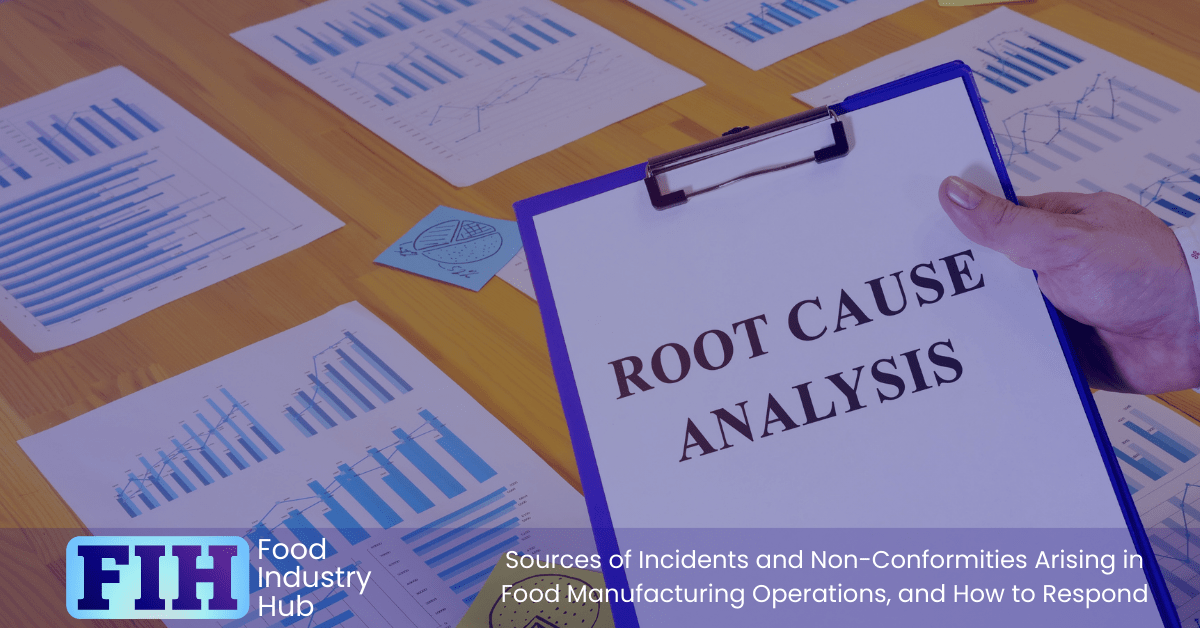
Implementing root cause analysis is crucial in identifying the underlying reasons for incidents and non-conformities in food manufacturing operations. By conducting a systematic investigation, you can determine the fundamental factors contributing to issues within the production process.
Root cause analysis involves delving beyond the surface-level symptoms to uncover the primary causes that lead to deviations from standards. This method enables you to address the root of the problem, rather than just treating the symptoms, thus preventing similar issues from arising in the future.
To apply root cause analysis effectively, it’s essential to gather relevant data, engage cross-functional teams, and utilise tools like the Fishbone diagram or the 5 Whys technique. These methodologies help in tracing back the chain of events that culminated in the incident or non-conformity.
In Summary
By closely examining incidents and non-conformities in food manufacturing operations, utilising various sources of information, conducting thorough investigations, implementing targeted corrective actions, and maintaining proactive measures, continuous improvement can be achieved.
It’s crucial to leverage these sources for ongoing improvements, enhance quality control, ensure compliance with standards, and drive operational efficiency.
Stay vigilant, proactive, and responsive to maintain a high standard of quality and safety in food production.

Further Resources
Food Industry Hub serves the food industry with a range of digital resources for the benefit of both commercial food manufacturers and food industry professionals.
For food manufacturers, we offer integrated management systems that give every user a direct interface with your QMS.
For food industry professionals, we provide an extensive signposting service in addition to informational content we hope you’ll find useful as you face new professional challenges. We have very ambitious plans to expand the range of services offered, and currently present informational content on management, safety and quality, food safety and quality culture, and professional success.