Technical Skills Vital for Career Success in Food Manufacturing

The Food Industry Hub Blog

Food Industry Hub blog

The Food Industry Hub blog includes practical discussion for food manufacturing professionals across technical, cultural, management and professional themes.

This post is part of the category:

Introduction

In the food manufacturing industry, your grasp of essential technical skills can mean the difference between stagnation and career advancement. Your proficiency in areas such as HACCP principles, record-keeping, fault resolution, and GMP implementation is pivotal for ensuring product safety and compliance. But how do these technical skills truly shape your journey towards success in this industry? Let’s dissect the critical components and explore their impact on your professional trajectory.

This post is part of a collection we’ve put together to explore the topic of professional success, and you can explore the topic in more detail by browsing the related content.

Table of Contents

Key Takeaways

  • You have to have proficiency in HACCP principles for food safety.
  • You need a strong understanding of industry regulations and compliance.
  • It pays to be skilled in fault resolution and root cause analysis.
  • You need the ability to write and approve food specifications accurately.
  • Knowledge of GMPs, pest control, and quality control points.

Technical Skills Needed for Career Success in Food Manufacturing

Research And Information-Gathering Skills for Technical, Regulatory, And Awareness of Emerging Risks

To excel in food manufacturing, you must continuously update your understanding of scientific and technical advancements. Stay well-versed in industry standards and regulations to ensure compliance and quality control.

Being proactive in identifying and addressing emerging risks, such as raw material authenticity concerns, is crucial for maintaining product integrity- so it’s really important to develop the ability to stay well informed in these areas.

For sites operating to the BRCGS Food standard, clause 1.1.8 specifically requires evidence of awareness and review of these developments, and the expectation is mirrored through equivalent assurance schemes – so you should consider your ability to stay abreast of updates and developments to be mandatory as a technical professional.

Staying Abreast of Scientific and Technical Developments

Keeping up with scientific and technical advancements is crucial for success in the food industry. This requires strong research and information-gathering skills to stay informed about new changes and advancements.

To achieve this, you must cultivate a proactive approach to research, constantly seeking out reputable sources of information such as scientific journals, industry publications, regulatory websites, and professional networks.

By monitoring these sources regularly, you can stay ahead of evolving trends, emerging technologies, and potential risks that may impact your operations. Developing a keen awareness of industry advancements can provide you with a competitive edge, enabling you to adapt quickly to changes and make informed decisions that benefit your organisation.

Familiarity With Industry Codes of Practice

Familiarity with codes of practice (COPs) is essential for any technical professional looking to get ahead in the food industry.

By staying informed about the latest industry regulations, you can proactively adapt your practices to meet the required standards and avoid potential penalties or reputational damage.

Retailer-driven codes of practice can represent the latest in best practice across the food industry, so a working familiarity with these standards can put you at the front of the curve for quality assurance and operational safety.

Alongside the practical advantages to familiarising yourself with codes of practice, it must be said that knowledge of COPs is essential if your site operates in compliance with those standards.

To stay ahead in your career and contribute to the success of your organisation, it’s essential to prioritise staying informed about industry codes of practice and integrating them into your daily operations.

Finding Out About New Risks to Authenticity of Raw Materials

Remaining vigilant about emerging risks to the authenticity of raw materials necessitates continual research and information gathering.

Regularly monitoring industry publications, attending relevant conferences, and engaging with industry experts are effective ways to stay informed about new risks for fraud risk mitigation.

Utilising online platforms such as regulatory websites can also provide valuable insights into emerging threats. Collaborating with suppliers to understand their sourcing and quality control processes can further enhance your awareness of potential authenticity risks.

Establishing a network of professionals within the field can facilitate the exchange of information and best practices. By actively seeking out information on evolving risks to raw material authenticity, you can better prepare your organisation to address and mitigate these challenges effectively.

All of this will position you to be able to confidently risk-assess your raw materials and supply chain for authenticity risks – and introduce appropriate mitigation measures.

Being Conversant with Relevant Legislation

To effectively navigate the regulatory landscape and stay informed about emerging risks in the food manufacturing industry, it’s imperative to be well-versed in relevant legislation and possess strong research and information-gathering skills. Understanding the laws and regulations that govern food production, labelling, and safety is crucial for ensuring compliance and upholding quality standards.

Research and information-gathering skills are essential for keeping abreast of evolving regulatory requirements and emerging risks in the industry. This involves regularly monitoring updates from regulatory bodies, industry publications, and attending relevant training sessions or seminars.

Research And Information-Gathering Skills

HACCP Skills

To excel in the food manufacturing industry, you must grasp the fundamentals of HACCP, ensuring the safety of products.

Applying your HACCP skills on the factory floor is crucial for controlling hazards and maintaining product safety.

Understanding and mitigating product safety risks through HACCP implementation will set you apart as a competent professional in the field.

Understanding HACCP

Understanding HACCP principles is essential for ensuring food safety in the manufacturing industry.

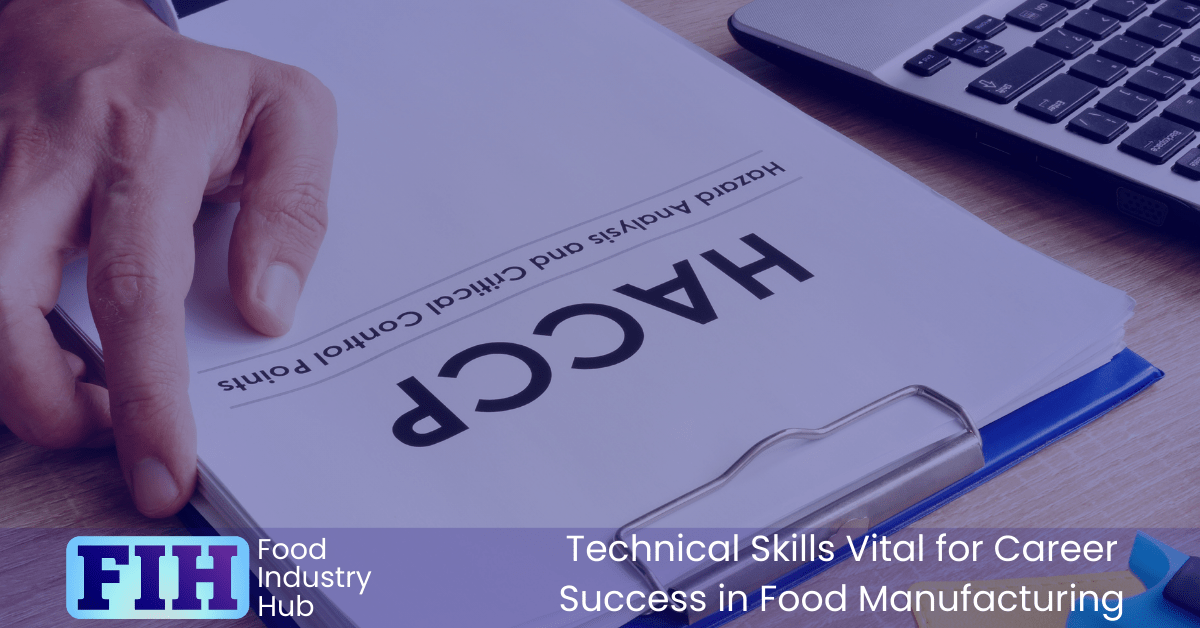
HACCP, which stands for Hazard Analysis and Critical Control Points, is a systematic approach to identifying, evaluating, and controlling food safety hazards. This methodology is crucial in preventing risks that could compromise the quality and safety of food products. By comprehending HACCP principles, you gain the ability to assess potential hazards at each stage of the food production process, from receiving raw materials to distributing finished goods.

To understand HACCP effectively, you must grasp the seven principles it’s based on.

The seven principles include conducting a hazard analysis, determining critical control points, establishing critical limits, monitoring procedures, corrective actions, verification procedures, and record-keeping processes.

Being well-versed in these principles equips you with the knowledge and skills necessary to develop, implement, and maintain a robust food safety system within a food manufacturing setting.

Applying Your HACCP Skills In the Factory

Implementing your HACCP skills in the factory requires a thorough understanding of the seven key principles and their practical application in the food manufacturing process.

The seven principles include conducting a hazard analysis, determining critical control points, establishing critical limits, monitoring procedures, corrective actions, verification procedures, and record-keeping processes.

To apply your HACCP skills effectively, you must be able to identify potential hazards in each step of the food production process, enact control measures to prevent these hazards, and implement monitoring procedures to ensure these controls are consistently met.

You need to be proactive in addressing any deviations from the critical limits set, maintaining accurate records, and verifying that the HACCP system is working as intended – so a working competency in HACCP really is an essential technical skill.

Understanding And Mitigating Product Safety Risks

A solid understanding and proactive approach to mitigating potential hazards are key to utilising your HACCP skills effectively.

Understanding the principles of HACCP, such as conducting hazard analysis, determining critical control points, and implementing corrective actions, is essential for safeguarding consumers and maintaining regulatory compliance.

To effectively mitigate product safety risks, you must be proficient in identifying potential hazards at each stage of the food production process. This includes assessing raw materials, monitoring food handling practices, and ensuring proper sanitation procedures are followed.
HACCP Skills

Record-Keeping and Information Processing for Quality Standardisation

You need to understand the importance of identifying the necessary process information to be recorded in food manufacturing operations.

By interpreting these records and promptly addressing any quality deviations, you can ensure that products meet the required standards.

Improving processes to minimise variation is essential for maintaining consistent quality in food manufacturing.

Identifying What Process Information Needs to Be Recorded in Food Manufacturing Operations

Properly recording process information in food manufacturing operations is essential for ensuring quality standardisation and operational efficiency. When identifying what process information needs to be recorded, it’s crucial to focus on key parameters that directly impact product quality and safety. This includes recording details such as:

  • Ingredient measurements
  • Production temperatures
  • Processing times
  • Equipment calibration checks
  • Cleaning records

By documenting these process variables, food manufacturers can maintain consistency in product quality, adhere to regulatory standards, and facilitate troubleshooting in case of deviations.

Capturing data on product traceability, lot numbers, and stock movements is vital for quality control and compliance purposes. Understanding the specific information that needs to be recorded at each stage of the manufacturing process ensures that all relevant data points are captured accurately.

Implementing a robust record-keeping system not only enhances quality assurance but also enables continuous improvement initiatives by providing valuable insights for improvements to production processes.

Interpreting Records and Responding to Quality Deviations

Interpreting recorded data and promptly responding to deviations in quality is a critical aspect of maintaining standardisation and efficiency in food manufacturing. When reviewing records, pay close attention to key indicators such as temperature logs, production volumes, and quality control checks.

By interpreting these records accurately, you can identify deviations from the expected quality standards. Once a quality deviation is detected, it’s important to respond promptly to address the issue before it escalates. This may involve halting production, conducting root cause analysis, and implementing corrective actions to prevent similar deviations in the future.

Effective communication with relevant team members is essential to coordinate responses and ensure swift resolution of quality deviations. Utilising data analysis tools and trend tracking can also aid in identifying patterns that may lead to potential deviations, allowing for proactive measures to be implemented.

Interpreting records and responding promptly to quality variations are key skills that contribute to maintaining high standards and operational efficiency in food manufacturing.

Improving Processes to Reduce Variation

A focus on accurate and comprehensive record-keeping and information processing is imperative to standardise product quality and reduce variation in manufacturing processes. Accurate record-keeping serves as the backbone for identifying trends, deviations, and areas for improvement.

In addition to meticulous record-keeping, effective information processing is essential for standardising quality across product batches. Using data analytics tools can help you identify patterns in production data, allowing for proactive adjustments to minimise variability. By streamlining information processing workflows, you can quickly respond to deviations, maintain quality standards, and enhance overall operational efficiency.

In all, record-keeping and interpretation skills stand as core competencies required from technical professionals. They’re essential for product quality control, and compliance with both regulatory and voluntary assurance standards.

Record-Keeping and Information Processing

Sign up for the Food Industry Hub Mail Service

Receive Food Industry Hub updates, resources, articles, tools and service developments direct to your inbox.

Each update helps you stay connected with new and relevant Food Industry Hub content, with links back to resources you may want to read, use or revisit.

Internal Auditing Competency

You need to grasp the purpose and significance of internal audits within food manufacturing.

By understanding compliance requirements and non-compliance indicators, you will be equipped to evaluate the degree to which your site is adhering to the compliance scheme(s) is has committed to.

Gathering objective evidence and documenting outcomes are crucial steps in maintaining carrying out audits, and doing so should be used to facilitate continuous improvement in the manufacturing process and internal governance systems.

Understanding The Purpose and Importance of Internal Audits

Internal audits serve as systematic and independent examinations of a company’s operations to evaluate adherence to internal policies and procedures, industry regulations, and quality standards.

By conducting internal audits, organisations can identify areas of improvement, assess risks, and ensure that processes are in line with best practices.

Internal audits play a significant role in enhancing transparency, accountability, and operational efficiency within food manufacturing facilities. They help in detecting discrepancies, mitigating risks, and promoting a culture of continuous improvement.

Internal audits provide valuable insights that enable management to make informed decisions and implement corrective actions promptly.

Understanding the purpose and importance of internal audits equips professionals with the knowledge and tools needed to uphold quality, safety, and compliance standards. Developing proficiency in internal auditing is essential for fostering a culture of excellence and driving organisational success in the food manufacturing industry.

Identifying Compliance and Non-Compliance

The ability to pinpoint instances of compliance and non-compliance is fundamental to your ability to carry out an audit. Identifying compliance involves recognising adherence to established standards through objective information-gathering.

Detecting non-compliance, on the other hand, entails uncovering deviations from these standards, which could pose risks to product quality, safety, and regulatory requirements.

Auditors must possess a keen eye for detail and a comprehensive understanding of relevant guidelines. This includes being able to interpret complex assurance schemes and compliance standards, evaluate processes objectively, and effectively communicate findings to stakeholders.

Gathering Objective Evidence

Gathering objective evidence is essential for evaluating compliance and non-compliance accurately. Internal auditors must possess the competency to collect tangible proof that’s unbiased and factual. This evidence serves as the foundation for determining whether processes align with regulatory requirements and industry standards.

When gathering objective evidence, auditors should focus on obtaining data that’s measurable, observable, and verifiable. This includes documented records, test results, photographs, and direct observations. By relying on concrete evidence rather than subjective opinions, auditors can provide an accurate assessment of a facility’s adherence to food safety protocols.

The ability to gather objective evidence demonstrates a high level of attention to detail and analytical skills. Auditors must meticulously document their findings to support their conclusions and recommendations effectively. Developing this competency is crucial for ensuring the credibility and reliability of internal audits.

Documenting Outcomes

Your role in documenting outcomes involves accurately detailing the results of audits, inspections, and evaluations conducted within the facility.

To excel in this competency, you have to maintain meticulous records that clearly outline the identified issues, non-conformities, and areas of improvement. By documenting outcomes in a structured manner, you provide valuable insights that support decision-making processes aimed at enhancing operational efficiency and maintaining regulatory compliance.

Your documentation shouldn’t only highlight the discrepancies found – you also need to record observations of compliance. The audit write-up should form an unbiassed assessment of compliance and non-compliance. The intention is to produce an audit report, not just a list of non-conformities.

Internal auditing should be carried out by a multi-disciplinary team of internal auditors – so it shouldn’t be thought of as an exclusively technical area of ownership… Though internal auditing certainly stands out as an essential technical competency.

Internal Auditing Competency

Specifications Writing and Approval Skills

You must possess a keen understanding of the contents of a food specification and able to spot any discrepancies or contradictions that may compromise the validity or dependability of the document.

It’s essential to grasp quality standards, defect limits, and potential risks to product safety.

Additionally, you should be proficient in writing accurate food specifications, ensuring clarity and adherence to industry standards.

Familiarity With the Contents of a Food Specification

Understanding the components and intricacies of a food specification is essential for mastering specifications writing and approval skills. A food specification is a detailed document that outlines the precise requirements for a food product, including ingredients, processing methods, packaging, and quality standards.

This knowledge is crucial for ensuring that the final product meets all regulatory requirements, quality standards, and consumer expectations.

Having a deep understanding of a food specification also allows you to effectively communicate with various stakeholders involved in the production process, such as production staff and quality control teams.

Familiarity with the contents of a food specification is a foundational skill for any technical professional working in food manufacturing, as it forms the basis for creating high-quality products that meet industry standards.

Identifying Discrepancies and Contradictions Within a Food Specification

To ensure the accuracy and compliance of a food product, you must skilfully pinpoint any inconsistencies or contradictions existing within a food specification. This task is crucial, as it directly impacts the quality and safety of the final product.

When analysing a food specification, pay close attention to details such as ingredient quantities, processing methods, packaging requirements, and quality standards. Look for discrepancies between different sections of the specification, and any supporting documents.

Use your specifications writing and approval skills to carefully review each aspect of the food specification and collaborate with relevant stakeholders to resolve any discrepancies effectively.

Understanding Quality Standards, Defect Limits, And Risks to Product Safety and Quality

An in-depth grasp of quality standards, defect limits, and potential risks to product safety and quality is paramount for those looking to develop specifications writing and approval skills. Understanding the intricate details of quality standards ensures that the products meet regulatory requirements and consumer expectations.

Defect limits play a crucial role in determining the acceptable level of imperfections in the final product, safeguarding its quality and safety. By being knowledgeable about defect limits, you can prevent substandard products from reaching consumers, protecting both the company’s reputation and public health.

Assessing Acceptability, and Knowing When Not to Approve a Specification

Having a keen eye for detail and a thorough understanding of quality standards, defect limits, and risks to product safety and quality will guide you in assessing the acceptability of specifications and knowing when not to approve them.

When evaluating specifications, it’s crucial to consider factors such as ingredient quality, allergen control, microbial limits, and compliance with regulatory requirements. Any deviation from these standards could pose significant risks to consumer health and brand reputation.

To determine the acceptability of a specification, you must meticulously review each component to ensure it aligns with industry best practices and legal standards. If you identify any inconsistencies, deviations, or potential hazards that could compromise product quality or safety, it’s imperative not to approve the specification.

Your decision-making process should be informed by a combination of technical expertise, regulatory knowledge, and a commitment to upholding the highest standards of quality assurance in food manufacturing. You should also be cognisant of your site’s HACCP requirements and limitations for raw materials, as well as any customer code of practice demands such as sustainability or compositional demands.

The Ability to Write a Food Specification

Developing the ability to write a comprehensive food specification requires a deep understanding of product requirements, quality standards, and regulatory guidelines. When crafting a food specification, you must meticulously outline every aspect of the product, including ingredients, nutritional content, packaging materials, and shelf-life expectations.

Clearly define the product characteristics, such as flavour profile, texture, colour, and size, to communicate your expectations to suppliers and production teams accurately. Incorporate any specific quality control measures and testing protocols intended to maintain consistency and safety standards.

Pay close attention to regulatory requirements, allergen declarations, and labelling guidelines to guarantee compliance with industry regulations. Regularly review and update food specifications to reflect any changes in ingredients, processes, or regulations.

Mastering the skill of writing precise and detailed food specifications is crucial for ensuring product integrity and meeting consumer expectations.

Specifications Writing and Approval Skills

Fault Resolution and Root Cause Analysis

To excel in the food manufacturing industry, you must be adept at identifying faults and swiftly implementing corrective actions. Understanding the causes and weaknesses within the quality management system is crucial for effective problem-solving.

Utilising root cause analysis techniques allows you to pinpoint the root issues and proactively address them to prevent future occurrences.

Identifying Faults, And Implementing Corrective Actions

Incidents and non-conformities can arise from a range of different sources throughout operations. When a fault is detected, it’s essential to promptly address it to prevent potential disruptions and product defects. Implementing corrective actions involves a systematic approach to resolve the issue effectively.

To begin, a thorough analysis of the fault should be conducted to understand its root cause. This may involve examining equipment, processes, and human factors that could contribute to the problem. Once the root cause is identified, a corrective action plan can be developed. This plan should outline the specific steps to be taken to rectify the fault and prevent its recurrence.

During the implementation phase, it’s important to monitor the effectiveness of the corrective actions taken. Regular follow-ups and evaluations should be conducted to ensure that the fault has been successfully addressed.

Determining Causes and Implied Weaknesses in The Quality Management System

Understanding the causes and implied weaknesses in the quality management system is essential for effective fault resolution and root cause analysis. By addressing the root of issues, you can prevent them from recurring and enhance overall quality.

When faced with a problem, start by identifying the specific fault and its impact on the product or process. Then, analyse the quality management system to pinpoint potential weaknesses that may have contributed to the issue. This could involve examining procedures, control systems, documentation, training programs, or communication channels.

Once you have identified the causes and implied weaknesses, prioritise them based on their impact and likelihood of recurrence. Implement corrective actions that address these root causes to prevent future faults.

Using Root Cause Analysis to Target Preventative Actions

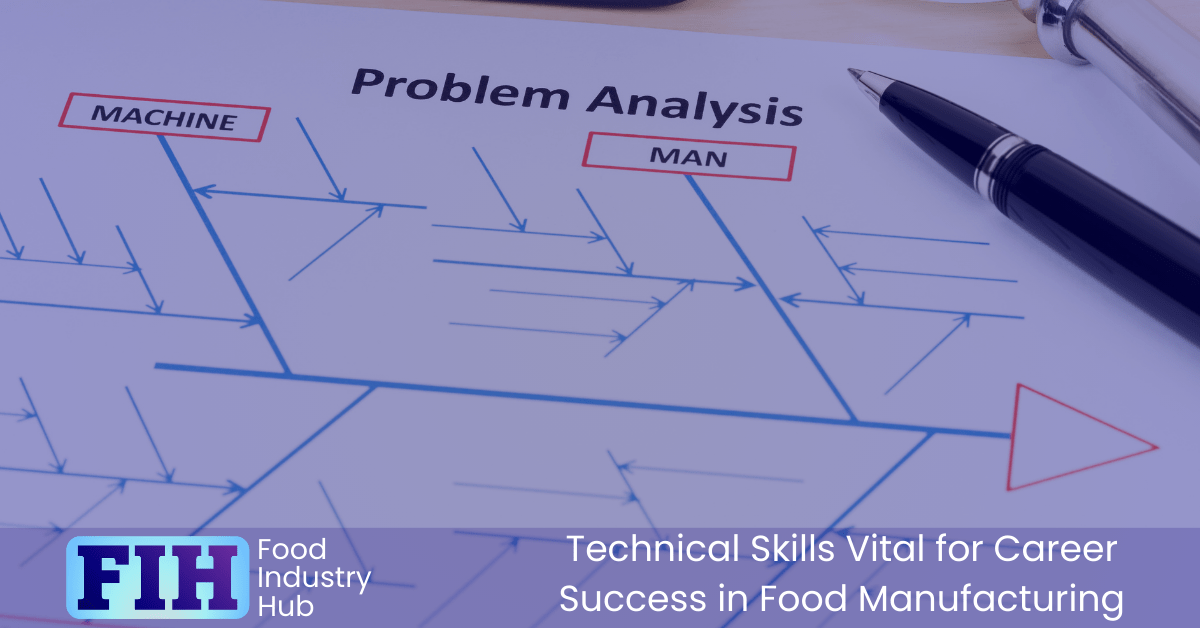
Analysing root causes through fault resolution and root cause analysis is pivotal in targeting preventative actions to enhance the quality management system in food manufacturing. By delving deep into the underlying reasons for issues within the production process, you can identify the core factors leading to defects or deviations from standards. This methodical approach allows you to not only address the immediate problems but also implement sustainable solutions to prevent their recurrence.

Root cause analysis involves systematically investigating each layer of a problem to determine the fundamental reasons behind it. Through this process, you can uncover hidden weaknesses in the quality management system that may have gone unnoticed. By understanding the root causes, you gain insights that enable you to develop proactive measures to mitigate risks and enhance overall operational efficiency.

Employing fault resolution techniques and root cause analysis empowers you to make informed decisions based on data-driven conclusions. This structured methodology equips you with the tools to implement targeted preventative actions, ensuring continuous improvement and adherence to quality standards.

Verifying The Effectiveness of Actions Taken

To ensure the efficacy of the actions taken in response to identified root causes, thorough verification processes are essential in fault resolution and root cause analysis.

Once measures have been implemented to address the identified issues, it’s you need to verify their effectiveness. By verifying the effectiveness of the actions taken, you can validate that the root causes have been adequately addressed, and the issue has been resolved.

Root cause analysis isn’t a one-time task; it requires continuous monitoring and verification to confirm that the implemented solutions are sustainable and don’t cause any unintended consequences.

By systematically verifying the effectiveness of the actions taken, you can ensure that the identified problems are permanently resolved, and the production processes in the food manufacturing process run smoothly and efficiently.
Root Cause Analysis

Good Manufacturing Practices (GMPs) and Hazard Awareness

You need to understand how prerequisite programmes from the HACCP plan are implemented in the production facility.

Keeping abreast of best practices and industry standards is crucial for success in food manufacturing.

Actively spotting potential hazards and being vigilant in hazard recognition are vital skills for ensuring product safety and quality.

Understanding How Prerequisite Programmes from The HACCP Plan Are Applied in The Factory

Effective implementation of prerequisite programs such as allergen control and cleaning programmes is crucial for ensuring the success of the HACCP plan – and should be well represented in ongoing operations.

Good Manufacturing Practices ensure products are consistently produced and controlled according to industry best practices. This includes maintaining a clean and hygienic production area, proper equipment maintenance, and training employees on safe food handling practices.

Hazard awareness involves identifying potential risks in the manufacturing process that could lead to contamination or foodborne illnesses. This includes recognising physical, chemical, allergenic, and biological hazards, and implementing measures to control or eliminate these risks.

Maintaining an Awareness of Best Practice and Industry Standards

Maintaining an awareness of best practice and industry standards, particularly regarding Good Manufacturing Practices (GMPs) and hazard awareness, is essential for ensuring the quality and safety of food manufacturing processes. Adhering to GMPs involves following established guidelines to guarantee that products are consistently produced and controlled according to quality standards.

By being well-versed in GMP requirements, you can ensure that processes are conducted in a manner that minimises risks and maintains the integrity of the final product.

Having a strong understanding of hazard awareness is crucial in food manufacturing. Hazards can arise from various sources such as biological, chemical, allergenic, or physical factors that can compromise the safety of the food supply.

Being vigilant about potential hazards and staying up to date with industry standards enables you to implement preventive measures effectively and uphold a safe working environment.

Proactively Identifying Hazards

GMPs provide a framework for maintaining cleanliness, proper sanitation, and appropriate handling of food products to prevent contamination and hazards. By strictly following GMP guidelines, you can minimise risks associated with foodborne illnesses, spoilage, and product recalls, thus safeguarding consumer health and upholding the reputation of the company.

Hazard awareness involves recognising potential sources of contamination or danger in the production environment. This includes identifying physical hazards like foreign objects in food, chemical hazards from cleaning agents, and biological hazards such as bacteria. Regular training on hazard identification and control measures is essential to empower employees to actively spot and address risks before they escalate.

Practicing Awareness and Knowing What to Look For

By practicing awareness, you can actively participate in maintaining a safe and efficient production environment. Understanding the principles of GMPs, such as proper sanitation procedures, equipment maintenance, and employee training, is crucial for upholding product quality and safety.

Knowing what to look for in terms of hazard identification is fundamental in preventing contamination and ensuring consumer protection. By being vigilant and proactive in hazard identification, you can mitigate potential threats to food safety and uphold regulatory compliance.

Continuously honing your hazard awareness skills through training and hands-on experience will contribute to a successful career in food manufacturing.

Good Manufacturing Practices

Understanding of Pest Control and Signs of Pest Activity

To excel in the food manufacturing industry, you must understand the importance of pest control and be able to recognise signs of pest activity swiftly.

Your ability to communicate effectively with pest control technicians, identify potential pest issues, and implement recommended solutions will play a crucial role in maintaining a hygienic production environment.

Being Able to Interact Effectively with Pest Control Technicians

With a thorough grasp of pest control principles and the ability to recognise signs of pest activity, you can effectively engage with pest control technicians. Understanding the importance of pest control in food manufacturing is crucial for maintaining high-quality standards and ensuring the safety of food produced.

By being able to communicate effectively with pest control technicians, you can effectively convey detailed information about potential pest issues, recent pest activity, and any specific concerns related to the production environment.

Engaging with pest control technicians requires a collaborative approach. You should be prepared to discuss any signs of pest activity that you have observed, such as droppings, gnaw marks, or unusual odours. Providing detailed information can help pest control technicians tailor their approach to address the specific pest challenges your facility may be facing.

Your interactions with pest control technicians should be proactive. By scheduling regular inspections and promptly addressing any pest-related issues, you contribute to a proactive pest management approach that can prevent infestations and safeguard the integrity of your food manufacturing processes.

Spotting The Signs of Pest Activity

Recognising the signs of pest activity is crucial for maintaining a pest-free environment in food manufacturing facilities. By being vigilant and observant, you can help prevent infestations that could compromise the safety and quality of the products being produced.

One of the key indicators of pest activity is the presence of droppings or urine, which may be found near food storage areas, on work surfaces, or along walls. Additionally, gnaw marks on packaging, walls, or wiring suggest rodent activity.

Smears or grease marks along walls or floors can indicate the movement of pests such as rats. Unusual odours, particularly musty or urine-like smells, could also signal the presence of pests.

Keep an eye out for nests or burrows in secluded areas, as these are signs of active pest populations. Regular monitoring and training staff to recognise these signs are essential components of a comprehensive pest management program in food manufacturing facilities.

Facilitating and Cooperating with Pest Control Activities

By being able to recognise the early indicators of pest presence, such as droppings, gnaw marks, unusual odours, or sightings of live pests, you can play a proactive role in preventing infestations and maintaining a safe production environment.

Significantly, prompt identification of pest activity allows for timely intervention, reducing the risk of contamination of the manufacturing environment and products.

In food manufacturing, pest control is a collaborative effort that requires effective communication and coordination between employees and pest control professionals. By understanding the signs of pest activity, you can provide valuable information to pest control contractors, enabling them to develop targeted strategies for eradication.

Your vigilance in spotting pest activity can help in implementing preventive measures to deter future infestations, safeguarding the quality and safety of food products.

Coordinating Actions Recommended by Pest Control Contractors

A thorough grasp of pest control methods and the ability to identify signs of pest activity are paramount when coordinating actions advised by pest control contractors. In food facilities, pest control is a critical component of the safety and quality system.

Understanding common pests like rodents, insects, and birds – as well as recognising signs of their presence such as droppings, gnaw marks, and nests – is crucial for effective pest management.

When pest control contractors recommend specific actions to address infestations or prevent future pest problems, it’s essential to act swiftly and decisively. Coordinating tasks such as sealing entry points, implementing sanitation measures, and deploying traps or baits requires attention to detail and adherence to industry regulations.

Understanding of Pest Control

Process Control Skills and Problem-Solving for Food Safety and Quality

You should understand the distinction between QCPs and CCPs to effectively manage food safety and quality.

By linking product variations to specific manufacturing processes, you can pinpoint areas for improvement.

Enhancing control points to minimise variations or address potential risks will help you develop innovative solutions for process optimisation.

Understanding The Difference Between QCPs And CCPs

Quality Control Points (QCPs) are specific checkpoints in the production process where quality parameters are monitored but don’t directly affect food safety. These points are crucial for ensuring consistency and meeting quality standards.

Critical Control Points (CCPs) are steps in the process where control can be applied to prevent, eliminate, or reduce food safety hazards to acceptable levels. CCPs are essential for ensuring that the final product is safe for consumption, and the HACCP team is responsible for determining CCPs.

Proper training and adherence to established protocols are essential to effectively manage QCPs and CCPs in food manufacturing processes.

Associating Product Variation with Manufacturing Processes

When analysing manufacturing processes, you have to effectively associate product variation with specific stages of production to ensure food safety and quality parameters are understood and appropriately controlled.

Understanding how variations in raw materials, equipment performance, or environmental factors can impact the final product is essential for maintaining consistency and meeting quality requirements.

By identifying potential sources of variation and linking them to specific manufacturing steps, you can proactively implement control measures to mitigate risks and ensure product quality.

Process control skills play a significant role in this – enabling you to monitor production parameters, detect deviations, and make real-time adjustments to maintain product integrity.

Problem-solving abilities are also vital for addressing unexpected variations promptly and effectively, minimising the impact on product quality.

Improving Control Points to Reduce Variation or Mitigate Risks

Enhancing control points within food manufacturing processes is crucial for reducing variation and mitigating risks associated with product quality and safety. By improving process control skills and problem-solving techniques, you can ensure that your products meet the highest standards of safety and quality.

One way to enhance control points is by implementing robust monitoring systems that allow for real-time data collection and analysis. This enables you to detect any deviations from set parameters promptly and take corrective actions before they escalate into larger issues.

Conducting regular audits and inspections can also help identify potential weak points in the process that may lead to variation or pose risks to product quality.

Investing in your process control and problem-solving skills can enable you to address issues effectively and proactively. By developing the necessary skills and knowledge, you can ensure consistent product quality and safety standards are maintained.

Creative Problem-Solving for Process Improvement

In the food industry, unexpected challenges can arise that may impact product quality or safety. Being able to think outside the box and come up with innovative solutions is key to ensuring that manufacturing processes run smoothly and meet the necessary standards.

Creative problem-solving involves analysing complex situations, identifying root causes of issues, and developing effective strategies to improve processes. This skill is particularly important in maintaining food safety and quality standards, as it allows for quick and effective responses to any deviations from the norm.

Whether it’s troubleshooting equipment malfunctions, implementing new quality control measures, or finding ways to optimise production efficiency without compromising safety, creative problem-solving skills are invaluable in the food manufacturing industry. By proactively addressing challenges and continuously seeking opportunities for improvement, you can contribute to a successful and thriving manufacturing operation.

Process Control Skills

In Summary

Possessing strong technical skills is crucial for success in the food manufacturing industry. From understanding industry standards and regulations to effectively managing quality control and critical control points, these skills are essential for ensuring product safety and quality.

By honing your skills in areas such as HACCP principles, record-keeping, fault resolution, and GMP implementation, you can pave the way for a successful and rewarding career in food manufacturing.

Possessing strong technical skills is crucial for success

Further Resources

Food Industry Hub serves the food industry with a range of digital resources for the benefit of both commercial food manufacturers and food industry professionals.

For food manufacturers, we offer integrated management systems that give every user a direct interface with your QMS.

For food industry professionals, we provide an extensive signposting service in addition to informational content we hope you’ll find useful as you face new professional challenges. We have very ambitious plans to expand the range of services offered, and currently present informational content on management, safety and quality, food safety and quality culture, and professional success.


How to Ask Someone to Mentor You and Make the Relationship Useful

How to Ask Someone to Mentor You and Make the Relationship Useful

You can admire someone's professional judgement without knowing how to ask for their help. An invitation to “be my mentor” leaves a great deal unspecified: what you want to learn, why you have approached this person and how much time you are asking them to give. A...

How to Learn From an Unsuccessful Interview Without Guessing Why

How to Learn From an Unsuccessful Interview Without Guessing Why

An unsuccessful interview gives you an outcome, but rarely a complete explanation. You may remember an answer that felt weak, receive a brief rejection message and conclude that the answer cost you the role. That explanation might be right. It could also be unrelated...

Do You Need Another Qualification for Your Next Career Step?

Do You Need Another Qualification for Your Next Career Step?

Further study can feel like the obvious answer when the next career step is uncertain. A qualification offers a defined syllabus, a period of focused learning and a result you can put on an application. Those are real benefits. Yet the development you need may be less...

What Your Handover Needs to Make Clear When You Leave a Role

What Your Handover Needs to Make Clear When You Leave a Role

Giving notice establishes that a professional is leaving. It does not tell colleagues which work is finished, where the latest evidence sits or who will make the next decision. Those gaps often become visible only after the person who knew the work has gone. Leaving a...

In a New Role, Learn the Work Before You Change It

In a New Role, Learn the Work Before You Change It

A new role brings permission to see familiar work with fresh eyes. It also places you inside a set of decisions, dependencies and past attempts that the job description cannot fully explain. Experience from another organisation or a degree course can be valuable here,...

When Everything Is Urgent, Make the Trade-Off Visible

When Everything Is Urgent, Make the Trade-Off Visible

Three people need your work today. Each has a credible reason, and moving one task may affect someone else's ability to act. A neat list of priorities can still leave the hardest part unresolved: the work will not all fit into the time available. Professional...

Take Initiative Without Exceeding Your Authority

Take Initiative Without Exceeding Your Authority

Something needs doing, and you can see the next step. Yet the decision that would authorise that step belongs to someone else. This is common in professional work: a person may be expected to recognise a problem, develop a response and keep colleagues informed without...

Working With a Manager Who Communicates Poorly

Working With a Manager Who Communicates Poorly

A short message from your manager can be enough when you already understand the work, its priority and the decisions you are authorised to make. It becomes harder to work independently when those conditions are unclear. You may be told to move quickly without knowing...

What to Expect From Your Manager, and What They Can Expect From You

What to Expect From Your Manager, and What They Can Expect From You

The working relationship with a manager can shape how much useful work a professional is able to do. It affects which priorities are clear, how decisions are made, when problems become visible and whether feedback leads to improvement. Yet people often enter the...

Building Credible Experience Before Your First Full-Time Role

Building Credible Experience Before Your First Full-Time Role

A student or graduate can encounter a frustrating gap in a job advert: the role is described as an entry point, yet the employer asks for experience that seems to require already having a job. You cannot create a history of industry responsibility you have not held....

Broaden Your Experience Without Losing Professional Depth

Broaden Your Experience Without Losing Professional Depth

Once you have become dependable in a specialist role, broader experience can look like the obvious next step. You want to understand more of the business, contribute to larger decisions or prepare for work that reaches beyond your current responsibilities. Yet the...

Asking for a Pay Rise: Make the Request, Understand the Decision

Asking for a Pay Rise: Make the Request, Understand the Decision

You may have good reasons to believe your contribution has grown and still find it difficult to ask for a pay rise. A record of strong work does not necessarily tell your manager what change you want, and a vague discussion of being valued may end without either...

Asking for a Promotion When Your Role Has Grown

Asking for a Promotion When Your Role Has Grown

You may be doing work that reaches beyond your current job description and still have no clear route to the next role. Perhaps colleagues now rely on your judgement, or you coordinate work that once sat with someone more senior. That is a reasonable point to raise...

Professional Judgement When the Evidence Is Incomplete

Professional Judgement When the Evidence Is Incomplete

In food manufacturing, a professional decision often has to be made before every relevant fact is known. A trial may produce mixed observations. An equipment problem may have several plausible causes. A colleague may need a recommendation while the evidence is still...

Learning How Other Functions Make Decisions

Learning How Other Functions Make Decisions

Watching another function work can reveal a great deal of activity while leaving its decisions difficult to understand. You may see someone check information, contact a supplier or revise a plan without knowing what they are trying to establish, which constraints they...

From Specialist to Manager: Where Your Expertise Matters Most

From Specialist to Manager: Where Your Expertise Matters Most

A strong specialist can finish a difficult day having solved the most urgent technical problems and still find that the team is waiting for them on almost everything else. That is a recognisable difficulty in a first management role. The expertise that earned...

The Capabilities Worth Building in Your First Professional Year

The Capabilities Worth Building in Your First Professional Year

Your first professional year can be full of work and still leave you uncertain about what you are becoming able to do. You learn the immediate tasks, meet deadlines and gradually need less help. That matters. Yet a year of competent task completion may leave important...

Turn Career Ambition Into Development Your Manager Can Support

Turn Career Ambition Into Development Your Manager Can Support

Strong performance tells a manager that you are doing valuable work in your current role. It does not tell them where you want your career to go. You might want deeper specialist expertise, broader coordination, responsibility for people, a move into another function...

Building a Professional Network That Keeps You Learning

Building a Professional Network That Keeps You Learning

Having someone's contact details gives you a way to reach them. It tells you little about whether you understand each other's work, can exchange useful perspective or have enough familiarity to discuss a difficult professional decision. Those qualities develop...

Adapting Technical Detail Without Changing the Meaning

Adapting Technical Detail Without Changing the Meaning

A shorter technical update can leave a reader with a stronger conclusion than the evidence supports. Removing an explanation of the method may make the message easier to follow. Removing the conditions under which a result was obtained can make a limited finding sound...

Professional Communication: Giving People What They Need to Decide

Professional Communication: Giving People What They Need to Decide

Accurate information can still leave a colleague unsure what to do. A technical explanation may describe a problem thoroughly without making clear whether the recipient needs to investigate it, approve a resource, change a plan or pass the concern to someone with...

Making Limited Experience Count in a First Professional Interview

Making Limited Experience Count in a First Professional Interview

A first professional interview can feel as though it demands examples from a job you have not yet had. It usually gives you a different task: explain what you have done, what your part in it was, how you thought and acted, and why this role is a sensible next step. A...

Your Next Development Step Depends on the Work You Want to Do

Your Next Development Step Depends on the Work You Want to Do

A course can be a valuable part of professional development. It gives you a defined subject to study, a date to complete it and often a credential you can show. Those visible steps make it tempting to build a development plan by collecting courses. The harder task is...

Career Plateau or Deeper Mastery: How to Judge Your Progress

Career Plateau or Deeper Mastery: How to Judge Your Progress

An unchanged job title tells you little about how your capability has developed. You may be handling more difficult work, making better judgements and becoming useful to a wider range of colleagues while remaining in the same position. Equally, a busy role can occupy...

Mentor, Sponsor, Peer or Manager: Choosing the Right Career Support

Mentor, Sponsor, Peer or Manager: Choosing the Right Career Support

An experienced colleague can help you think through a career choice without being able to offer the work experience you need. A manager may arrange a useful development opportunity while having limited perspective on careers outside the organisation. Both can be...

Food Manufacturing Career Paths: The Work Behind the Function Names

Food Manufacturing Career Paths: The Work Behind the Function Names

A food-manufacturing vacancy can look like a choice between labels: Quality, Technical, Product Development, Operations, Engineering or Supply Chain. The name is a starting point, but it does not tell you what you would spend your days doing. Two employers may place...

Rebuilding Professional Credibility After a Mistake

Rebuilding Professional Credibility After a Mistake

A professional mistake can change more than the work immediately affected. A colleague who acted on an incorrect figure may start checking your analysis more closely. A manager who had to rescue a missed commitment may hesitate before allocating another important...

Systems Thinking at Work: Developing Judgement Beyond Your Own Task

Systems Thinking at Work: Developing Judgement Beyond Your Own Task

A decision can make your own work easier while making somebody else's work harder. Batching requests may protect concentration, yet leave a colleague waiting for information needed before a commitment. Completing a technical update may close your task, while the...

Making the Organisational Impact of Your Work Visible

Making the Organisational Impact of Your Work Visible

A piece of professional work can be important even when its most visible result belongs to someone else. A specialist prepares evidence that helps a manager choose a sound course of action. A planner makes a dependency clear before another team commits to a schedule....

When Completed Work Hides a Capacity Problem

When Completed Work Hides a Capacity Problem

A full diary is easy to see. A workload that only fits because someone stays late, skips a check or keeps postponing another commitment is less visible. The difference matters to a professional trying to do reliable work: apparent completion can prevent the...

When to Escalate Beyond Your Manager and Where to Take the Issue

When to Escalate Beyond Your Manager and Where to Take the Issue

Raising a concern with your manager does not always resolve it. The manager may understand the problem but lack the authority to decide, the resources to act or the reach to coordinate another part of the organisation. You may still be responsible for work affected by...

When to Challenge Your Manager and How to Make It Count

When to Challenge Your Manager and How to Make It Count

Disagreeing with a manager can be uncomfortable even when the concern is well founded. You may know something important about the work while the manager holds the wider decision. Staying silent can leave that information out of the judgement. Raising it as a contest...

How to Judge a First Professional Job Beyond the Offer Letter

How to Judge a First Professional Job Beyond the Offer Letter

Your first professional job can shape what you learn, who sees your work and what choices become available next. Yet an offer letter gives only a partial view of the experience ahead. A promising title may cover narrow tasks; an attractive salary may sit beside...

A Credible First CV When Experience Is Limited

A Credible First CV When Experience Is Limited

Writing a first professional CV can feel awkward when a vacancy describes work you have not yet done full time. Education may be your longest section, and the experience you do have might come from projects, placements, volunteering or part-time jobs. The temptation...

Job Dissatisfaction: A Clearer Basis for Staying or Leaving

Job Dissatisfaction: A Clearer Basis for Staying or Leaving

Dissatisfaction with work can become a single conclusion: you need to leave. Yet the experience behind that conclusion may contain several different problems. You might still enjoy the professional work while disliking the way the role is organised. A difficult...

Will the Work Behind the Promotion Suit You?

Will the Work Behind the Promotion Suit You?

A promotion can look like clear progress from the outside. The title carries more weight, the pay may improve and other people recognise the step. Yet the work filling most days may change in ways that matter more to you than the title suggests. A technical specialist...

When a Lateral Move Is Worth Making

When a Lateral Move Is Worth Making

Once you have established yourself in a role, a sideways move can be difficult to judge. You may be trusted with demanding work, know the organisation well and have a credible case for greater responsibility. An opportunity in another team offers something different,...

Choosing a Stretch Assignment That Builds Your Capability

Choosing a Stretch Assignment That Builds Your Capability

Once you are established in a role, opportunities to develop often arrive as requests to take on something extra. Your manager may ask you to cover a wider remit, contribute to a project or coordinate work involving another department. For a specialist who wants...

Growing Your Specialist Career Without Becoming a Line Manager

Growing Your Specialist Career Without Becoming a Line Manager

Wanting to remain a specialist can sit comfortably alongside an ambition for greater responsibility. You may enjoy difficult technical work, want more influence over decisions and expect your contribution to develop, while having little interest in making the...

Should You Move into Management? Compare the Work First

Should You Move into Management? Compare the Work First

A specialist who is trusted with difficult work may be encouraged to apply for management. The invitation can recognise real achievement, yet the new role may ask them to contribute in a different way. It is possible to be ready for more responsibility and still...

Your Contribution Has Grown: Preparing a Pay or Recognition Case

Your Contribution Has Grown: Preparing a Pay or Recognition Case

Your role can change gradually while your pay, title or recognised scope stays the same. Colleagues begin relying on you for more difficult decisions. You take responsibility for work that previously needed close supervision, or help several teams achieve something...

What Shows You Are Ready for Promotion

What Shows You Are Ready for Promotion

Doing your current job exceptionally well gives an employer a good reason to value your contribution. It does not, by itself, show how you would perform in a role with different decisions, wider dependencies or responsibility for other people's work. That gap can...

Learn the Work Around Your Job Before Choosing a Specialism

Learn the Work Around Your Job Before Choosing a Specialism

Your first professional role gives you a close view of one part of a food business. It may also shape what you imagine a successful career in the sector looks like. That view is valuable, but it is incomplete. The work on your desk often began with someone else's...

Graduate Scheme or Direct-Entry Role: Which Will Help You Develop?

Graduate Scheme or Direct-Entry Role: Which Will Help You Develop?

Choosing how to enter professional work can feel like choosing the shape of your whole career. A graduate scheme may offer rotations through several departments, organised training and a group of people starting together. A direct-entry role places you in a particular...

The Job Behind the Advert: What to Ask at Interview

The Job Behind the Advert: What to Ask at Interview

An interview is often treated as your chance to convince an employer that you want the job. It is also one of your few chances, before an offer, to discover what the job would actually ask of you. For someone entering a profession, the difference between an appealing...

Prepare for the Work Behind the Interview

Prepare for the Work Behind the Interview

An interview for an unfamiliar food-manufacturing function can feel like a test of how much you know about the company. Its products, customers and public information are useful context. Yet the vacancy is also an invitation to discuss work you may never have done in...

A Cover Letter Should Explain the Fit, Not Repeat the CV

A Cover Letter Should Explain the Fit, Not Repeat the CV

A CV can tell an employer what you studied and what you have done. A cover letter earns its place when it explains why selected parts of that record matter for this particular role. If it simply turns the CV into paragraphs, the reader gets more words without a...

Read a Job Advert for the Work Behind the Title

Read a Job Advert for the Work Behind the Title

A graduate can recognise the name of a role and still have little idea what the job involves. The advert may contain a long list of duties and requirements, but its lines do not all tell you the same thing. Some describe the work. Others describe evidence the employer...

Choosing Your First Role: What the Job Title Leaves Out

Choosing Your First Role: What the Job Title Leaves Out

Your first professional job can feel as though it will define the rest of your career. A title that sounds senior or specialised may therefore carry a strong appeal, especially when you are trying to show that your studies and early experience have led somewhere. Yet...

Your First Career Move Is a Direction, Not a Lifetime Decision

Your First Career Move Is a Direction, Not a Lifetime Decision

The first job after graduation can feel as though it will define every job that follows. Yet a graduate making that choice may know little about what a role feels like from day to day, how they will develop within it and which parts of the work will suit them. That...

Professional Consistency When Your Work Keeps Changing

Professional Consistency When Your Work Keeps Changing

Professional consistency becomes more demanding when the work changes. A familiar routine may no longer give colleagues what they need, while a different response may look inconsistent to someone who does not know why you changed it. The challenge is to remain...

Adaptability at Work Without Lowering Your Standards

Adaptability at Work Without Lowering Your Standards

A working method can outlive the circumstances that made it useful. The conversation that once kept a project moving becomes difficult to arrange when colleagues work different hours. A detailed personal routine becomes awkward after a change of role. A way of...

Your Career May Have Changed More Than Your Job Title

Your Career May Have Changed More Than Your Job Title

The job title on a professional's profile may be unchanged for several years while the work beneath it becomes more demanding. They may now handle difficult investigations, make better recommendations or understand how their decisions affect other functions....

When a Project Fails, What Was Yours to Own?

When a Project Fails, What Was Yours to Own?

An unsuccessful project can produce a very simple story. You may decide that the result proves you handled the work badly, or that the obstacles were entirely outside your control. Either account can feel convincing soon after a disappointment. Neither necessarily...

Becoming Your Former Peers’ Manager Changes the Relationship

Becoming Your Former Peers’ Manager Changes the Relationship

Yesterday you could work through a change of priorities with a colleague as an equal. After a promotion, the same colleague may bring you the same problem, but you are now responsible for deciding or taking it to the person who can. The conversation can remain...

When Every Difficult Decision Comes Back to the Manager

When Every Difficult Decision Comes Back to the Manager

A newly promoted manager is asked to settle a question that a capable specialist could probably answer. The manager knows the work well and gives a quick response. The next day, a similar question arrives. Soon, colleagues wait for the manager's view before taking...

What Your Decisions Depend on Beyond Your Own Task

What Your Decisions Depend on Beyond Your Own Task

A decision that looks sensible within your own task can depend on a condition you have not checked elsewhere. A proposed completion date may assume that another team can supply an input earlier. A quicker handover may leave the recipient with more clarification to do....

Turning Everyday Work Into Professional Development

Turning Everyday Work Into Professional Development

Doing a task many times can make it feel familiar without making your judgement better. The same handover can run smoothly because the conditions were forgiving, while a persistent weakness in how you explain a decision goes unnoticed. Experience gives you material to...

Ask for Help While There Is Still Time to Use It Well

Ask for Help While There Is Still Time to Use It Well

Waiting to ask for help can feel responsible. You want to make a proper attempt, avoid interrupting someone else and show that you can handle your work. Yet a request made after the decision has been taken or the deadline has passed offers fewer ways to improve the...

When the Evidence for Your Work Is Stronger Than Your Confidence

When the Evidence for Your Work Is Stronger Than Your Confidence

You may have prepared an assessment carefully and still feel hesitant before explaining it to more senior colleagues. The unfamiliar room, the importance of the decision or the possibility of challenge can make uncertainty feel like evidence that you are not ready....

Getting a Decision When Colleagues Cannot Agree

Getting a Decision When Colleagues Cannot Agree

A disagreement can remain unresolved even when the people involved understand each other. Two teams may accept the same information and still prefer different uses of a limited budget, different priorities for specialist time or different balances between immediate...

When Another Function Cannot Meet Your Request

When Another Function Cannot Meet Your Request

A request can feel straightforward from the team making it and difficult from the team receiving it. You need an investigation, a change to equipment, information for a decision or help meeting a deadline. When the response is slow or qualified, it is tempting to...

What Colleagues Need From a Cross-Functional Handoff

What Colleagues Need From a Cross-Functional Handoff

A colleague says a piece of work has been handed over. The file has arrived and the meeting has ended, but the receiving team still cannot plan its next step. They do not know which information is final, what remains under review or when they can expect an answer....

Build Credibility With the People Who Use Your Work

Build Credibility With the People Who Use Your Work

Your manager and a colleague in another function can have different, well-founded views of the same piece of work. The manager may see that you delivered an agreed analysis on time. The colleague may discover whether the analysis contains what they need to make their...

Why Small Commitments Matter to Your Professional Reputation

Why Small Commitments Matter to Your Professional Reputation

A small promise can become a working assumption in someone else's day. If you agree to check a figure before a colleague prepares a briefing, they may set aside time to use your answer. They may leave that part of the briefing unfinished, confident that the...

When Technical Expertise Does Not Influence a Decision

When Technical Expertise Does Not Influence a Decision

A specialist can give a technically sound recommendation and still find that the decision goes another way. Sometimes the evidence is disputed or another constraint carries more weight. Sometimes the decision holder cannot see how the specialist reached the...

Make the Case for Your Proposal to Other Teams

Make the Case for Your Proposal to Other Teams

A proposal can make complete sense within your own work and still leave a colleague unsure whether to support it. You may need information earlier, access to specialist time or a change in the way another team handles a request. The need is clear to you because you...

A Cleared Task List Can Hide the Work That Matters

A Cleared Task List Can Hide the Work That Matters

At the end of a busy day, a list of completed tasks offers reassuring evidence that time was used well. Emails were answered, small requests closed and several names crossed off a tracker. Yet a recommendation that another team needs may still be unprepared, or a...

Professional Boundaries When You Cannot Promise the Outcome

Professional Boundaries When You Cannot Promise the Outcome

Being asked to take responsibility can be an opportunity to show that you are ready for more demanding work. It can also leave you carrying a promise that depends on decisions you cannot make. If you coordinate projects, contribute specialist advice or work across...

Make Responsibility Clear When You Hand Work Over

Make Responsibility Clear When You Hand Work Over

Finishing your part of a task can leave somebody else with work to do. You may have prepared information for a decision, completed an action that needs checking or brought an issue to the point where another function can take it forward. A message saying that your...

When Changing Your Decision Shows Better Judgement

When Changing Your Decision Shows Better Judgement

Suppose a product-development team recommends moving a proposed change to the next stage, subject to a production-equipment trial. The plan assumes that the process can achieve the required result at the intended scale. The trial does not demonstrate that capability...

When More Information Stops Improving a Decision

When More Information Stops Improving a Decision

An additional report can feel like progress when a decision is uncomfortable. Sometimes it is progress: one missing fact may change the recommended course. At other times, the next report adds detail while the available choices, their likely consequences and the...

Build Cross-Functional Relationships Before the Work Becomes Urgent

Build Cross-Functional Relationships Before the Work Becomes Urgent

An urgent request to another function can involve more than the immediate task. You may also be finding out who handles it, what information they need and why the date that matters to you is difficult for them. If those details are unfamiliar, the first conversation...

Organisational Awareness Without Playing Office Politics

Organisational Awareness Without Playing Office Politics

Knowing how an organisation works can feel uncomfortably close to playing politics. You learn who needs to be involved, whose timetable can change a proposal and where a decision is likely to meet resistance. That knowledge can help you do better work. It can also be...

When Work Priorities Conflict, Make the Trade-Off Visible

When Work Priorities Conflict, Make the Trade-Off Visible

Two requests can each be reasonable and still be impossible to complete together. A professional may be asked for a review needed by one team while another project needs their input in the same working period. Agreeing to both without changing anything can turn a...

What Your Manager Needs When You Escalate a Problem

What Your Manager Needs When You Escalate a Problem

Raising a problem with your manager can lead to a conversation you weren't prepared for. You explain what has gone wrong, and the manager asks what you have checked, what could be done and which commitment would be affected. Those questions may expose missing...

What a Job Description Leaves Out About the Role

What a Job Description Leaves Out About the Role

A job description can tell you that a role leads improvement, manages a technical system or coordinates work across functions. It may say much less about how the person obtains information, secures time from colleagues or gets a decision made when priorities compete....

Before Accepting a Role, Find Out What Success Will Mean

Before Accepting a Role, Find Out What Success Will Mean

A job description can make a role sound attractive while leaving the most consequential expectation unclear: what will the person taking the job be expected to achieve? “Lead improvement” or “support operational performance” may describe the territory, yet neither...

The Career Value You Can Carry Into an Internal Move

The Career Value You Can Carry Into an Internal Move

Wanting different work does not always mean wanting a different employer. You may still value the organisation's purpose, know colleagues you respect and understand how useful work gets done, while feeling that your current role offers too little room to develop....

Staying Dependable at Work When Motivation Is Low

Staying Dependable at Work When Motivation Is Low

The first months of a role or project can make effort feel easy to explain. There is something new to learn, an immediate problem to solve or a visible result to reach. Later, the work may become repetitive, priorities may shift, or a hoped-for move may not happen....

How External Peers Can Broaden Your Professional Judgement

How External Peers Can Broaden Your Professional Judgement

The longer you work in one organisation, the more familiar its arrangements become. You learn who makes which decisions, what information people expect and how work moves between teams. That knowledge makes you effective locally. It can also make some choices appear...

Team Achievements in Interviews: Make Your Contribution Clear

Team Achievements in Interviews: Make Your Contribution Clear

“We delivered the project” is a truthful answer to who completed it, but it leaves an interviewer with little sense of what you did. “I delivered the project” may create the opposite problem when several colleagues made essential decisions and carried out the work....

Showing How Your Experience Fits a Different Role

Showing How Your Experience Fits a Different Role

A vacancy can describe work you have never performed under that particular name, even though some of its underlying demands are familiar. You may have coordinated information across departments, helped resolve conflicting priorities or made incomplete evidence usable...

A Job Application Needs More Than the Vacancy’s Own Words

A Job Application Needs More Than the Vacancy’s Own Words

A job application can sound closely aligned with a vacancy and still reveal very little about the applicant. It may say that the person is collaborative, commercially aware and confident with change because those phrases appear in the description. The reader is then...

Make Your Experience Understood When You Change Function

Make Your Experience Understood When You Change Function

Experience can be substantial and still be difficult for someone in another function to assess. Your colleagues may understand what managing a corrective-action programme, planning production or supporting a product launch involved. A manager considering you for...

Changing Function Mid-Career Without Starting From Scratch

Changing Function Mid-Career Without Starting From Scratch

Consider an experienced Quality specialist moving into Product Development. She understands how a manufacturing site assesses risk, how decisions travel between functions and why a product change needs careful review. She has yet to learn how this team develops a...

How Long Should You Stay While Waiting for a Role to Improve?

How Long Should You Stay While Waiting for a Role to Improve?

“It should get better soon” can be reassuring when a role has become frustrating. A new manager may be settling in, a vacancy may be due to fill, or a broader remit may have been discussed. Some changes do take time. Yet a general expectation of improvement can keep a...

When Your Definition of Career Success Changes

When Your Definition of Career Success Changes

A promotion you once wanted can become less appealing after you have done the work it involves. You may still value the experience, the people and the opportunities it brought, while finding that your next move calls for something different. Perhaps you now want more...

Making Preventive Work Visible in Career Conversations

Making Preventive Work Visible in Career Conversations

Preventive work can be hardest to explain when things stay quiet. A review is completed, an uncertainty is resolved, or a weakness is addressed before it disrupts a decision. Months later, there may be no dramatic event to point to. That absence does not make the work...

Share Credit Without Making Your Own Work Disappear

Share Credit Without Making Your Own Work Disappear

When a team has delivered something valuable, describing it as “our result” is accurate and generous. It may also leave your own work invisible to someone who was not there. Saying “I delivered it” creates the opposite problem when several people made the outcome...

Make Your Contribution Visible Without Self-Promotion

Make Your Contribution Visible Without Self-Promotion

Some of the most valuable professional work is difficult to see from the outcome alone. A problem that was prevented may leave little visible trace. A useful recommendation may appear in someone else's decision. A team may deliver an improvement after several...

What Kind of Recognition Would Actually Improve Your Role?

What Kind of Recognition Would Actually Improve Your Role?

Feeling undervalued at work can make a pay rise seem like the obvious request. Sometimes it is exactly the right request: the compensation no longer reflects the contribution or responsibility you carry. In other situations, the strongest source of frustration lies in...

Prepare for Promotion Without Acting Beyond Your Role

Prepare for Promotion Without Acting Beyond Your Role

A vacancy is often a poor starting signal for development. By the time a more senior role is advertised, the work it requires may already be familiar to some applicants and largely abstract to others. Yet preparation does not mean taking decisions that belong to a...

A Promotion or a Broader Role: Choosing Your Next Career Move

A Promotion or a Broader Role: Choosing Your Next Career Move

Imagine two credible openings. One is a step up in your present specialism, with a larger team and a more senior title. The other has no promotion attached, but would put you into work that crosses functions and exposes you to decisions you rarely see now. A title...

Choose What Matters Most in Your Next Career Move

Choose What Matters Most in Your Next Career Move

A more senior role might offer greater influence over decisions while leaving less time for the technical work you enjoy. A specialist post could deepen your expertise but offer a narrower say in the wider organisation. Either move could be right, and either could be...

Persistence at Work: When to Keep Going and When to Change Course

Persistence at Work: When to Keep Going and When to Change Course

You have put time into an approach, explained it to colleagues and kept it going through a difficult period. The results are still disappointing. At that point, continuing can feel like the responsible choice: people depend on you, and a change might look like giving...

How to Create Career Development in Your Current Role

How to Create Career Development in Your Current Role

A professional can be doing good work and still feel that their development has stopped. The next formal course may be months away, a promotion may not be available, and a busy manager may have no ready-made plan. It is tempting to treat that absence as a pause in...

What Being Passed Over for Promotion Does and Does Not Tell You

What Being Passed Over for Promotion Does and Does Not Tell You

Being passed over for promotion can be especially difficult when you have done strong work in your current role. You may have prepared carefully, made a credible case and expected a serious opportunity. The decision matters: someone else will take the role, and your...

What Happens to Your Work After You Hand It Over

What Happens to Your Work After You Hand It Over

Finishing an assigned task gives you evidence that you completed your part. It tells you less about what happened when someone else tried to use the result. A report may have been accurate yet difficult to turn into a decision. A carefully prepared update may have...

How to Turn Everyday Work Into Professional Development

How to Turn Everyday Work Into Professional Development

Much of a professional's working life is spent on tasks they already know how to do. Familiar work can still develop judgement, communication and understanding of the wider organisation, but repetition does not guarantee that growth. A person can complete the same...

Assertiveness at Work Without Turning Up the Pressure

Assertiveness at Work Without Turning Up the Pressure

Speaking up to someone more senior can feel like a test of confidence, especially early in a career. A professional may have noticed an evidence gap or reached a limit in what they can responsibly agree, yet worry that a direct statement will sound confrontational....

How to Respond When You Don’t Know the Answer at Work

How to Respond When You Don’t Know the Answer at Work

Someone asks for an answer you cannot yet support. It may be a manager wanting a quick view, a colleague waiting to act or a senior specialist challenging your recommendation. Early in a career, saying “I don't know” can feel like admitting you are not ready for...

Knowing When to Escalate an Unresolved Work Issue

Knowing When to Escalate an Unresolved Work Issue

A difficult work issue can remain unresolved through several perfectly courteous conversations. A colleague understands your concern, you understand their pressures, and neither of you wants to make the relationship more awkward. Yet the work still lacks a decision,...

Before You Call Another Function Obstructive

Before You Call Another Function Obstructive

You have explained what needs to happen, asked another team for help and received an objection. The proposed date is unsuitable, more information is needed, or nobody will commit the necessary time. When your own work depends on that contribution, the response can...

Why Good Professionals Disagree Across Functions

Why Good Professionals Disagree Across Functions

A technical specialist wants an extra check before a change goes ahead. The operations team wants to protect the production plan. Both may understand the work well, and both may have a sound reason for their position. Yet the conversation can quickly become a contest...

Professional Credibility: What Makes Colleagues Rely on You

Professional Credibility: What Makes Colleagues Rely on You

A colleague can recognise your expertise and still hesitate before relying on your recommendation. They may have heard you explain the issue clearly, but they also need to know whether the conclusion rests on sound evidence, whether you will say when something is...

When to Escalate a Cross-Team Issue You Cannot Resolve

When to Escalate a Cross-Team Issue You Cannot Resolve

Cross-functional work often depends on action you cannot direct. A quality specialist may need production time for an investigation; a project contributor may need another team's evidence before a decision can be made. A good relationship and a well-framed request...

How to Gain Cooperation Across Teams Without Line Authority

How to Gain Cooperation Across Teams Without Line Authority

A specialist may be responsible for getting a review completed while another function controls the people and time needed to do it. The request can be technically sound and still fail to move. Repeating the requirement more firmly does not give the other team spare...

When Immediate Requests Crowd Out Important Work

When Immediate Requests Crowd Out Important Work

An inbox can be cleared, colleagues can receive prompt answers and urgent requests can be handled without the work that matters most moving forward. This is a difficult form of drift to notice. The professional looks available and reliable, and each interruption has a...

Accountability Across Teams: What You Can Own

Accountability Across Teams: What You Can Own

A supplier approval needs to move forward. You can examine the evidence, explain what is missing and recommend a decision. A colleague may have to obtain information from the supplier, while a designated approver decides whether the supplier can be used. If someone...

When You’re Responsible for a Result You Cannot Control

When You’re Responsible for a Result You Cannot Control

A professional can be asked to deliver a result while a necessary decision sits with someone else. You may be able to complete the analysis, prepare a recommendation and coordinate the people involved, but you cannot approve a supplier, allocate another team's...

When a Good Decision Has a Disappointing Outcome

When a Good Decision Has a Disappointing Outcome

A disappointing result can make an earlier decision look obviously wrong. Details that were uncertain at the time become clear, and an alternative course can seem as though it was available all along. For the professional who made the decision or advised someone else,...

Map Stakeholders by What They Need From Your Work

Map Stakeholders by What They Need From Your Work

You can know the names of everyone involved in a project and still watch a sound piece of work stall. The person who needs to make a decision receives detail without a clear recommendation. Another function hears about a change after it has planned its work. Someone...

Your Organisation Chart Does Not Show How the Work Gets Decided

Your Organisation Chart Does Not Show How the Work Gets Decided

An organisation chart can tell you who reports to whom. It may not tell you whose evidence a decision needs, who can release the resources for it, or who will have to make the result work. A professional who knows only the formal approver can prepare a sound proposal...

When Your Manager’s Expectations Are Too Vague to Act On

When Your Manager’s Expectations Are Too Vague to Act On

“Take more ownership of this” can sound like a vote of confidence. It can also leave you unsure what result your manager wants, which decisions you may make and what other work should give way. If you wait for a complete set of instructions, you may appear reluctant...

Which Decisions Can You Own Without Asking Your Manager Each Time?

Which Decisions Can You Own Without Asking Your Manager Each Time?

You have done the analysis, know the usual options and understand what happens next, yet the choice still goes to your manager for approval. Sometimes that review protects an important decision. Sometimes the boundary has never been discussed, so work waits for a...

The Reporting Line Can Change What a Role Offers You

The Reporting Line Can Change What a Role Offers You

Two roles can share a job title and still offer markedly different working lives. A quality specialist who reports to a site manager may work closely with daily operational priorities. A specialist with the same title who reports to a central technical manager may...

Check the Authority Behind a Job Offer’s Responsibilities

Check the Authority Behind a Job Offer’s Responsibilities

A job offer or proposed internal move can describe an attractive level of responsibility while saying little about who makes the decisions that would let you fulfil it. You might be expected to improve performance across teams, establish a new approach or be...

How to Show Professional Judgement in an Interview Example

How to Show Professional Judgement in an Interview Example

An interview answer can contain plenty of technical detail and still leave a listener unsure how you work. You may describe a difficult investigation, the data you gathered and a successful result. Yet the interviewer may not know what you had to decide, how you dealt...

Should You Apply When You Do Not Meet Every Job Requirement?

Should You Apply When You Do Not Meet Every Job Requirement?

A job advert can make an otherwise promising move look out of reach. You recognise the work, have solved similar problems and can imagine contributing, but one line asks for an experience or qualification you cannot claim. Treating every line as a pass-or-fail test...

When Staying in Your Role Can Still Move Your Career Forward

When Staying in Your Role Can Still Move Your Career Forward

An unchanged job title can make a career feel motionless. After several years in a role, another move may seem like the only visible sign of progress. Yet a new title is only one kind of change. The work inside a role can become more demanding, influential and...

Keep a Record of Your Work Before You Need to Make a Career Case

Keep a Record of Your Work Before You Need to Make a Career Case

When a promotion or interview conversation arrives, it is tempting to assemble examples from memory. The most useful work may be the hardest to recall. A problem was noticed early and never became a crisis. A decision improved because several people contributed. An...

When Good Work Goes Unnoticed: Make Your Contribution Visible

When Good Work Goes Unnoticed: Make Your Contribution Visible

Excellent work does not always produce a result that carries your name. A problem is spotted before it becomes an incident. A colleague makes a better decision because you supplied the missing evidence. A project succeeds because several functions resolved their part...

Your Pay Rise Request Was Declined: How to Decide What Comes Next

Your Pay Rise Request Was Declined: How to Decide What Comes Next

You have prepared a case for greater pay or recognition, explained how your contribution has changed and received a no. The answer can feel definitive, particularly when the work behind the request was substantial. Yet the refusal alone tells you little about what the...

How to Get Clearer Answers About Your Promotion Readiness

How to Get Clearer Answers About Your Promotion Readiness

You have been doing your job well for some time, and you want to take on more. Perhaps you have become the person colleagues approach when a problem is difficult. You may already be covering parts of a more senior role. Yet when you raise progression, the conversation...

Plan Your Career Around the Work, Not Just the Title

Plan Your Career Around the Work, Not Just the Title

A target job title can make a career plan feel concrete. It is easy to picture the next step as a promotion to manager, head of function or senior specialist. The less visible choice is what the person in that role actually spends their time doing. A title that looks...

Impactful questions to ask your manager in your next 1:1

Impactful questions to ask your manager in your next 1:1

IntroductionYour one-on-one meetings with your manager are more than just a routine check-in—they’re an opportunity to unlock personal growth, enhance team dynamics, and position yourself for career advancement. By asking the right questions, you can gain valuable...

Applying The 7 Cs of Resilience to Your Professional Development

Applying The 7 Cs of Resilience to Your Professional Development

IntroductionIn the food manufacturing industry, resilience is a cornerstone of professional success, given the complexities of quality control, regulatory standards, and supply chain demands. Dr. Kenneth Ginsburg’s 7 Cs of Resilience framework offers valuable...

Growth Mindset for Career Success

Growth Mindset for Career Success

IntroductionIn the competitive world of food manufacturing, it's not enough just to do your job well - you need to constantly evolve and adapt. By adopting a growth mindset, you'll see challenges not as setbacks, but as opportunities for growth and skill development....

Vocational Skills Needed for a Career in Food Manufacturing

Vocational Skills Needed for a Career in Food Manufacturing

IntroductionAre you ready to take your career in food manufacturing to the next level? In today's competitive industry, having the right skills is essential for success. From ensuring food safety and quality control to navigating complex regulations, professionals in...

How to Move Your Career Forward in Food Manufacturing

How to Move Your Career Forward in Food Manufacturing

IntroductionTo progress in the food manufacturing industry, you have to be proactive in seeking growth opportunities, building a strong network, and showcasing your reliability through extra responsibilities. By focusing on continuous improvement and positioning...

How Self-Discipline Can Determine Your Career Success

How Self-Discipline Can Determine Your Career Success

IntroductionIn your professional journey, self-discipline holds the key to unlocking your full potential and paving the way for career triumphs. It forms the bedrock of your success by guiding your actions, fortifying your resolve, and honing your focus in the face of...

Aligning Your Individual Efforts with Organisational Objectives

Aligning Your Individual Efforts with Organisational Objectives

IntroductionDelivering meaningful impact for your business is a fundamental lever for career success. Demonstrating competence and effectiveness in your role will underpin your professional credibility, and is essential for upward movement. You understand the...

Training and Development in The Food Industry

Training and Development in The Food Industry

IntroductionAs a group of professionals, people in the food industry tend to be as passionate about building their professional expertise as they are about the profession itself. Every time opportunities for professional development are made available, people are...

Professional Development for Food Industry Professionals

Professional Development for Food Industry Professionals

Food industry professionals are constantly looking for ways to improve their knowledge and develop their skills. Professional development is an important part of staying ahead in this competitive field, as it can help food industry professionals stay up to date with...

How To Get the Most Out of Your Career in The Food Industry

How To Get the Most Out of Your Career in The Food Industry

A career in the food industry can be a rewarding and exciting experience with potential for substantial earning and progression. To ensure that you get the most out of your career, it is important to set goals, create a strategy and maintain an interest in your chosen...

Career Pitfalls to Avoid In The Food Manufacturing Industry

Career Pitfalls to Avoid In The Food Manufacturing Industry

For professionals in the food manufacturing industry, there are many career opportunities and successes to be had, but avoiding certain pitfalls is key to long-term success. Knowing which mistakes to avoid can help professionals navigate their careers and build a...

Food Industry Hub blog

The Food Industry Hub blog includes practical discussion for food manufacturing professionals across technical, cultural, management and professional themes.

This post is part of the category:

Stay connected with Food Industry Hub

Receive Food Industry Hub updates, resources and practical content for food manufacturing businesses and professionals.

Stay informed about new resources, articles, tools and Food Industry Hub service developments.

Raise the standard for how food gets made.