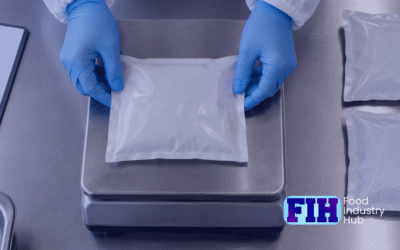
“Operator error caused weak seals” sounds like the start of a root-cause investigation. In fact, it may be the end of one. The words identify a cause before the evidence has established what failed, when it began, which packs were affected or whether the equipment and materials behaved as expected. Once that sentence appears on an action form, interviews and record searches can become an exercise in confirming it.
A stronger investigation starts with the observable problem and lets competing explanations face the evidence. That discipline does not slow the immediate response. Product can be protected and the process corrected while the cause remains open. It does, however, prevent a plausible story from being treated as a technical conclusion simply because it arrived first.
Contain the consequence while the explanation remains open
Suppose, in a hypothetical packaging operation, a check finds several packs with seals that do not meet the site's defined condition. The team first needs to understand potential consequences and affected scope. It may need to hold product, check other packs or runs, adjust the line, and decide what can safely continue. The right response depends on the product, pack function, defect and local evidence; a weak seal is not automatically the same food safety outcome in every setting.
These immediate steps answer a different question from root-cause analysis. They address exposure now. A line adjustment might restore acceptable seals for the next run without explaining why the defect appeared. A product hold can prevent uncertain material moving onward without proving that the held packs are unsafe. Recording that distinction matters. If the case is later described simply as “fixed”, the organisation may lose sight of the unresolved mechanism and the need for durable action.
The depth of investigation should also be proportionate. A significant or recurring defect, uncertain product scope, or failure of an important control calls for more than a routine correction. A minor, well understood isolated issue may not require an elaborate causal study. The decision about depth should be explicit enough that convenience does not masquerade as risk judgement.
Describe the failure without writing a cause into it
The initial statement should say what was observed, against which expected condition, where and when it was found, and what is known about scope. For the hypothetical case, a useful opening might be: “At the scheduled seal check on Line 2, four packs from the current run failed the defined seal-integrity test. The previous recorded check met the criterion. The start time and full affected quantity are not yet established.”
That statement leaves room for investigation. It does not claim that an operator made a mistake, that the sealing equipment drifted or that packaging film caused the failure. It also avoids the opposite weakness of saying only “seal issue”, which strips away the timing, criterion and uncertainty needed to decide what evidence to retrieve.
A good problem definition can change as facts emerge. If retained samples show the same defect in an earlier run, the initial time boundary needs revision. If a different test shows that the first result was unreliable, the case changes again. Updating the statement is not a failure of the investigation. It is the point of preserving a distinction between observation and interpretation.
The framing affects who and what the team examines. “Operator error” directs attention toward training and individual behaviour. An observation-led description keeps equipment condition, material variation, setup, method and detection capability in view until evidence can discriminate among them. It also helps the team ask which control should have prevented the defect and which should have detected it sooner.
Reconstruct the event and its conditions
The investigation needs an account of how the defect could have arisen, not a large folder of unconnected records. Begin with sequence. When was the last credible satisfactory result? What changed before the first adverse result? Which runs, shifts, materials and machine settings were involved? Was the defect confined to one product, one packaging lot, one side of a machine or a particular changeover? Comparisons with unaffected work can be more informative than another general statement that the line “normally runs well”.
Evidence quality matters as much as volume. A measurement taken at the point of work may be more useful than a recollection gathered days later, but it still needs an identifiable method and context. Maintenance history may show a relevant intervention, or it may show routine work unrelated to the failure. An interview can explain how the line was operated; it should not be treated as proof of a mechanism without checking it against records, physical condition and other accounts.
In the seal example, useful material might include retained packs, seal-test results, time-stamped process data, setup records, film-lot information, maintenance work and inspection-method checks. The purpose is to build a timeline and identify a route by which seal quality changed. If key evidence is missing, that limitation belongs in the analysis rather than being filled with a neat narrative.
Test explanations against competing evidence
Several explanations may initially fit. A changed film lot could alter sealing behaviour. A worn or misaligned jaw could create a defect that varies by position. A setup change might leave the line outside a suitable operating range. An inspection method might be missing defects that were present earlier. These are hypotheses, not findings. Each should make predictions that can be checked.
If film variation is the leading explanation, do defects follow the lot across runs or equipment, and do retained materials show a relevant difference? If the machine is implicated, is there a location pattern, a maintenance change or a physical condition consistent with the failure? If setup is suspected, do time-stamped settings and changeover records match the onset? If the inspection method is weak, how reliable is the apparent “last good” result? Evidence that contradicts a preferred explanation is valuable because it prevents premature action.
The team should also ask why existing controls did not prevent or reveal the problem earlier. A sealing condition may have drifted, but perhaps the monitoring point was poorly placed or an adverse trend was visible and not acted on. The cause of the defect and the reason it escaped detection can be different. A corrective plan that addresses only the most visible event may leave the control system vulnerable.
There is no guarantee that every investigation will isolate one cause with complete certainty. Some mechanisms interact, and some evidence disappears before it can be recovered. The conclusion should state what is supported, what remains uncertain and why the chosen action is proportionate. A familiar diagram or repeated “why” question can organise thinking; it cannot turn an unsupported explanation into evidence.
Use evidence about the failure to choose corrective action
An action should interrupt the mechanism that the evidence supports. If the problem is material behaviour, retraining operators alone is unlikely to be sufficient. If a setup step is genuinely the weak point, a machine replacement may miss the issue. If inspection has been insensitive, changing the process without fixing detection may leave future failures hidden. The plan should identify owners, resources, timing, interim protection and the evidence that will later show whether the action was implemented and worked.
Those last two checks are different. A revised instruction may have been issued and training completed; that confirms activity. Effectiveness needs evidence that the defect or failure route has been controlled under relevant operating conditions, including recurrence signals. A later adverse result or new process change should be able to reopen the case. Closure is a decision supported by evidence, not a date on a tracker.
Before agreeing a cause, an investigator can ask whether the problem statement would still be true if the preferred explanation proved false, and whether the proposed mechanism explains the event's timing and pattern better than the alternatives. If it cannot survive those tests, more precise observation or a bounded interim decision is better than a confident story. Defining the problem carefully is how corrective action begins to earn its claim of preventing recurrence.