Introduction
Motivation is a multifaceted and fascinating concept that drives human behaviour, but have you ever wondered what truly motivates individuals in the workplace?
Enter Maslow’s Hierarchy of Needs, a renowned framework that explores the various levels of human needs and their impact on engagement. From basic physiological necessities to the pursuit of self-actualisation, this hierarchy provides valuable insights into what truly drives individuals to excel.
But how can understanding these motivational drivers benefit both employees and managers? And what potential drawbacks should be acknowledged?
Let’s explore the depths of Maslow’s Hierarchy of Needs to unravel the secrets behind employee engagement and motivation.
Table of Contents
Key Takeaways
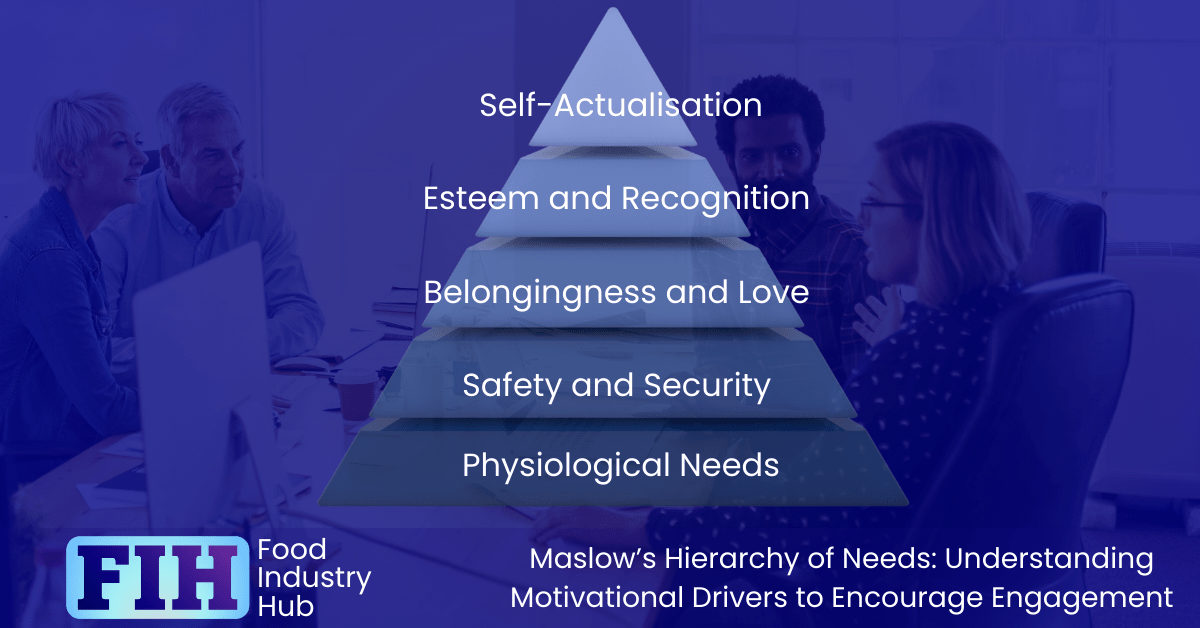
- Physiological and safety needs must be met before individuals can focus on higher-level needs.
- Building meaningful relationships and fostering a sense of belongingness and love or social fulfilment are crucial for personal fulfilment.
- Developing self-esteem and receiving recognition for achievements are important for motivation and self-worth.
- Self-actualisation involves realising one’s full potential and living a meaningful life, which requires continuous self-improvement and embracing personal values.
Physiological Needs
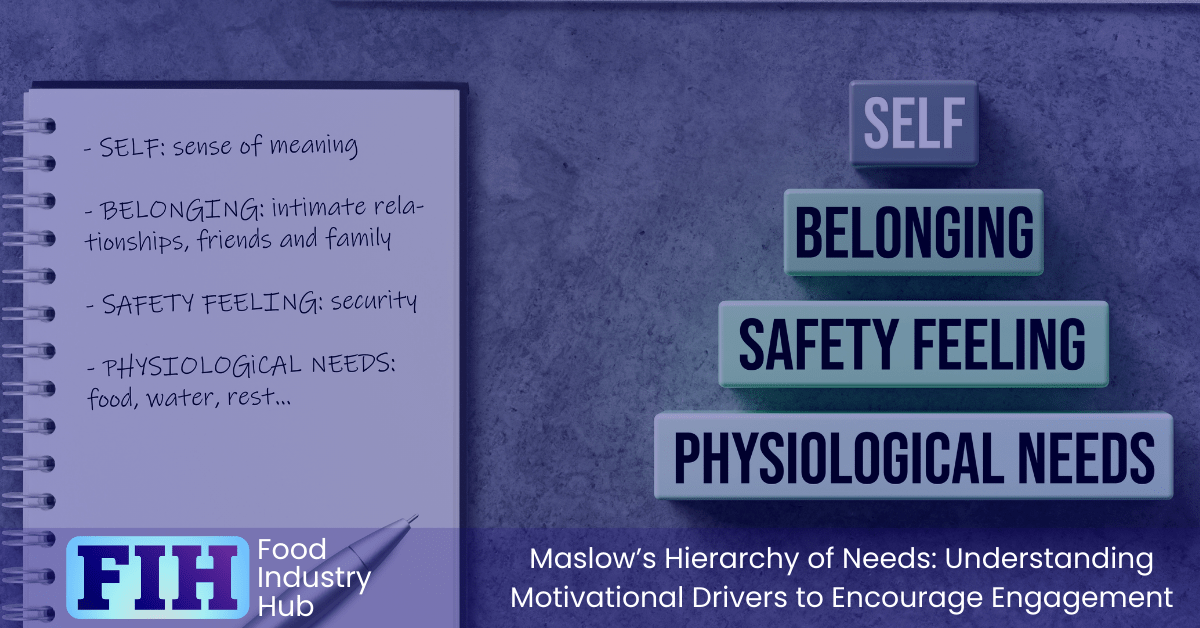
At the very foundation of Maslow’s theory are our physiological needs, which are the most fundamental and essential for survival. These needs include air, water, food, shelter, clothing, and sleep. They’re the primal instincts that we all possess, driving us to seek these necessities to maintain our physical well-being.
Without satisfying our physiological needs, it becomes nearly impossible to focus on any other aspect of our lives. When we’re hungry, thirsty, or lacking sleep, our attention is solely fixated on fulfilling these needs. Our bodies become our primary concern, and everything else takes a backseat.
In today’s modern society, many of us are fortunate enough to have our physiological needs consistently met. However, it’s crucial to recognise that there are still individuals who struggle to fulfil these basic requirements. These individuals may face food insecurity, homelessness, or inadequate access to clean water and healthcare.
Maslow’s Hierarchy of Needs reminds us of the importance of addressing these fundamental physiological needs before moving on to higher-level motivations. By ensuring that everyone has their basic needs met, we can pave the way for individuals to focus on personal growth, self-esteem, and ultimately self-actualisation.

Safety and Security
Ensuring your safety and security is the next step in Maslow’s Hierarchy of Needs after fulfilling your physiological needs. Once your basic physiological needs like food, water, and shelter are met, it’s natural to seek a sense of safety and security.
This need for safety encompasses physical safety, emotional security, and a stable environment. Physically, you desire protection from harm, danger, and threats. This includes having a safe home and a secure neighbourhood. You want to feel safe in your surroundings, free from the fear of violence or accidents.
Emotionally, you crave stability and predictability. You want to feel secure in your relationships, knowing that you can trust and depend on others. Having a stable job and financial security also contributes to your sense of safety and security.
In today’s world, there are various ways to fulfil this need for safety and security. Building strong and supportive relationships with loved ones and seeking therapy for emotional healing can also contribute to your feeling of safety. Additionally, having a stable income and savings can provide financial security.
To summarise, once your physiological needs are met, the next step is to address your need for safety and security. By taking steps to protect yourself physically and emotionally, you can create a stable and secure environment that allows you to thrive.

Sign up for the Food Industry Hub Mail Service
Receive Food Industry Hub updates, resources, articles, tools and service developments direct to your inbox.
Each update helps you stay connected with new and relevant Food Industry Hub content, with links back to resources you may want to read, use or revisit.
Belongingness and Love
Once your needs for safety and security are met, the next step in Maslow’s Hierarchy of Needs is the desire for a sense of belongingness and love. This fundamental need stems from our inherent social nature as human beings. We’ve an innate longing to connect with others, to form meaningful relationships, and to feel accepted and loved by those around us. In this context, ‘love’ can be taken to mean ‘social fulfilment’ or ‘rewarding social connection’.
Belongingness and love play a crucial role in our overall well-being and happiness. When we feel a sense of belonging, we experience emotional support, encouragement, and validation from our social connections. This sense of belonging helps to strengthen our self-esteem and self-worth. It provides us with a sense of purpose and identity, as we’re able to identify ourselves as part of a larger group or community.
In today’s fast-paced and digitally connected world, it’s important to prioritise building and nurturing meaningful relationships. This can be done through participating in social activities, joining clubs or organisations, and reaching out to others for support and companionship. By fostering a sense of belongingness and love, we’re able to create a positive and supportive environment for ourselves and those around us.
From a managerial perspective, this tier of Maslow’s hierarchy can be best addressed through team dynamics and by cultivating strong interpersonal relationships among staff. This can be instrumental in enabling performance and resilience throughout the team.

Esteem and Recognition
To achieve esteem and recognition, you must cultivate a strong sense of self-worth and garner respect from others. Esteem refers to the need for self-esteem, confidence, and the respect of others, while recognition is about feeling valued and acknowledged for your achievements and contributions. These two components play a crucial role in our motivation and overall well-being.
Developing a strong sense of self-worth starts with acknowledging your own strengths and capabilities. Take time to identify your talents, skills, and accomplishments, recognising the unique qualities that make you who you are. Embrace your individuality and be proud of your achievements, no matter how big or small they may be.
In addition to self-worth, garnering respect from others is equally important. Treat people with kindness, empathy, and fairness, and they’re more likely to reciprocate. Show integrity and honesty in your actions, as trust is the foundation of any healthy relationship. When others respect you, it boosts your self-esteem and reinforces your sense of worth.
Recognition comes from being acknowledged for your efforts and contributions. Seek opportunities to showcase your skills and talents, whether it be through projects, presentations, or volunteering. Embrace feedback, both positive and constructive, as it helps you grow and improve. Celebrate your accomplishments and appreciate the recognition you receive, as it reinforces your self-worth and motivates you to strive for more.
As a manager, you can draw on esteem needs to help employees feel valued – which in turn will promote a sense of motivation. Make sure to acknowledge and compliment good work and professional achievements – but only do so authentically. People can sense when they are being humoured.

Self-Actualisation
What does it mean to achieve self-actualisation and how can it be attained?
Self-actualisation refers to the highest level of fulfilment and personal growth that an individual can achieve. It’s the realisation of one’s full potential and the ability to live a meaningful and purposeful life.
To attain self-actualisation, you must first meet the lower-level needs in Maslow’s Hierarchy, such as physiological, safety, love and belonging, and esteem. Once these needs are satisfied, you can focus on personal growth, self-discovery, and pursuing your passions.
Self-actualisation involves continuous self-improvement, setting and achieving challenging goals, and embracing personal values and beliefs. It requires self-awareness, introspection, and a willingness to take risks and step out of your comfort zone. It’s about finding your true calling and living authentically.
To attain self-actualisation, you can engage in activities that promote personal growth, such as meditation, journaling, seeking new experiences, and learning new skills. Surrounding yourself with supportive and like-minded individuals can also contribute to your self-actualisation journey. It’s important to prioritise self-care, maintain a balanced lifestyle, and cultivate positive relationships.
Ultimately, self-actualisation is a lifelong journey of personal development and self-discovery, and it’s different for everyone. By striving for self-actualisation, you can lead a more fulfilling and purpose-driven life.
From a managerial point of view, there’s incredible utility in aligning the motivations of a self-actualising employee with the ownership of work that they are given. A person driven by the actualisation of their greatest self does not need to be given prescriptive instructions. A person who has access to the ’self-actualisation’ tier of Maslow’s hierarchy can take real ownership and deliver outcomes rather than just following instructions. The results delivered by a self-actualising individual will literally be the actualisation of the greatest version of what that person has to deliver, so there’s an incredible incentive for managers to develop every employee toward self-actualisation.

Making Practical Use of Maslow’s Hierarchy of Needs
In order to apply Maslow’s Hierarchy of Needs practically, it’s important to understand how each level of needs motivates human behaviour. By grasping this concept, you can effectively use the hierarchy to drive engagement and motivation in various settings.
The first level of needs, physiological needs, includes basic requirements such as food, water, and shelter. By ensuring these needs are met, you can create an environment where individuals feel secure and can focus on higher-level needs.
The second level, safety needs, involves providing a sense of stability and protection. This can be achieved through implementing safety protocols, creating a secure work environment, and establishing clear boundaries.
The third level, belongingness and love needs, emphasises the importance of social connections. Encouraging teamwork, fostering positive relationships, and promoting a sense of community can help satisfy these needs.
The fourth level, esteem needs, centres around recognition and respect. Acknowledging individuals’ achievements, providing opportunities for growth, and allowing for autonomy can fulfil these needs.
Finally, the fifth level, self-actualisation, focuses on personal growth and fulfilment. By encouraging individuals to pursue their passions, set meaningful goals, and engage in self-reflection, you can support their self-actualisation journey.
Understanding and addressing these needs can greatly enhance employee engagement, customer satisfaction, and overall well-being.

Advantages for Employees
Employees can benefit greatly from understanding and fulfilling their hierarchical needs according to Maslow’s theory. One advantage is increased motivation. When employees recognise that their basic physiological and safety needs are met, they can focus on higher-level needs such as belongingness, esteem, and self-actualisation. This awareness can drive them to work harder and contribute more effectively to the organisation and to their own development.
Another advantage is improved job satisfaction. When employees feel a sense of belongingness and acceptance within their teams, they’re more likely to enjoy their work and feel satisfied with their job. This can lead to increased productivity and reduced turnover rates.
Understanding their needs can also help employees prioritise their goals and make informed career choices. By recognising their personal growth needs, employees can seek out opportunities for learning and development that align with their aspirations. This can lead to career advancement and increased job satisfaction.
Fulfilling higher-level needs can lead to a sense of fulfilment and overall well-being. When employees have a purpose and feel valued for their contributions, they’re more likely to experience a sense of fulfilment in their work and personal lives.

Advantages for Managers
Managers can benefit significantly from understanding and leveraging Maslow’s Hierarchy of Needs in their leadership approach. By grasping the different levels of needs that employees have, managers can effectively motivate and engage their teams, ultimately leading to increased productivity and job satisfaction.
Firstly, understanding Maslow’s Hierarchy of Needs allows managers to identify and address the basic physiological and safety needs of their employees. By providing a safe and comfortable work environment, managers can ensure that employees feel secure and can focus on their work without worrying about their basic needs being met.
Secondly, by recognising the importance of social needs, managers can foster a sense of belonging and camaraderie within their teams. This can be achieved through team-building activities, open communication, and creating a positive work culture. When employees feel connected to their colleagues and valued by their managers, they’re more likely to be motivated and engaged in their work.
Managers who understand the higher-level needs of self-esteem and self-actualisation can provide opportunities for growth and development to their employees. This can include providing challenging assignments, offering training and development programs, and recognising and rewarding achievements. By helping employees reach their full potential, managers can’t only increase job satisfaction but also retain top talent within the organisation.

Potential Drawbacks
One potential drawback of utilising Maslow’s Hierarchy of Needs in a leadership approach is the potential oversimplification of employee motivations. While the hierarchy provides a useful framework for understanding human needs and their impact on motivation, it may fail to capture the complexity of individual motivations. People are unique, and their motivations can be influenced by a wide range of factors beyond the basic needs outlined by Maslow.
By relying solely on the hierarchy, leaders risk overlooking the diverse and multifaceted nature of employee motivations. For example, some individuals may prioritise belongingness and love needs over physiological or safety needs, while others may place a higher importance on esteem needs. By assuming that all employees can be motivated in the same way based on the hierarchy, leaders risk neglecting the specific needs and desires of their team members.
The hierarchy assumes a linear progression from one need to another, suggesting that individuals must fulfil lower-level needs before progressing to higher-level needs. However, in reality, individuals may be motivated by multiple needs simultaneously, and their motivations may fluctuate based on various factors.
To address this potential drawback, leaders should recognise the limitations of the hierarchy and take a more holistic approach to understanding and motivating their employees. This includes actively engaging in open communication, seeking feedback, and recognising the unique motivations and aspirations of each individual. By doing so, leaders can create a more inclusive and effective motivational strategy that goes beyond the oversimplification of Maslow’s Hierarchy of Needs.

In Summary
So, as you can see, Maslow’s Hierarchy of Needs provides a valuable framework for understanding what motivates individuals and encourages their engagement.
It’s like a ladder, with each level building upon the one before, ultimately leading to self-actualisation. By recognising and addressing these needs, both employees and managers can benefit, fostering a more productive and fulfilling work environment.
However, it’s important to be aware of potential drawbacks and limitations to ensure a well-rounded approach.
Further Resources
Food Industry Hub serves the food industry with a range of digital resources for the benefit of both commercial food manufacturers and food industry professionals.
For food manufacturers, we offer integrated management systems that give every user a direct interface with your QMS.
For food industry professionals, we provide an extensive signposting service in addition to informational content we hope you’ll find useful as you face new professional challenges. We have very ambitious plans to expand the range of services offered, and currently present informational content on management, safety and quality, and professional success.