Introduction
Food manufacturing software can really transform efficiency across an organisation. Digital systems bring connectivity for communication and visibility in ways that can’t be achieved using offline systems. In this post, we’ll explore some of the ways software is revolutionising operational and managerial processes in the food manufacturing industry.
As we dive into the topic, you’ll be interested to know that Food Industry Hub offers integrated management systems for food manufacturers, with a a range of modular functions included as part of a holistic package. You can self-register into a free trial with zero commitment to see for yourself the advantages for your business.
Table of Contents
○ How Software Will Transform Management Across the Food Industry
○ Record, Investigate and Resolve Any Nonconformance
○ Manage All Your Controlled Documents
○ Improve Coordination Across Departments and Teams
○ FAQ
○ In Summary
How Software Will Transform Management Across the Food Industry
Many providers of software for food manufacturers exist, but a lot of the systems seem to have been designed only to take processes which would otherwise have occurred offline and present a framework which enables them to be done on a computer. In some cases, there are advantages to doing this – but there is far greater potential to innovate for operational and managerial benefits.
We see instances of functional innovations across information systems all the time. Processing data in more functional ways leads to progressively greater advantages.
○ Collect information about roads, and you can make a map.
○ Collect and analyse data about traffic, and you can alert drivers to avoid congestion.
○ Analyse and process data about traffic, and smart motorways can adjust speed limits to mitigate traffic volume.
At each progressive phase of technical innovation, the system adapts in favour of data processing over data collection, and designed functions are oriented around benefits derived from the way the data is processed. At a low level, value is delivered as a result of collecting and storing information – while at a high level, value is generated as a result of analysing and processing the information collected.
Management software in food manufacturing will follow a similar innovation pattern.
Existing systems that enable data to be collected and accessed for compliance purposes are effectively the first stage of a cycle that begins by cataloguing data in ways that are most advantageous for accessing that data and presenting it to auditors – and ultimately pave the way for more functional innovations. The true value of software for food manufacturers will be realised when solutions move beyond data collection and record-keeping. In the same way that national infrastructure can be revolutionised with connectivity solutions, software has the power to radically accelerate operational systems for food manufacturers.
The number of ways software can be applied for operational and managerial benefit is the food industry is only limited by creativity and imagination. This article could describe hundreds of possibilities, but for brevity we will focus on nonconformance management, document control, and cross-functional collaboration.
Record, Investigate and Resolve Any Nonconformance
Nonconformance management is a really interesting example of how software solutions have been used to take a systematic activity and move its administration from offline to online. Rather than have a ring binder full of printed nonconformance records, record nonconformances on an electronic database.
There’s a clear business advantage. The system is intentionally designed around assurance scheme requirements, and the software makes it easy to retrieve records to show an auditor. The value generated by the software is rooted in the ability to store and retrieve evidence of compliance.
There’s a methodology called ‘object-oriented programming’. As far as technical jargon goes, this one’s pretty good because it’s exactly what it sounds like – so systems developers put consideration into ‘objects’ (subjects/entities/things), and orient attributes or triggered actions around them for functional reasons. The orientation of systems around the correct ‘things’ dictates what sort of functions the systems are capable of performing.
To make this easy to understand, think about a very simple system: an exchange between two people. A system of exchange might be oriented around the people, with the exchange items (money/goods/services) as attributes, and a transaction (action) triggered in the event that both people agree to the terms of the exchange. It would be dysfunctional to orient the system around the exchange items, for example. The system must be structured in such a way as to accommodate for the functions it is intended to perform.
Software presented as a compliance solution will deliver the advantages that it was designed to deliver. The orientation of the system around the compliance function is apparent in the way the workflow is presented.
The assurance scheme says you have to record nonconformances, carry out root cause analysis, and implement corrective actions – so fill in these fields to record the nonconformity, use this text area to describe root cause, and use this field to record the corrective action.
This is progressive because you get a robust record-keeping system, and it’s significantly quicker, easier, and more reliable to retrieve digital records than hardcopy files.
There’s a commercial incentive for food industry compliance software providers to hand a developer a copy of the BRCGS Food standard with a job brief: “Make the software do that.” Now the software can be marketed as a compliance solution specially aligned with that assurance scheme.
Unfortunately, orienting this type of system around the documented expectations of compliance schemes results in a system that is functionally aligned with scheme clauses, rather than the actual activity of managing nonconformances.
A system optimised for managing unplanned occurrences would identify and record incidents, and make note of the source. Associated investigation records could identify numerous contributing factors, with a corrective and preventative action plan for each. Every corrective or preventative action could be delegated to a department/team and/or a specific individual. Interacting with a well-structured system would generate user notifications and changelog entries. Every data point could contribute to trending and improvements.
In practice, a nonconformance doesn’t have a root cause and a corrective action that can be addressed with a data field for each. Investigations can yield numerous contributing factors, and it’s completely normal for a range of corrective and preventative actions to be applied to a single causative factor.
The software offered by Food Industry Hub has been developed for functional advantage first, but with consideration given to the intention and purpose of quality assurance schemes. The idea is that if you develop an excellent system optimised to perform the activity, then meeting the expectations of compliance schemes is a very small ask.
Interestingly, from a software development point of view it’s not really any more difficult to facilitate unlimited contributing factors for an incident than it is to record a single root cause, and delegating responsive actions across individual users or departments only requires a project management workflow. Systems limitations on compliance solutions are entirely born out of the fact that they’re structured to be compliance solutions as an intentional design feature. It’s not a technology limitation or anything.
This exploration is all about the potential for food manufacturing software to transform management for the food industry, and nonconformance management really is a very interesting example of how software solutions designed around ‘compliance’ as the value proposition very much do add value, but don’t bring forward all the benefits that digital systems could offer.
You might find it useful to think that for software presented as a compliance solution, external auditors are the customers being served – while functionally progressive management systems would serve the food manufacturer first, whilst still being considerate of compliance expectations.
Putting aside the way systems are structured to handle specific incidents, there is an inherent benefit to using software for operational nonconformities: connectivity.
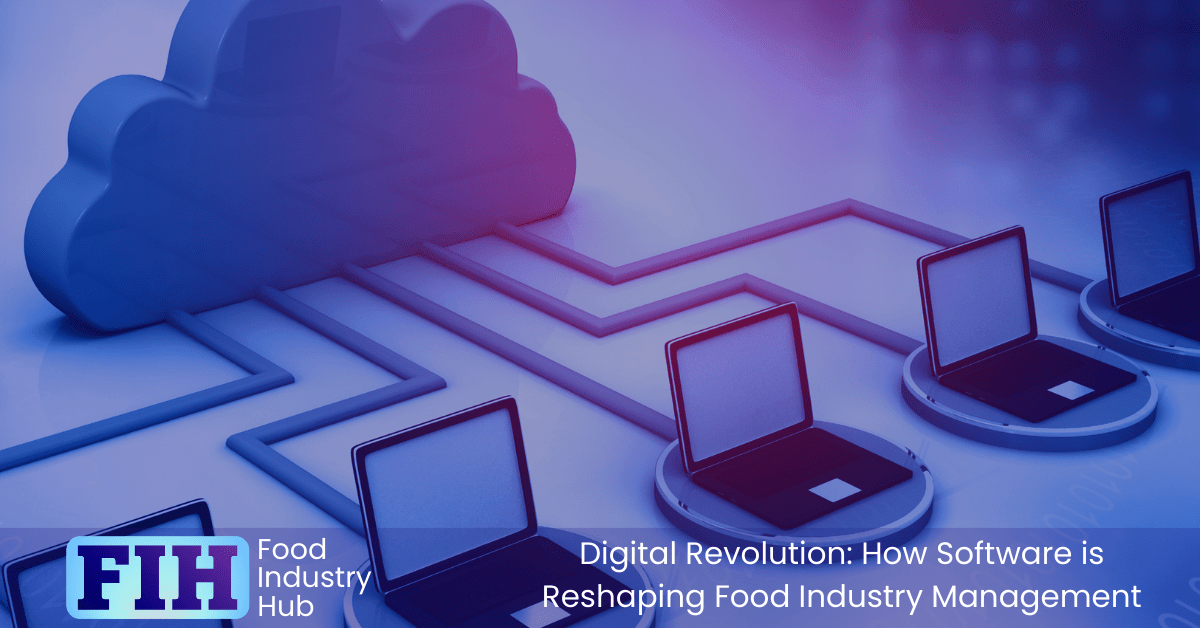
Cloud delivery enables any employee on the factory floor to record an operational nonconformity, and this is based on decentralised data entry. Systematically, you don’t depend on the person who’s reporting the fault to leave the factory floor and enter the event information in a system located in an office somewhere – the process of entering data into a centralised management system can be decentralised to any location.
Efficiency gains from real-time decentralised data entry offer real added value – and you can see this in emerging technologies. Sensor systems linked to equipment can offer invaluable insights into overall equipment efficiency, for example.
There’s a potential for every individual working throughout a food business to proactively report things like fabrication problems, quality deviations, pest activity, or (H&S) accidents into a centralised management system in real time. A software interface that really connects everyone with the quality management system, bringing transparency of operational performance information – just like a dynamic set of sensors.
This is made possible by virtue of the fact that many individuals can contribute into a centralised management system using decentralised data entry – so this is a technological advantage that could not be achieved using offline methods.
Manage All Your Controlled Documents
Controlled documents present a curious sort of challenge. Curious, because the requirements and management processes are extremely simple. There is nothing technically challenging about making a note of the activation of a new document revision.
In terms of subject complexity, there’s no good reason for any food manufacturer to ever incur a nonconformity based on a failure of document control systems. This isn’t the sort of thing that takes expert knowledge or complex risk-assessment. Whenever there’s a new document revision, record the reason for change, update the quality manual to reflect the active revision, and withdraw any superseded copies.
Despite this, food manufacturers get nonconformances at audit because of document control problems all the time.
So the question is, why is such a technically simple process so hard to manage consistently?
The problem has never been that compliance is challenging to orchestrate. If you can knock together an excel spreadsheet that lists all of your documents and their revisions, you’re more than capable to putting together a compliance system.
In practice, there are two factors that determine the success or failure of document control systems:
Consistency and discipline.
Access levels.
Consistency and discipline.
You want to perform one action (update a document revision), but you have to perform an additional two actions (update the quality manual, withdraw superseded copies) in order to have completed your workflow in accordance with the document control procedure. This is the kind of situation where, over months and years, steps get skipped.
This is where workflow automations can utterly transform the way an activity is performed. An automation can be triggered by the activation of a new document revision which results in the instantaneous update of the quality manual – taking out a manual process step.
It seems laughable to think that so many nonconformities based on discrepancies between document revision records and the content of the quality manual could be avoided by such a simple automation – but the nature of the problem is rooted in human behaviour, and software can follow a repeatable process consistently and faultlessly in a way a human never can.
The problem isn’t that it’s difficult – the problem is that it’s difficult to get even a small group of people to consistently administrate the process accurately and comprehensively hundreds of times of the trot.
Access levels.
Restricting access to controlled documents can be more technically challenging.
You have to create a situation where only certain people can make updates to controlled documents in line with the requirements of your document control procedure, and you also want to make the active revision of all documents in your quality manual accessible to all employees.
This can be overcome with password-protected drive partitions, or by login credentials for certain individuals allowing access to controlled documents – but in practice, access to controlled documents can often be unrestricted.
In cases where access privileges do restrict user’s access to controlled documents, selection criteria often has nothing to do with whether that individual has received document control training, and is instead rooted in job role. So for example, all members of the technical department might be able to access and edit controlled documents – regardless of whether or not they have individually received document control training.
Here, software can provide a really functional advantage. The systems offered by Food Industry Hub enable you to determine whether specific users can access the controlled documents module, while providing all users access to the active version of every document included in your quality manual. This overcomes the problem of enabling access to the people who need to use or refer to documents, and preventing unauthorised changes or updates.
The remarkable thing about the potential for software to revolutionise operational effectiveness around document control (and associated features of the quality system such as the quality manual) is not really creditable to technological advancement. It’s more that a very simple coupling of automations to safeguard consistency, and user levels restricting access to sensitive documents, can deliver a transformative managerial advantage by addressing the systematic problems that are encountered in real life.
This is all about designing systems that address the actual challenges faced by food manufacturers, rather than reverting to the practice of creating systems oriented around the specific wording of compliance schemes. The value is in really understanding and catering for processes that need to be undertaken, rather than thinking of the compliance scheme first, and the user second.
Improve Coordination Across Departments and Teams
If you’re a department manager, it can be difficult to maintain visibility over all of the tasks that the members of your department are routinely carrying out. If you’re trying to coordinate activities across different departments and teams, it can seem like trying to heard a swarm of wasps: they’re probably not going in the direction you want, and it feels like you’re getting stung as you do it.
Suppose you have a nonconformance as a result of a customer audit. Insufficient ventilation led to mould growth inside the factory. There are corrective and preventative actions across different departments.
Preventative
Engineering department: Install additional ventilation.
Corrective
Hygiene department: clean and sanitise the area.
Quality department: validate the effectiveness of remedial actions.
Trying to get these different functions to cooperate for the effective resolution of the issue is often such an uphill struggle that the quality department is made responsible for ‘chasing’ these dependencies. The explanation is that audit nonconformities are owned by the quality department, but in reality this is an example of misaligned accountabilities.
The convention across the food industry to make the quality department accountable for all nonconformance resolutions – irrespective of the nature of the action – is not a rational alignment of responsibility and accountability… It’s more symptomatic of a reluctance to manage cross-functionally.
Systematically, the optimum scenario would be for the engineering department to be responsible for installing the additional ventilation and providing evidence – and the subsequent actions would be undertaken by the respective departments after that action was completed. Senior management would be accountable for overseeing the total process of resolution* and would maintain visibility of the coordinated actions. The technical department would upload evidence onto the customer’s system.
*This scenario would align senior management commitment with quality values by making the total resolution process an accountability of senior management, while also promoting accountability with the responsible departments.
Software can offer an effective way to overcome this type of problem with a project management workflow. Any type of activity can be represented as a project, with tasks and sub-tasks making up complex processes. Connectivity and management interventions allow specific tasks to be delegated to departments and individuals, with planned and actual completion dates assigned for each.
Every department or team in your business can be coordinated – both in the internal operation of the department and in cross-functional collaborations. The systems offered by Food Industry Hub can accommodate for both planned projects and unplanned events.
Beyond delegation advantages, software can help to align organisational management through functions such as change control. If there’s a benefit to having a document revision change authorised by representatives from different departments, that can be accomplished by requesting change approval from representative individuals.
Another thing to consider is the effect of engagement on food safety and quality culture. The more you can establish a relationship between the food safety and quality management system and employees, the more relevant and meaningful the documented management system becomes as an internal authority.
A situation where individuals not only reference the management system for guidance, but manage their workload and activities from the same management system, would be highly conducive to a strong food safety and quality culture.
FAQ
Can software help with nonconformance management in food manufacturing?
Yes, software can definitely help with nonconformance management in food manufacturing. Nonconformance refers to situations where products, processes, or systems do not meet established standards or specifications. In the food manufacturing industry, ensuring quality and safety is paramount, and managing nonconformances effectively is crucial to maintaining regulatory compliance and consumer trust.
Here’s how software can assist with nonconformance management in food manufacturing:
Automated Reporting and Tracking: Nonconformance management software can automate the process of reporting and tracking incidents or issues. When a nonconformance occurs, employees can input the details into the software, which then generates reports and tracks the entire lifecycle of the nonconformance.
Alerts and Notifications: Software can send automated alerts and notifications to the appropriate personnel when a nonconformance is reported or identified. This ensures that the responsible parties are aware of the issue and can take immediate action.
Workflow and Escalation: Software can streamline the workflow for addressing nonconformances. It can route the issue to the appropriate departments or individuals for investigation, corrective action planning, and resolution. If a nonconformance is not resolved within a specified timeframe, the software can escalate the issue to higher management levels.
Root Cause Analysis: Nonconformance management software can facilitate root cause analysis by providing tools to investigate the underlying reasons for the nonconformance. This helps in identifying the source of the problem and implementing effective corrective and preventive actions.
Evidence Collection: The software can store all related documentation, such as reports, images, and communication logs, in a centralised location. This ensures that all necessary information is readily accessible and can be used for audits and compliance purposes.
Audit Trail: Nonconformance management software can maintain a comprehensive audit trail of all actions taken regarding the nonconformance. This is essential for demonstrating compliance with regulations and standards.
Data Analysis and Trend Identification: By aggregating data from various nonconformances, software can help identify trends and patterns. This information is valuable for making informed decisions to prevent future nonconformances.
Continuous Improvement: The software can contribute to a culture of continuous improvement by providing insights into recurring issues and enabling the implementation of effective corrective actions.
Overall, nonconformance management software enhances the efficiency, accuracy, and accountability of dealing with nonconformances in food manufacturing, ultimately leading to improved product quality and safety.
Can software be used to improve document management for food manufacturers?
Absolutely, software can be extremely beneficial for improving document management in the context of food manufacturing. Proper document management is crucial for maintaining regulatory compliance, ensuring product quality, and streamlining operations. Here’s how software can help:
Centralised Storage: Document management software provides a centralised repository for all documents related to food manufacturing, including standard operating procedures (SOPs), work instructions, recipes, specifications, and more. This ensures that employees have easy access to the most up-to-date documents.
Version Control: Software allows you to maintain version control for documents. This prevents confusion by ensuring that users always access the latest approved version of a document. Older versions are archived, providing a history of changes.
Access Control: Document management software enables you to control who can access, edit, and approve documents. This is crucial for maintaining data security and ensuring that only authorised personnel can make changes.
Workflow Automation: You can create automated workflows that update the quality manual with the activation of every new document revision – safeguarding consistency, and reducing administration costs.
Search and Retrieval: Document management software often includes powerful search capabilities. This helps users quickly locate specific documents or information within documents, reducing the time spent searching for critical information.
Mobile Access: With mobile-friendly interfaces, employees can access documents even when they are not at their desks. This is particularly useful for employees who need to reference documents while on the production floor or in the field.
Document Lifecycle Management: Software can help manage the entire lifecycle of a document, from creation and review to approval, distribution, and eventual archiving or disposal.
By implementing document management software, food manufacturers can streamline processes, reduce errors, enhance collaboration, and ensure compliance, all of which contribute to better overall operations and product quality.
Can software make a difference to the way cross-functional activities are managed in food manufacturing?
Absolutely, software can make a significant difference in the way cross-functional activities are managed in food manufacturing. Cross-functional activities involve collaboration and coordination among different departments or teams within an organisation. In the complex and regulated environment of food manufacturing, effective management of cross-functional activities is crucial for maintaining product quality, safety, and regulatory compliance. Here’s how software can help:
Communication and Collaboration: Software provides a platform for seamless communication and collaboration across departments. It enables real-time sharing of information, updates, and progress on projects, ensuring that everyone involved is on the same page.
Centralised Information: With a software platform, all relevant information, documents, and data related to cross-functional activities can be stored in a centralised location. This prevents silos of information and ensures that teams have access to accurate and up-to-date information.
Task and Project Management: Software tools often include task and project management features that allow teams to create, assign, and track tasks related to cross-functional activities. This ensures accountability and helps teams stay organised.
Workflow Automation: Many software solutions offer workflow automation capabilities. This means that processes involving multiple departments can be streamlined with predefined workflows that guide the flow of tasks and approvals.
Visibility and Transparency: Software provides visibility into the status of cross-functional activities. Managers and team members can easily track progress, identify bottlenecks, and take proactive measures to keep activities on track.
Real-time Updates: Software allows for real-time updates and notifications. For instance, if there’s a change in a project status or an issue arises, relevant team members can be notified immediately, allowing for rapid response.
Cross-Departmental Reporting: Software can generate reports that span multiple departments, providing insights into the performance of cross-functional activities. This data-driven approach helps in making informed decisions.
Document Sharing and Version Control: Effective cross-functional activities often require sharing documents. Software ensures that the most recent versions of documents are accessible to all relevant parties, reducing errors caused by outdated information.
Conflict Resolution: In cross-functional activities, conflicts or differences in approach can arise. Software provides a platform for discussions, decision-making, and conflict resolution, promoting alignment among departments.
Data Integration: Modern software can integrate various systems used by different departments. This facilitates the flow of data across functions, reducing the need for manual data entry and minimising errors.
Compliance Management: Software can help ensure that cross-functional activities adhere to industry regulations and standards. It can facilitate documentation of compliance-related processes and evidence.
Audit Trails: Software maintains an audit trail of activities and changes made by different users. This is valuable for tracking decisions, actions, and responsibilities, which is essential for audits and accountability.
By implementing software for cross-functional activity management, food manufacturing companies can improve efficiency, reduce miscommunications, enhance collaboration, and ultimately deliver higher-quality products while meeting regulatory requirements.
What benefits can software bring for the development of a food manufacturer's food safety and quality culture?
Software can bring numerous benefits to the development of a food manufacturer’s food safety and quality culture. Here are some key advantages:
Standardisation and Consistency: Software enforces standardised processes and procedures, ensuring that food safety and quality practices are consistently followed across all operations and departments. This instils a sense of confidence and predictability around the way quality processes are enacted – setting the scene for cultural norms and expectations in favour of food safety and quality.
Continuous Improvement: Software allows for the collection of feedback, suggestions, and incident reports. This information can be used to drive continuous improvement efforts in food safety and quality practices. This is a cultural advantage borne out of communication and visibility.
Transparency and Accountability: By using software to track actions and decisions, organisations can establish clear lines of responsibility and accountability. This creates a culture where individuals take ownership of their roles in ensuring food safety and quality. Software is really good for tracking actions taken by specific individuals – making it easier to align rewards and positive reinforcement with actions taken by particular individuals.
Quick Response to Incidents: In the event of a food safety or quality incident, software can expedite the response process. Relevant information can be accessed quickly, aiding in containment and resolution. When employees see that the business is committed to quick and effective fault resolution, it adds credibility to the stated values that the business claims to uphold.
Employee Engagement: Involving employees in the adoption and utilisation of software empowers them to contribute to food safety and quality efforts. When employees see that their contributions matter, they’re more likely to actively participate in maintaining standards. There’s also a clear benefit to having users interact with the management system in a way that empowers them with information at the same time as managing their tasks and activities.
Reduction in Manual Processes: Software reduces the need for manual data entry and paperwork, freeing up employees’ time to focus on higher-value tasks, such as proactive quality improvements. This can ease frustration over repetitive tasks, improve employee satisfaction, and orient behaviours toward improvement initiatives.
Culture of Continuous development: Employing technological solutions is an effective way for food businesses to signal to their workforce that the organisation values adaptation and improvement. The act of resourcing and implementing digital systems demonstrates a commitment to reliable process management and presents clear ways for employees to engage with the quality system.
Overall, the integration of software can lead to a stronger food safety and quality culture by promoting consistency, accountability, transparency, and continuous improvement throughout the organisation.
In Summary
The initial software products that have been introduced onto the market all have unique strengths and weaknesses. They each provide a differentiated combination of features and benefits – and none of them are bad or defective.
There is a design pattern that has been evident across software solutions. Design the software to do what the clauses of compliance standards demand, and label it a ‘compliance solution’. By itself, this approach is better than pen and paper in most cases.
At Food Industry Hub, we respect the ways existing service providers have contributed to an innovation curve which introduces commercial software advantages to the food manufacturing industry, and we see opportunities to really change the landscape of the food industry by innovating in favour of managerial and operational benefits. A paint-by-numbers compliance solution genuinely does add some value, but we believe the key to moving forward lies in understanding activities and objectives of food manufacturers rather than depending on assurance schemes to define exactly how processes should occur.
There are some really radical advantages that software can bring to the food industry – both on the supply chain scale and at site level.
Some innovations will be transformative by virtue of technological advancement. Artificial intelligence, for example, will introduce capabilities we haven’t yet imagined.
Some innovations will revolutionise operations as a result of applying the right functional solutions where the greatest impact on performance can be had.
More and more advantages will be discovered in favour of effective operations. We believe management systems for food manufacturers can be optimised for performance over compliance – with positive audit outcomes being a natural outcome.
It’s noteworthy that digital systems and connectivity have the potential to transform supply chain scale operations as well as at site level. Everything from stock movements and traceability through to relationships between food manufacturers and their commercial partners can be re-evaluated through a technological lens.
We are now at a point where design philosophy can move away from ‘make the software do what the compliance standard says’ and toward ‘how can software be applied in food manufacturing for the greatest practical benefit?’ Fundamentally, this is how software will transform management across the food industry.
Further Resources
Food Industry Hub serves the food industry with a range of digital resources for the benefit of both commercial food manufacturers and food industry professionals.
For food manufacturers, we offer integrated management systems that give every user a direct interface with your QMS.
For food industry professionals, we provide an extensive signposting service in addition to informational content we hope you’ll find useful as you face new professional challenges. We have very ambitious plans to expand the range of services offered, and currently present informational content on management, safety and quality, and professional success.