Digital Revolution: How Software is Reshaping Food Industry Management

The Food Industry Hub Blog

Food Industry Hub blog

The Food Industry Hub blog includes practical discussion for food manufacturing professionals across technical, cultural, management and professional themes.

This post is part of the category:

Introduction

Food manufacturing software can really transform efficiency across an organisation. Digital systems bring connectivity for communication and visibility in ways that can’t be achieved using offline systems. In this post, we’ll explore some of the ways software is revolutionising operational and managerial processes in the food manufacturing industry.

As we dive into the topic, you’ll be interested to know that Food Industry Hub offers integrated management systems for food manufacturers, with a a range of modular functions included as part of a holistic package. You can self-register into a free trial with zero commitment to see for yourself the advantages for your business.

Table of Contents

○ How Software Will Transform Management Across the Food Industry

○ Record, Investigate and Resolve Any Nonconformance

○ Manage All Your Controlled Documents

○ Improve Coordination Across Departments and Teams

○ FAQ

○ In Summary

How Software Will Transform Management Across the Food Industry

Many providers of software for food manufacturers exist, but a lot of the systems seem to have been designed only to take processes which would otherwise have occurred offline and present a framework which enables them to be done on a computer. In some cases, there are advantages to doing this – but there is far greater potential to innovate for operational and managerial benefits.

We see instances of functional innovations across information systems all the time. Processing data in more functional ways leads to progressively greater advantages.

○ Collect information about roads, and you can make a map.
○ Collect and analyse data about traffic, and you can alert drivers to avoid congestion.
○ Analyse and process data about traffic, and smart motorways can adjust speed limits to mitigate traffic volume.

At each progressive phase of technical innovation, the system adapts in favour of data processing over data collection, and designed functions are oriented around benefits derived from the way the data is processed. At a low level, value is delivered as a result of collecting and storing information – while at a high level, value is generated as a result of analysing and processing the information collected.

Management software in food manufacturing will follow a similar innovation pattern.

Existing systems that enable data to be collected and accessed for compliance purposes are effectively the first stage of a cycle that begins by cataloguing data in ways that are most advantageous for accessing that data and presenting it to auditors – and ultimately pave the way for more functional innovations. The true value of software for food manufacturers will be realised when solutions move beyond data collection and record-keeping. In the same way that national infrastructure can be revolutionised with connectivity solutions, software has the power to radically accelerate operational systems for food manufacturers.

The number of ways software can be applied for operational and managerial benefit is the food industry is only limited by creativity and imagination. This article could describe hundreds of possibilities, but for brevity we will focus on nonconformance management, document control, and cross-functional collaboration.
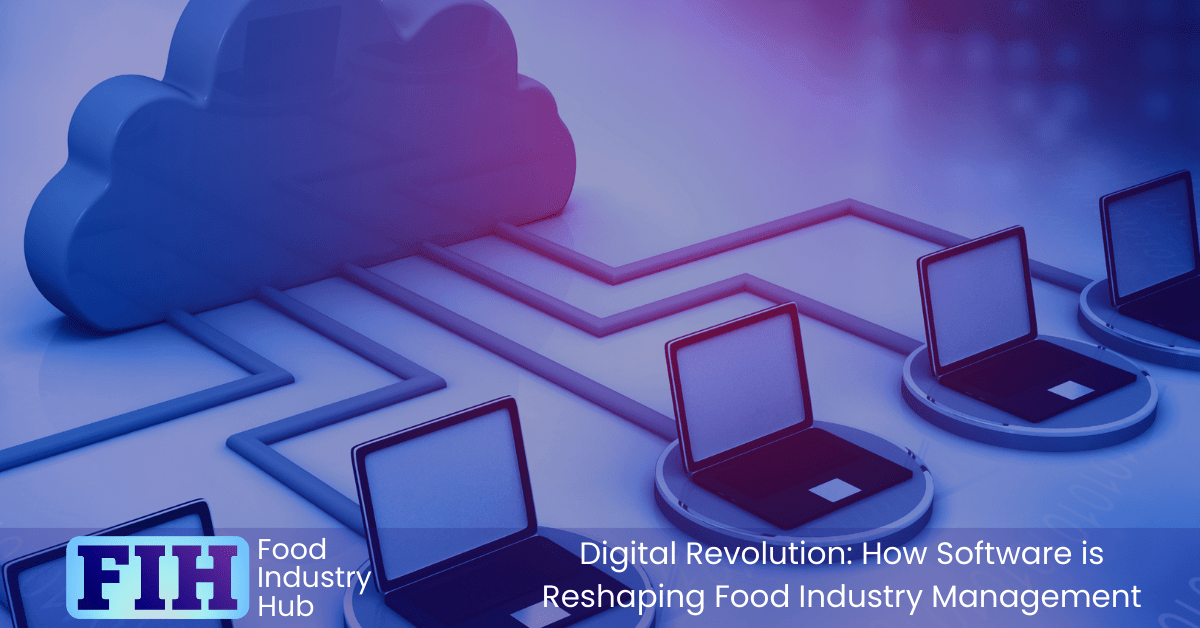
Management software applications for Food manufacturing bring connectivity benefits

Record, Investigate and Resolve Any Nonconformance

Nonconformance management is a really interesting example of how software solutions have been used to take a systematic activity and move its administration from offline to online. Rather than have a ring binder full of printed nonconformance records, record nonconformances on an electronic database.

There’s a clear business advantage. The system is intentionally designed around assurance scheme requirements, and the software makes it easy to retrieve records to show an auditor. The value generated by the software is rooted in the ability to store and retrieve evidence of compliance.

There’s a methodology called ‘object-oriented programming’. As far as technical jargon goes, this one’s pretty good because it’s exactly what it sounds like – so systems developers put consideration into ‘objects’ (subjects/entities/things), and orient attributes or triggered actions around them for functional reasons. The orientation of systems around the correct ‘things’ dictates what sort of functions the systems are capable of performing.

To make this easy to understand, think about a very simple system: an exchange between two people. A system of exchange might be oriented around the people, with the exchange items (money/goods/services) as attributes, and a transaction (action) triggered in the event that both people agree to the terms of the exchange. It would be dysfunctional to orient the system around the exchange items, for example. The system must be structured in such a way as to accommodate for the functions it is intended to perform.

Software presented as a compliance solution will deliver the advantages that it was designed to deliver. The orientation of the system around the compliance function is apparent in the way the workflow is presented.

The assurance scheme says you have to record nonconformances, carry out root cause analysis, and implement corrective actions – so fill in these fields to record the nonconformity, use this text area to describe root cause, and use this field to record the corrective action.

This is progressive because you get a robust record-keeping system, and it’s significantly quicker, easier, and more reliable to retrieve digital records than hardcopy files.

There’s a commercial incentive for food industry compliance software providers to hand a developer a copy of the BRCGS Food standard with a job brief: “Make the software do that.” Now the software can be marketed as a compliance solution specially aligned with that assurance scheme.

Unfortunately, orienting this type of system around the documented expectations of compliance schemes results in a system that is functionally aligned with scheme clauses, rather than the actual activity of managing nonconformances.

A system optimised for managing unplanned occurrences would identify and record incidents, and make note of the source. Associated investigation records could identify numerous contributing factors, with a corrective and preventative action plan for each. Every corrective or preventative action could be delegated to a department/team and/or a specific individual. Interacting with a well-structured system would generate user notifications and changelog entries. Every data point could contribute to trending and improvements.

In practice, a nonconformance doesn’t have a root cause and a corrective action that can be addressed with a data field for each. Investigations can yield numerous contributing factors, and it’s completely normal for a range of corrective and preventative actions to be applied to a single causative factor.

The software offered by Food Industry Hub has been developed for functional advantage first, but with consideration given to the intention and purpose of quality assurance schemes. The idea is that if you develop an excellent system optimised to perform the activity, then meeting the expectations of compliance schemes is a very small ask.

Interestingly, from a software development point of view it’s not really any more difficult to facilitate unlimited contributing factors for an incident than it is to record a single root cause, and delegating responsive actions across individual users or departments only requires a project management workflow. Systems limitations on compliance solutions are entirely born out of the fact that they’re structured to be compliance solutions as an intentional design feature. It’s not a technology limitation or anything.

This exploration is all about the potential for food manufacturing software to transform management for the food industry, and nonconformance management really is a very interesting example of how software solutions designed around ‘compliance’ as the value proposition very much do add value, but don’t bring forward all the benefits that digital systems could offer.

You might find it useful to think that for software presented as a compliance solution, external auditors are the customers being served – while functionally progressive management systems would serve the food manufacturer first, whilst still being considerate of compliance expectations.

Putting aside the way systems are structured to handle specific incidents, there is an inherent benefit to using software for operational nonconformities: connectivity.

Cloud delivery enables any employee on the factory floor to record an operational nonconformity, and this is based on decentralised data entry. Systematically, you don’t depend on the person who’s reporting the fault to leave the factory floor and enter the event information in a system located in an office somewhere – the process of entering data into a centralised management system can be decentralised to any location.

Efficiency gains from real-time decentralised data entry offer real added value – and you can see this in emerging technologies. Sensor systems linked to equipment can offer invaluable insights into overall equipment efficiency, for example.

There’s a potential for every individual working throughout a food business to proactively report things like fabrication problems, quality deviations, pest activity, or (H&S) accidents into a centralised management system in real time. A software interface that really connects everyone with the quality management system, bringing transparency of operational performance information – just like a dynamic set of sensors.

This is made possible by virtue of the fact that many individuals can contribute into a centralised management system using decentralised data entry – so this is a technological advantage that could not be achieved using offline methods.

The impact of management software for food manufacturers

Manage All Your Controlled Documents

Controlled documents present a curious sort of challenge. Curious, because the requirements and management processes are extremely simple. There is nothing technically challenging about making a note of the activation of a new document revision.

In terms of subject complexity, there’s no good reason for any food manufacturer to ever incur a nonconformity based on a failure of document control systems. This isn’t the sort of thing that takes expert knowledge or complex risk-assessment. Whenever there’s a new document revision, record the reason for change, update the quality manual to reflect the active revision, and withdraw any superseded copies.

Despite this, food manufacturers get nonconformances at audit because of document control problems all the time.

So the question is, why is such a technically simple process so hard to manage consistently?

The problem has never been that compliance is challenging to orchestrate. If you can knock together an excel spreadsheet that lists all of your documents and their revisions, you’re more than capable to putting together a compliance system.

In practice, there are two factors that determine the success or failure of document control systems:

Consistency and discipline.
Access levels.

Consistency and discipline.

You want to perform one action (update a document revision), but you have to perform an additional two actions (update the quality manual, withdraw superseded copies) in order to have completed your workflow in accordance with the document control procedure. This is the kind of situation where, over months and years, steps get skipped.

This is where workflow automations can utterly transform the way an activity is performed. An automation can be triggered by the activation of a new document revision which results in the instantaneous update of the quality manual – taking out a manual process step.

It seems laughable to think that so many nonconformities based on discrepancies between document revision records and the content of the quality manual could be avoided by such a simple automation – but the nature of the problem is rooted in human behaviour, and software can follow a repeatable process consistently and faultlessly in a way a human never can.

The problem isn’t that it’s difficult – the problem is that it’s difficult to get even a small group of people to consistently administrate the process accurately and comprehensively hundreds of times of the trot.

Access levels.

Restricting access to controlled documents can be more technically challenging.

You have to create a situation where only certain people can make updates to controlled documents in line with the requirements of your document control procedure, and you also want to make the active revision of all documents in your quality manual accessible to all employees.

This can be overcome with password-protected drive partitions, or by login credentials for certain individuals allowing access to controlled documents – but in practice, access to controlled documents can often be unrestricted.

In cases where access privileges do restrict user’s access to controlled documents, selection criteria often has nothing to do with whether that individual has received document control training, and is instead rooted in job role. So for example, all members of the technical department might be able to access and edit controlled documents – regardless of whether or not they have individually received document control training.

Here, software can provide a really functional advantage. The systems offered by Food Industry Hub enable you to determine whether specific users can access the controlled documents module, while providing all users access to the active version of every document included in your quality manual. This overcomes the problem of enabling access to the people who need to use or refer to documents, and preventing unauthorised changes or updates.

The remarkable thing about the potential for software to revolutionise operational effectiveness around document control (and associated features of the quality system such as the quality manual) is not really creditable to technological advancement. It’s more that a very simple coupling of automations to safeguard consistency, and user levels restricting access to sensitive documents, can deliver a transformative managerial advantage by addressing the systematic problems that are encountered in real life.

This is all about designing systems that address the actual challenges faced by food manufacturers, rather than reverting to the practice of creating systems oriented around the specific wording of compliance schemes. The value is in really understanding and catering for processes that need to be undertaken, rather than thinking of the compliance scheme first, and the user second.

Improve Coordination Across Departments and Teams

If you’re a department manager, it can be difficult to maintain visibility over all of the tasks that the members of your department are routinely carrying out. If you’re trying to coordinate activities across different departments and teams, it can seem like trying to heard a swarm of wasps: they’re probably not going in the direction you want, and it feels like you’re getting stung as you do it.

Suppose you have a nonconformance as a result of a customer audit. Insufficient ventilation led to mould growth inside the factory. There are corrective and preventative actions across different departments.

Preventative
Engineering department: Install additional ventilation.

Corrective
Hygiene department: clean and sanitise the area.
Quality department: validate the effectiveness of remedial actions.

Trying to get these different functions to cooperate for the effective resolution of the issue is often such an uphill struggle that the quality department is made responsible for ‘chasing’ these dependencies. The explanation is that audit nonconformities are owned by the quality department, but in reality this is an example of misaligned accountabilities.

The convention across the food industry to make the quality department accountable for all nonconformance resolutions – irrespective of the nature of the action – is not a rational alignment of responsibility and accountability… It’s more symptomatic of a reluctance to manage cross-functionally.

Systematically, the optimum scenario would be for the engineering department to be responsible for installing the additional ventilation and providing evidence – and the subsequent actions would be undertaken by the respective departments after that action was completed. Senior management would be accountable for overseeing the total process of resolution* and would maintain visibility of the coordinated actions. The technical department would upload evidence onto the customer’s system.
*This scenario would align senior management commitment with quality values by making the total resolution process an accountability of senior management, while also promoting accountability with the responsible departments.


Software can offer an effective way to overcome this type of problem with a project management workflow. Any type of activity can be represented as a project, with tasks and sub-tasks making up complex processes. Connectivity and management interventions allow specific tasks to be delegated to departments and individuals, with planned and actual completion dates assigned for each.

Every department or team in your business can be coordinated – both in the internal operation of the department and in cross-functional collaborations. The systems offered by Food Industry Hub can accommodate for both planned projects and unplanned events.

Beyond delegation advantages, software can help to align organisational management through functions such as change control. If there’s a benefit to having a document revision change authorised by representatives from different departments, that can be accomplished by requesting change approval from representative individuals.

Another thing to consider is the effect of engagement on food safety and quality culture. The more you can establish a relationship between the food safety and quality management system and employees, the more relevant and meaningful the documented management system becomes as an internal authority.

A situation where individuals not only reference the management system for guidance, but manage their workload and activities from the same management system, would be highly conducive to a strong food safety and quality culture.

Use software to improve Coordination Across Departments and Teams

FAQ

Can software help with nonconformance management in food manufacturing?

Yes, software can definitely help with nonconformance management in food manufacturing. Nonconformance refers to situations where products, processes, or systems do not meet established standards or specifications. In the food manufacturing industry, ensuring quality and safety is paramount, and managing nonconformances effectively is crucial to maintaining regulatory compliance and consumer trust.

Here’s how software can assist with nonconformance management in food manufacturing:

Automated Reporting and Tracking: Nonconformance management software can automate the process of reporting and tracking incidents or issues. When a nonconformance occurs, employees can input the details into the software, which then generates reports and tracks the entire lifecycle of the nonconformance.

Alerts and Notifications: Software can send automated alerts and notifications to the appropriate personnel when a nonconformance is reported or identified. This ensures that the responsible parties are aware of the issue and can take immediate action.

Workflow and Escalation: Software can streamline the workflow for addressing nonconformances. It can route the issue to the appropriate departments or individuals for investigation, corrective action planning, and resolution. If a nonconformance is not resolved within a specified timeframe, the software can escalate the issue to higher management levels.

Root Cause Analysis: Nonconformance management software can facilitate root cause analysis by providing tools to investigate the underlying reasons for the nonconformance. This helps in identifying the source of the problem and implementing effective corrective and preventive actions.

Evidence Collection: The software can store all related documentation, such as reports, images, and communication logs, in a centralised location. This ensures that all necessary information is readily accessible and can be used for audits and compliance purposes.

Audit Trail: Nonconformance management software can maintain a comprehensive audit trail of all actions taken regarding the nonconformance. This is essential for demonstrating compliance with regulations and standards.

Data Analysis and Trend Identification: By aggregating data from various nonconformances, software can help identify trends and patterns. This information is valuable for making informed decisions to prevent future nonconformances.

Continuous Improvement: The software can contribute to a culture of continuous improvement by providing insights into recurring issues and enabling the implementation of effective corrective actions.

Overall, nonconformance management software enhances the efficiency, accuracy, and accountability of dealing with nonconformances in food manufacturing, ultimately leading to improved product quality and safety.

Can software be used to improve document management for food manufacturers?

Absolutely, software can be extremely beneficial for improving document management in the context of food manufacturing. Proper document management is crucial for maintaining regulatory compliance, ensuring product quality, and streamlining operations. Here’s how software can help:

Centralised Storage: Document management software provides a centralised repository for all documents related to food manufacturing, including standard operating procedures (SOPs), work instructions, recipes, specifications, and more. This ensures that employees have easy access to the most up-to-date documents.

Version Control: Software allows you to maintain version control for documents. This prevents confusion by ensuring that users always access the latest approved version of a document. Older versions are archived, providing a history of changes.

Access Control: Document management software enables you to control who can access, edit, and approve documents. This is crucial for maintaining data security and ensuring that only authorised personnel can make changes.

Workflow Automation: You can create automated workflows that update the quality manual with the activation of every new document revision – safeguarding consistency, and reducing administration costs.

Search and Retrieval: Document management software often includes powerful search capabilities. This helps users quickly locate specific documents or information within documents, reducing the time spent searching for critical information.

Mobile Access: With mobile-friendly interfaces, employees can access documents even when they are not at their desks. This is particularly useful for employees who need to reference documents while on the production floor or in the field.

Document Lifecycle Management: Software can help manage the entire lifecycle of a document, from creation and review to approval, distribution, and eventual archiving or disposal.

By implementing document management software, food manufacturers can streamline processes, reduce errors, enhance collaboration, and ensure compliance, all of which contribute to better overall operations and product quality.

Can software make a difference to the way cross-functional activities are managed in food manufacturing?

Absolutely, software can make a significant difference in the way cross-functional activities are managed in food manufacturing. Cross-functional activities involve collaboration and coordination among different departments or teams within an organisation. In the complex and regulated environment of food manufacturing, effective management of cross-functional activities is crucial for maintaining product quality, safety, and regulatory compliance. Here’s how software can help:

Communication and Collaboration: Software provides a platform for seamless communication and collaboration across departments. It enables real-time sharing of information, updates, and progress on projects, ensuring that everyone involved is on the same page.

Centralised Information: With a software platform, all relevant information, documents, and data related to cross-functional activities can be stored in a centralised location. This prevents silos of information and ensures that teams have access to accurate and up-to-date information.

Task and Project Management: Software tools often include task and project management features that allow teams to create, assign, and track tasks related to cross-functional activities. This ensures accountability and helps teams stay organised.

Workflow Automation: Many software solutions offer workflow automation capabilities. This means that processes involving multiple departments can be streamlined with predefined workflows that guide the flow of tasks and approvals.

Visibility and Transparency: Software provides visibility into the status of cross-functional activities. Managers and team members can easily track progress, identify bottlenecks, and take proactive measures to keep activities on track.

Real-time Updates: Software allows for real-time updates and notifications. For instance, if there’s a change in a project status or an issue arises, relevant team members can be notified immediately, allowing for rapid response.

Cross-Departmental Reporting: Software can generate reports that span multiple departments, providing insights into the performance of cross-functional activities. This data-driven approach helps in making informed decisions.

Document Sharing and Version Control: Effective cross-functional activities often require sharing documents. Software ensures that the most recent versions of documents are accessible to all relevant parties, reducing errors caused by outdated information.

Conflict Resolution: In cross-functional activities, conflicts or differences in approach can arise. Software provides a platform for discussions, decision-making, and conflict resolution, promoting alignment among departments.

Data Integration: Modern software can integrate various systems used by different departments. This facilitates the flow of data across functions, reducing the need for manual data entry and minimising errors.

Compliance Management: Software can help ensure that cross-functional activities adhere to industry regulations and standards. It can facilitate documentation of compliance-related processes and evidence.

Audit Trails: Software maintains an audit trail of activities and changes made by different users. This is valuable for tracking decisions, actions, and responsibilities, which is essential for audits and accountability.

By implementing software for cross-functional activity management, food manufacturing companies can improve efficiency, reduce miscommunications, enhance collaboration, and ultimately deliver higher-quality products while meeting regulatory requirements.

What benefits can software bring for the development of a food manufacturer's food safety and quality culture?

Software can bring numerous benefits to the development of a food manufacturer’s food safety and quality culture. Here are some key advantages:

Standardisation and Consistency: Software enforces standardised processes and procedures, ensuring that food safety and quality practices are consistently followed across all operations and departments. This instils a sense of confidence and predictability around the way quality processes are enacted – setting the scene for cultural norms and expectations in favour of food safety and quality.

Continuous Improvement: Software allows for the collection of feedback, suggestions, and incident reports. This information can be used to drive continuous improvement efforts in food safety and quality practices. This is a cultural advantage borne out of communication and visibility.

Transparency and Accountability: By using software to track actions and decisions, organisations can establish clear lines of responsibility and accountability. This creates a culture where individuals take ownership of their roles in ensuring food safety and quality. Software is really good for tracking actions taken by specific individuals – making it easier to align rewards and positive reinforcement with actions taken by particular individuals.

Quick Response to Incidents: In the event of a food safety or quality incident, software can expedite the response process. Relevant information can be accessed quickly, aiding in containment and resolution. When employees see that the business is committed to quick and effective fault resolution, it adds credibility to the stated values that the business claims to uphold.

Employee Engagement: Involving employees in the adoption and utilisation of software empowers them to contribute to food safety and quality efforts. When employees see that their contributions matter, they’re more likely to actively participate in maintaining standards. There’s also a clear benefit to having users interact with the management system in a way that empowers them with information at the same time as managing their tasks and activities.

Reduction in Manual Processes: Software reduces the need for manual data entry and paperwork, freeing up employees’ time to focus on higher-value tasks, such as proactive quality improvements. This can ease frustration over repetitive tasks, improve employee satisfaction, and orient behaviours toward improvement initiatives.

Culture of Continuous development: Employing technological solutions is an effective way for food businesses to signal to their workforce that the organisation values adaptation and improvement. The act of resourcing and implementing digital systems demonstrates a commitment to reliable process management and presents clear ways for employees to engage with the quality system.

Overall, the integration of software can lead to a stronger food safety and quality culture by promoting consistency, accountability, transparency, and continuous improvement throughout the organisation.

In Summary

The initial software products that have been introduced onto the market all have unique strengths and weaknesses. They each provide a differentiated combination of features and benefits – and none of them are bad or defective.

There is a design pattern that has been evident across software solutions. Design the software to do what the clauses of compliance standards demand, and label it a ‘compliance solution’. By itself, this approach is better than pen and paper in most cases.

At Food Industry Hub, we respect the ways existing service providers have contributed to an innovation curve which introduces commercial software advantages to the food manufacturing industry, and we see opportunities to really change the landscape of the food industry by innovating in favour of managerial and operational benefits. A paint-by-numbers compliance solution genuinely does add some value, but we believe the key to moving forward lies in understanding activities and objectives of food manufacturers rather than depending on assurance schemes to define exactly how processes should occur.

There are some really radical advantages that software can bring to the food industry – both on the supply chain scale and at site level.

Some innovations will be transformative by virtue of technological advancement. Artificial intelligence, for example, will introduce capabilities we haven’t yet imagined.

Some innovations will revolutionise operations as a result of applying the right functional solutions where the greatest impact on performance can be had.

More and more advantages will be discovered in favour of effective operations. We believe management systems for food manufacturers can be optimised for performance over compliance – with positive audit outcomes being a natural outcome.

It’s noteworthy that digital systems and connectivity have the potential to transform supply chain scale operations as well as at site level. Everything from stock movements and traceability through to relationships between food manufacturers and their commercial partners can be re-evaluated through a technological lens.

We are now at a point where design philosophy can move away from ‘make the software do what the compliance standard says’ and toward ‘how can software be applied in food manufacturing for the greatest practical benefit?’ Fundamentally, this is how software will transform management across the food industry.

Further Resources

Food Industry Hub serves the food industry with a range of digital resources for the benefit of both commercial food manufacturers and food industry professionals.

For food manufacturers, we offer integrated management systems that give every user a direct interface with your QMS.

For food industry professionals, we provide an extensive signposting service in addition to informational content we hope you’ll find useful as you face new professional challenges. We have very ambitious plans to expand the range of services offered, and currently present informational content on management, safety and quality, and professional success.


Responding to Serious Adverse Evidence Before the Cause Is Known

Responding to Serious Adverse Evidence Before the Cause Is Known

A concerning result arrives during production. The technical team is checking whether it reflects a local problem, a wider issue or an error in the evidence. Meanwhile, work and product may continue to move. Managers cannot wait for a complete explanation before...

Turning Strategic Priorities into Work Managers Can Deliver

Turning Strategic Priorities into Work Managers Can Deliver

A strategic priority can be understood throughout a food-manufacturing business and still leave daily work largely untouched. People may know the goal but continue with the same projects, staffing assumptions, approval routes and review measures. To make a priority...

How Senior Leaders Can Govern Without Rechecking Every Control

How Senior Leaders Can Govern Without Rechecking Every Control

Senior leaders are accountable for whether a management system has the people, resources and direction to work. They cannot personally inspect every receiving decision, maintenance task or verification record. Trying to do so would displace the specialists who own...

Making Management Review a Decision and Learning Process

Making Management Review a Decision and Learning Process

Management review brings senior leaders into contact with information that individual teams cannot resolve in isolation. A complaint trend, an overdue corrective action and a request for additional capability may each appear in a different report. Their relationship,...

How to Transfer Operational Learning Across Shifts and Sites

How to Transfer Operational Learning Across Shifts and Sites

A finding at one site can reveal a weakness that exists elsewhere. It can also describe a local arrangement that has no equivalent in another shift, function or facility. Managers need a way to distinguish those cases before turning one team's corrective action...

Preserving the Reasoning Behind Management Decisions

Preserving the Reasoning Behind Management Decisions

A current procedure can tell a team what to do without explaining why that method was chosen. That may be enough for routine execution. It becomes less helpful when a supplier changes, equipment is replaced, a recurring problem appears or the person who made the...

How Organisations Turn Findings into Verified Change

How Organisations Turn Findings into Verified Change

An investigation can be completed, its actions closed and its report filed while the conditions that produced the original problem remain largely intact. The records show that people responded. They do not yet show whether the organisation will make a better decision...

When Short-Term Savings Erode Management Capability

When Short-Term Savings Erode Management Capability

Reducing labour or support costs can be a sound management decision. The difficult case is a saving that leaves today's output intact because people absorb the missing work. Extra hours cover an absence, an experienced technician takes on a second area, or a...

How to Make a Credible Case for Preventive Investment

How to Make a Credible Case for Preventive Investment

Preventive work often competes for money with projects that promise an obvious increase in output. A new line can be described in units per hour. Better maintenance, stronger monitoring or more capable technical support may chiefly prevent interruptions that have not...

Commercial Judgement Begins With the Outcome That Must Be Protected

Commercial Judgement Begins With the Outcome That Must Be Protected

A lower unit price can look attractive until a material change slows approval, interrupts production or creates more waste. A tighter process setting can improve yield while making acceptable product harder to assure. In each case, the commercial result depends on...

When the Result Arrives Later Than the Management Response

When the Result Arrives Later Than the Management Response

A maintenance change is completed on Monday, and the following day's defect count is much the same. It is tempting to call the change ineffective. Yet the equipment may need to run across different products and operating conditions before the outcome it was...

Make Systems Thinking Useful to a Management Decision

Make Systems Thinking Useful to a Management Decision

A department can complete its work on time while the next team still receives something it cannot use. The local measure looks healthy; the wider process is delayed. Managers often meet this kind of problem as a missed target in one area, although the conditions...

A Process Improvement Must Survive Normal Production

A Process Improvement Must Survive Normal Production

A trial can produce an encouraging chart: fewer defects, less spread and a process that appears easier to control. Those results are worth examining, but they do not settle whether the change is ready for routine production. The trial may have used a narrow product...

Use Variation Data to Strengthen Cause Investigation

Use Variation Data to Strengthen Cause Investigation

Two defects may look similar in a daily report while pointing to different kinds of work. One may follow an unusual breakdown or a specific wrong-material selection. Another may be part of a recurring spread in results from a process that otherwise runs as designed....

Trust the Measurement Before the Variation Analysis

Trust the Measurement Before the Variation Analysis

A chart of process readings can make a production problem look well understood. The points may form a pattern, and a large number of observations can make the conclusion feel secure. Yet every point depends on a device, a method of taking the reading, a choice of...

When Six Sigma Is Worth the Analytical Effort

When Six Sigma Is Worth the Analytical Effort

A recurring defect can make a formal improvement project look like the obvious next step. The method has a name, a sequence of stages and the promise of more disciplined analysis. Yet the decision to use it should begin with the nature of the problem. A production...

Make TPM a Shared Reliability Practice With Clear Work Boundaries

Make TPM a Shared Reliability Practice With Clear Work Boundaries

An operator may notice a change in a machine long before its next planned maintenance visit. Engineering may know that the same component has needed adjustment several times. Each view can improve equipment reliability, but only if the observations reach a person who...

Before Reducing Inventory, Test What It Protects

Before Reducing Inventory, Test What It Protects

Reducing inventory can release cash, free warehouse space and make material flow easier to manage. A lower stock figure can also expose a factory to interruptions that its previous buffer quietly absorbed. The management decision is therefore more specific than...

When Higher OEE Hides a Worse Operating Result

When Higher OEE Hides a Worse Operating Result

A production line runs faster, loses less recorded time and reports a higher Overall Equipment Effectiveness score. That is useful news. It may also be an incomplete account of what changed. If Engineering now spends more time on reactive repairs, Hygiene has less...

Find the Real Bottleneck by Mapping Evidence and Decisions

Find the Real Bottleneck by Mapping Evidence and Decisions

A production line can finish its work on time while the product remains unavailable for its next step. The physical process may be complete, yet a result still needs interpretation, a record is missing, or someone with the right authority has not made a status...

Make Lean Improvements Without Removing Necessary Food Controls

Make Lean Improvements Without Removing Necessary Food Controls

A step that takes time may be waste, necessary protection or a mixture of both. In food manufacturing, the distinction matters when an improvement team sees a long changeover, an inspection before release or a route that appears unnecessarily indirect. Removing time...

Judge 5S by How Food-Factory Work and Controls Improve

Judge 5S by How Food-Factory Work and Controls Improve

A workplace can look orderly in an inspection photograph while the people using it still search for the right item, move around an obstruction or struggle to see a developing defect. It can also look busy and be well organised for the work being done. The purpose of...

When Small Improvements Keep Moving the Problem

When Small Improvements Keep Moving the Problem

A team makes a task quicker, closes its action and reports a better measure. Suppose the people who receive its work must then spend longer chasing missing information, correcting it or waiting for a decision. The first improvement may be real for that team, but the...

Find Improvement Opportunities in the Work People Actually Do

Find Improvement Opportunities in the Work People Actually Do

A process map can make a difficult task look effortless. It shows the approved sequence, the intended handovers and perhaps the time allotted to each activity. It may not show the search for a missing tool, the repeated re-entry of information or the pause while...

Make Continuous Improvement a Controlled Learning Cycle

Make Continuous Improvement a Controlled Learning Cycle

Continuous improvement often begins with a small irritation: a repeated wait, an awkward handover or a record that seems to duplicate another. People doing the work can usually describe the friction more clearly than a distant project team. Yet the benefit of removing...

Keep Open Issues Visible Until the Decision Is Closed

Keep Open Issues Visible Until the Decision Is Closed

A management meeting can finish while the issue it discussed remains open. The minutes may show that an investigation was assigned and a date agreed. By the next meeting, the original report may no longer be on the agenda. If the underlying condition persists, the...

Report While There Is Still Time to Decide

Report While There Is Still Time to Decide

A report can be accurate, complete and too late. If a supplier concern reaches the manager responsible for a purchasing commitment after that commitment has been made, the information can still inform later review. It cannot influence the choice that has already...

How Management Reports Lose Meaning on the Way Up

How Management Reports Lose Meaning on the Way Up

A senior manager cannot work through every operational record behind a site report. The information has to become shorter as it moves from the people doing the work to those who decide on priorities and resources. That change in detail is useful. Trouble begins when a...

A Balanced Scorecard Needs a Wider View, Not an Average of Risks

A Balanced Scorecard Needs a Wider View, Not an Average of Risks

A food manufacturer can meet its service target, improve yield and still have a serious unresolved control issue. Those results do not contradict one another. They describe different parts of the business, and managers need to see all of them before deciding what to...

When a KPI Improves but Control Gets Worse

When a KPI Improves but Control Gets Worse

A rising completion rate looks like progress. If a site closes more corrective actions within its target time, managers have a reasonable reason to look more closely at what changed. Yet the rate describes a defined event: cases recorded as closed within a period. It...

Interpreting KPI Movement Before Calling It Improvement

Interpreting KPI Movement Before Calling It Improvement

A falling complaint count looks encouraging. It may reflect fewer problems reaching customers, but the number alone cannot establish that conclusion. The site may have sold less product, changed its mix, altered its classification rules or made it harder for feedback...

Designing KPIs That Support Decisions and Still Deserve to Exist

Designing KPIs That Support Decisions and Still Deserve to Exist

A dashboard can display a precise number without helping anyone decide what to do. The number may be easy to collect, familiar to senior managers and stable enough to plot every month. Those qualities do not establish that it describes the condition the organisation...

Managing External Providers While Retaining Site Accountability

Managing External Providers While Retaining Site Accountability

An external laboratory can produce a result, a contractor can repair a machine, and a supplier can provide information about a material. The food-manufacturing site still has to decide what those outputs mean for its own work. That distinction becomes difficult in...

Using Theory of Constraints Without Losing Control of the Work

Using Theory of Constraints Without Losing Control of the Work

A production line may be able to make more product than the laboratory can test, or a technical team may complete its review faster than the authorised decision maker can consider it. Adding effort to the fast part of either process will make more work wait. The...

Following Change Impacts Beyond the Initiating Department

Following Change Impacts Beyond the Initiating Department

A change can look small from the place where it begins. A different packaging material may seem to require a supplier approval and a line trial. Yet the material could alter how equipment is set, how an allergen or hygiene control is applied, what the specification...

Keeping Controlled Information Aligned With Changed Work

Keeping Controlled Information Aligned With Changed Work

A revised instruction can be approved while the people expected to use it are still working with the old equipment or record. The reverse can happen too: a team develops a practical local method, yet the controlled instruction still describes the earlier one. Both...

Managing Temporary Controls During Operational Change

Managing Temporary Controls During Operational Change

Some changes cannot be introduced everywhere at once. A revised method may begin on one line while another continues with the old version. Equipment may become unavailable before a permanent repair is complete. In either case, people have to work in a period when the...

Managing Change Fatigue Through Better Sequencing and Mobilisation

Managing Change Fatigue Through Better Sequencing and Mobilisation

A site can have good reasons for changing a procedure, introducing new software and revising a handover arrangement. Each proposal may be sound on its own. If all three reach the same supervisors and teams at once, those people must learn, explain, practise and check...

Managing Resistance to Change Without Misdiagnosing the Problem

Managing Resistance to Change Without Misdiagnosing the Problem

A person who challenges a proposed change may be protecting a familiar routine. They may also have noticed that the new routine cannot be carried out as designed. Calling both responses “resistance” obscures the difference that a manager needs to understand before...

Managing Change From Approval to Stable Practice

Managing Change From Approval to Stable Practice

An approved change can still leave everyday work much as it was. The proposed method may have been assessed, the revised procedure issued and the training recorded, yet people can find that the new decision depends on an unavailable colleague or that the old form is...

Close Projects by Transferring Ownership Into Stable Operations

Close Projects by Transferring Ownership Into Stable Operations

A project can reach its final milestone while the new way of working is still settling. People may be using a temporary check, an improvement may be waiting for evidence, or one shift may be working differently from the process that was approved. Closing the project...

Manage Supplier Transitions Around Readiness, Not Delivery Dates

Manage Supplier Transitions Around Readiness, Not Delivery Dates

A replacement supplier may be able to deliver material on the date Procurement requested while the site is not ready to use it. The specification may still need agreement, approval evidence may be incomplete, or a trial may not yet have established whether the...

Close Physical Change Projects Only When Operation Is Ready

Close Physical Change Projects Only When Operation Is Ready

A new machine can be installed, commissioned and handed over as an asset while the production team is still unable to use it as part of a controlled routine. A new wall or barrier can be complete while people, materials and cleaning activities still follow the old...

Revisit the Project Promise When Scope or Assumptions Change

Revisit the Project Promise When Scope or Assumptions Change

A project can keep its original completion date on a report long after it has ceased to be the project that date described. An extra requirement may have been accepted without changing the resources available. A supplier may no longer be able to meet the lead time on...

Build Project Schedules Around the Work That Enables Operation

Build Project Schedules Around the Work That Enables Operation

The installation date is often the most visible point in a food-manufacturing project plan. Yet equipment can be in place while the work needed to use it responsibly is still unfinished. A specification may await approval, a relevant check may not be complete, or the...

Give Project Decisions an Owner Beyond the RACI Chart

Give Project Decisions an Owner Beyond the RACI Chart

A project can have a clear list of task owners and still stall when two departments need the same specialist, an approval exceeds the project lead's authority or a transition carries a risk no single function can accept. The problem is not necessarily poor task...

Govern Projects by the Operating Change They Must Deliver

Govern Projects by the Operating Change They Must Deliver

A project plan can be completed on time while the change it was meant to deliver remains difficult to use. New equipment may be installed, for example, while the people who will operate, maintain and assess it still lack an agreed way of working. The schedule records...

Plan Management Capacity for Events as Well as Routine Work

Plan Management Capacity for Events as Well as Routine Work

A team can have enough people for every task on its weekly schedule and still run out of capacity when an adverse result, equipment failure or significant supplier problem arrives. The new work does not politely wait for a meeting slot. People must establish what...

When Manager Overload Is a Problem With the Role

When Manager Overload Is a Problem With the Role

A manager can have a carefully organised diary and still be unable to keep up with the work the organisation expects. Planned reviews, staff support and routine decisions share the week with urgent exceptions. Some tasks can move; others return because the manager...

When One Person Carries Several Critical Roles

When One Person Carries Several Critical Roles

On a smaller food manufacturing site, one capable person may hold responsibilities that a larger organisation distributes across several posts. That arrangement can be efficient: the person understands the site, can connect related decisions and avoids unnecessary...

Manage Attention Where Decisions and Work Are Stuck

Manage Attention Where Decisions and Work Are Stuck

A manager can spend a full day responding to legitimate requests and still leave important work waiting. A complaint needs an answer, a meeting needs a decision, and a colleague needs an approval before proceeding. The difficulty is not simply the number of demands....

Laboratory Turnaround Is Only Part of the Decision Time

Laboratory Turnaround Is Only Part of the Decision Time

A laboratory can report a result within its agreed turnaround and an operational decision can still be late. The sample may have waited before dispatch, arrived without enough context to interpret it, or reached a reviewer who was unavailable at the point the result...

Shared Specialists Need One View of the Work

Shared Specialists Need One View of the Work

Two departments can each have a workable plan and still be unable to carry out both. Their schedules may depend on the same technical specialist, the same authorised reviewer or the same opportunity to access a production line. Because each plan looks only at its own...

Before Adding Resource, Find the Constraint in the Work

Before Adding Resource, Find the Constraint in the Work

When a queue grows, asking for more people feels practical. It may be the right response, but the queue alone does not show whether the shortage is labour, equipment, access, information or a decision. Additional staff can spend their time waiting for the same missing...

Start Resource Decisions With the Outcome at Stake

Start Resource Decisions With the Outcome at Stake

A request for another person, more laboratory hours or a larger maintenance budget can be easy to challenge and difficult to decide. The quantity is visible; the result it is meant to protect may be less so. A sound allocation decision starts by naming that result,...

Management Reports Should Make the Decision Visible

Management Reports Should Make the Decision Visible

A report can be full of completed actions and still leave a manager unsure what needs to happen next. Pages of activity show that work took place, but a single unresolved control weakness or resource constraint may matter more to the next decision. The opposite...

When the Budget Holder Does Not Own the Risk

When the Budget Holder Does Not Own the Risk

A department can be responsible for paying for work without being the one that bears the consequences if the work is delayed. Engineering may hold the maintenance budget, while Production needs the equipment and Technical needs assurance about its condition. A...

When a KPI Improves but the System Gets Worse

When a KPI Improves but the System Gets Worse

A department reports better performance. Its target has been met, the trend is moving in the desired direction, and the people responsible can explain how they achieved it. Yet work is accumulating elsewhere, decisions take longer, or a control activity is being...

When Departmental Objectives Collide, Make the Trade-off Visible

When Departmental Objectives Collide, Make the Trade-off Visible

A Production Manager may be asked to protect today's output while a Technical Manager needs time to establish whether a control has worked. Both are carrying legitimate responsibilities. The difficulty begins when the schedule assumes the line will run and the...

Respond Quickly Without Deciding Before the Evidence

Respond Quickly Without Deciding Before the Evidence

A customer wants an explanation today. An auditor has challenged a control. A supplier has information that may affect a production decision. Each situation calls for attention, and delay can carry a real cost. Yet a quick reply and a sound conclusion depend on...

Involve Stakeholders When Their Input Can Change the Work

Involve Stakeholders When Their Input Can Change the Work

A stakeholder list can be complete as a list of names and still be poor guidance for a decision. A senior person may have little direct part in a particular change, while an operator, supplier or specialist with no approval right may hold information that determines...

Coordinate Shared Work Without Losing Ownership

Coordinate Shared Work Without Losing Ownership

Cross-functional work often has many legitimate contributors. Production may control access to a line, Engineering may complete a modification, and Technical may assess whether the change meets its intended requirements. Each team can own its part while the overall...

Make the Next Team Able to Proceed

Make the Next Team Able to Proceed

A department can finish its assigned work while the wider job remains stuck. Engineering has completed a repair, but Production does not know whether the equipment can return to service. A laboratory has issued a result, but the site cannot connect it confidently to...

Choose Suppliers on Total Consequence, Not Price Alone

Choose Suppliers on Total Consequence, Not Price Alone

A supplier's quoted price is visible before many of the costs of using that supplier are known. A lower unit price can be valuable, especially when margins are tight. It can also be offset by extra assurance work, inconsistent material, longer lead times or...

Build One Evidence Chain Across an Investigation

Build One Evidence Chain Across an Investigation

An investigation can collect a large amount of information and still fail to explain an event. Production has its records, Hygiene has cleaning information, Engineering has maintenance history and a laboratory has a result. Each may be accurate within its own area....

Make Product Launch a Readiness Decision

Make Product Launch a Readiness Decision

A new product can have an agreed specification and a booked production slot while the operation that must make it is still preparing. The packaging may be awaiting approval, a line trial may have exposed a capacity limit, or the people who will run and check the...

Involve the People Who Will Make the Change Work

Involve the People Who Will Make the Change Work

A change can be technically sound on paper and awkward to carry out on a busy line. The proposed check may need access that disappears during production, information that arrives after the decision, or time that the shift does not have. People who will perform and...

Negotiate Competing Interests With Real Alternatives

Negotiate Competing Interests With Real Alternatives

Negotiation inside a food-manufacturing business often starts with firm positions. Production needs a date. Technical needs evidence. Procurement needs a workable supplier and price. Each position can sound like an obstacle to the others, even when each reflects a...

Know When Consultation Must Become a Management Decision

Know When Consultation Must Become a Management Decision

Disagreement often deserves more conversation. A manager may need to hear evidence held by another function, understand why two teams see a risk differently, or help people work together after a difficult exchange. But another meeting can also postpone a choice that...

When Recurring Conflict Needs a Governance Decision

When Recurring Conflict Needs a Governance Decision

When the same two functions argue over the same work every week, another appeal for better cooperation may bring a temporary pause. It will do little if neither function has the authority to settle the competing commitments. Repeated conflict can be a sign that the...

Take a Difficult Conversation from Evidence to Decision

Take a Difficult Conversation from Evidence to Decision

A difficult conversation at work should leave people better able to act. The immediate result may be an agreed change, a decision that one party dislikes, or a clearly owned escalation. Continuing to talk until everyone appears comfortable can leave the original...

Challenge the Reasoning Without Attacking the Specialist

Challenge the Reasoning Without Attacking the Specialist

A manager may need to decide how work proceeds after receiving specialist advice, even when the specialist knows far more about the technical subject. In a food factory, a maintenance specialist might report that a repaired machine can return to a proposed schedule....

Make It Possible to Raise Problems Before They Become Consequences

Make It Possible to Raise Problems Before They Become Consequences

An instruction can be clear to its author and still leave a person doing the work unsure how to apply it. Suppose a proposed packaging sequence changes during a shift, and an operator notices that the instruction does not fit the work in front of them. The immediate...

Give Every Management Message an Owner and a Real Receiver

Give Every Management Message an Owner and a Real Receiver

When several functions contribute to a management message, its content may be sound while its route to action remains uncertain. Maintenance can supply findings, quality can assess an implication, and operations can describe a planning constraint. Someone still needs...

Tailor Management Messages Without Changing the Truth

Tailor Management Messages Without Changing the Truth

A production plan may need a decision before every piece of supporting information is available. If a supplier's approval evidence is still under review, procurement, production planning and senior management cannot simply wait without knowing what to do. Yet a...

Preserve Decision Context in Shift and Site Handovers

Preserve Decision Context in Shift and Site Handovers

“Repair pending” may be a true entry in a shift handover. It tells the next team that work remains, but it does not explain why equipment is in its present condition, what has already been checked, which restriction still applies or who can decide when it returns to...

Communicate Decisions So the Work Actually Changes

Communicate Decisions So the Work Actually Changes

A manager may decide that one job now takes priority over another, announce the new order and assume the team will adjust. Yet the original deadline can remain in the schedule, materials can still be prepared for the old sequence, and people in other functions may...

Manage Performance Between Appraisals

Manage Performance Between Appraisals

An annual appraisal should bring together what a manager and colleague already understand about the year. If it is the first occasion on which a significant performance gap is discussed, the conversation arrives too late to help with much of the work it describes. The...

Diagnose Recurring Performance Problems Before Choosing a Remedy

Diagnose Recurring Performance Problems Before Choosing a Remedy

A manager gives feedback about a missed action. The same problem appears again, so the manager repeats the conversation with more emphasis. When it happens a third time, the temptation is to conclude that the person is unwilling to improve. That conclusion may be...

When to Coach, Instruct or Hold Someone Accountable

When to Coach, Instruct or Hold Someone Accountable

A manager sees a team member hesitate over a decision. Asking how they see the options might help them develop judgement. It might also leave them without a clear instruction when the work has an immediate boundary. Managers need to match the intervention to the work...

Make Feedback Specific, Timely and Proportionate

Make Feedback Specific, Timely and Proportionate

A manager notices that information needed at a shift hand-off was missing. By the time the issue is raised, the observation may have turned into an interpretation: the person was careless, did not take ownership or should have known better. None of those claims...

Judge Performance Fairly When Results Depend on Other Teams

Judge Performance Fairly When Results Depend on Other Teams

An improvement action misses its due date. The person named on the action appears to have failed, and the overdue figure enters a management report. Yet the next step may have required an assessment from another function, a decision outside that person's authority...

Set Expectations for Results, Evidence and Judgement

Set Expectations for Results, Evidence and Judgement

A person can complete every assigned activity and still leave the intended result unresolved. A check was performed, a meeting held or a report submitted, but the information needed for a decision is missing. If the manager described only the activity, both parties...

Make Roles Clear Where the Work Changes Hands

Make Roles Clear Where the Work Changes Hands

A job description can explain the broad purpose of a role, yet leave the next action unclear when work crosses a team boundary. One person gathers information, another reviews it, and a third is expected to approve a change. If the hand-off is incomplete or the...

Use Motivation Theories to Examine Work, Not Label People

Use Motivation Theories to Examine Work, Not Label People

Motivation theories can give managers useful ways to notice what work asks of people and what may support sustained effort. They become less useful when a framework is treated as a diagnosis of a particular person. A missed task does not reveal which need someone has,...

Recognise the Work That Keeps Problems from Growing

Recognise the Work That Keeps Problems from Growing

The work that attracts the most attention is often easy to see: a target reached, a difficult problem resolved or an urgent response delivered. Many valuable contributions in food manufacturing are quieter. A colleague keeps a routine check dependable, challenges...

Diagnose the Work Before Judging Motivation

Diagnose the Work Before Judging Motivation

When work is late, incomplete or repeatedly done in a way a manager has challenged, the behaviour is visible. The reason for it is less certain. A person may be unwilling to do the work as expected, but they may also lack time, information, authority or a workable...

Give People Real Responsibility Without Leaving Them Exposed

Give People Real Responsibility Without Leaving Them Exposed

People often develop sound judgement by taking responsibility for work that is less familiar or more consequential than their usual assignment. The experience has to be real: observation alone cannot reveal how someone weighs evidence, coordinates others or acts when...

Make Deputy Cover Work Before the Absence

Make Deputy Cover Work Before the Absence

A named deputy can be familiar with a manager's work and still be unable to keep it moving when that manager is away. The deputy may know how a task is performed but have no authority to make the decision it leads to. They may have approval rights in principle but...

Prove Competence in the Work, Not on the Training Record

Prove Competence in the Work, Not on the Training Record

A training record tells a manager that somebody attended, received an explanation or completed a learning activity. It rarely settles the decision that follows: can this person now do the work to the required standard, under the conditions in which it actually...

Stop High Performance Becoming a Single Point of Failure

Stop High Performance Becoming a Single Point of Failure

The most dependable person in a team is often the one everyone calls when work becomes difficult. They know which evidence matters, who needs to be involved and how an unusual case was resolved last time. Their contribution can keep the operation moving. It can also...

Keep Management Ownership Across Shift Changes

Keep Management Ownership Across Shift Changes

A shift can finish while a decision remains open. The next team may inherit an interim control, a delayed repair or an exception that needs further assessment. If the handover only reports that the issue exists, the receiving team may know about the problem without...

Lead Specialists Without Confusing Authority and Expertise

Lead Specialists Without Confusing Authority and Expertise

A manager can be accountable for delivering a result without being the person best qualified, or authorised, to make every technical decision within it. That distinction becomes especially important when a specialist reports to one manager but holds an approval...

Give Autonomy Without Losing Oversight

Give Autonomy Without Losing Oversight

A manager can hand over a piece of work and still find it returning to their desk every day. They may be asked to decide small matters that the colleague could handle, or they may intervene so often that the colleague waits for instructions before acting. The opposite...

Adapt Supervision to the Work and the Person

Adapt Supervision to the Work and the Person

Two people can hold the same job title and need different support for the work in front of them. One may have carried out a routine task reliably for years; the other may be competent in the role but new to that particular activity. Even the experienced colleague may...

Make the Cost of Deferred Work Visible

Make the Cost of Deferred Work Visible

An urgent production fault may need the only technician who can restore a critical piece of equipment. Releasing that person from planned work is a sensible decision if the immediate consequence warrants it. The decision also moves the planned work somewhere else in...

Set and Revise Priorities as the Evidence Changes

Set and Revise Priorities as the Evidence Changes

An agreed order of work that was sensible yesterday can become unsuitable today. A new result may widen the possible consequence of an open issue. A prerequisite may stall, leaving another team unable to continue. A specialist may become unavailable. Managers still...

Prioritise the Work, Not the Score on the Matrix

Prioritise the Work, Not the Score on the Matrix

A team has capacity for two pieces of work today and four credible claims on its time. An equipment fault needs a response, a verification activity is due, a corrective action is approaching its agreed date, and a planned improvement is aimed at reducing recurring...

Make Temporary Decision Authority Work Under Pressure

Make Temporary Decision Authority Work Under Pressure

An urgent problem can arrive when the person who normally makes the decision is absent. The team may know how to investigate, contain or report the issue, yet still be unsure who can authorise the next consequential step. Finding a name on an absence list helps only...

Make Cross-Functional Decisions Clear at the Hand-Off

Make Cross-Functional Decisions Clear at the Hand-Off

A decision can stall even when every function has done the work assigned to it. One team has obtained the supplier information, another has assessed the technical evidence, and a third is waiting to know whether the supplier can be used. If nobody owns the decision...

Who Performs, Owns, Approves and Answers for the Work?

Who Performs, Owns, Approves and Answers for the Work?

A responsibility chart can show one name beside an activity and still leave an important gap. The person who carries out the task may not own the wider programme. Someone who approves a proposed response may not have performed the work or managed its dependencies. A...

Escalate at the Right Point, Then Learn from the Pattern

Escalate at the Right Point, Then Learn from the Pattern

Managers are asked to take ownership of difficult work and to escalate matters that exceed their authority. Both expectations are sound, but neither tells a manager where the boundary lies in a particular case. Holding an issue locally for too long can conceal a...

Send Escalation to the Holder of the Missing Decision

Send Escalation to the Holder of the Missing Decision

An issue can travel through the expected reporting line and still come back without a decision. The recipient may understand its importance but lack the authority to release a resource, make a technical judgement or direct another function's work. Further upward...

Make Escalation Produce a Decision and Return Ownership

Make Escalation Produce a Decision and Return Ownership

Copying a senior manager into a difficult issue may increase visibility without changing what anyone can do. The operating team still faces the same decision, resource constraint or conflict. Escalation becomes useful when it identifies the intervention that cannot be...

Cross-Functional Delegation Needs a Receiving System That Can Act

Cross-Functional Delegation Needs a Receiving System That Can Act

An action can be clear in a tracker and impossible in the working week. A manager assigns a colleague in another function to provide information or complete part of a corrective action. The named person understands the request, but their team has not agreed its...

Adjust Delegated Autonomy as the Work Changes

Adjust Delegated Autonomy as the Work Changes

A delegation that was sensible on Monday may need a different boundary by Thursday. The person doing the work may have shown sound judgement and be ready to decide more independently. Alternatively, new evidence may reveal a greater consequence than anyone expected...

When Delegation Keeps Coming Back to the Manager

When Delegation Keeps Coming Back to the Manager

A manager can delegate a piece of work and still find it on their desk every day. A colleague has the action, but asks the manager to approve each next step, secure access to another team or resolve every difficult choice. The manager may respond quickly and keep the...

Delegate the Outcome and Define the Decision Space

Delegate the Outcome and Define the Decision Space

An assignment can have an owner and still leave that person unable to move the work forward. The manager expects initiative, while the person doing the work waits for approval of routine choices. The opposite problem is possible too: a delegate makes a consequential...

Give Decision Owners the Authority and Information to Act

Give Decision Owners the Authority and Information to Act

A decision can have a named owner and still wait for days. The person may know the work but lack permission to act. They may have permission yet be unable to see the evidence held in another system. Or the decision may formally sit with a senior manager who receives a...

Use Weighted Decision Tools to Clarify Management Trade-Offs

Use Weighted Decision Tools to Clarify Management Trade-Offs

A weighted decision matrix can give a management choice the appearance of precision. Each option receives a score, the scores are combined, and one option comes out ahead. The calculation may be correct while the decision remains poorly understood. A binding...

Record and Review Management Decisions Without Hindsight Bias

Record and Review Management Decisions Without Hindsight Bias

When a management decision produces an unwelcome result, the information available afterwards can make the earlier choice appear obvious. The manager who made it did not have that later information. A useful review therefore examines the basis for the decision at the...

Make Defensible Management Decisions When Certainty Is Unavailable

Make Defensible Management Decisions When Certainty Is Unavailable

Food businesses sometimes have to act while important facts are still being established. An equipment condition may interrupt a planned run, a supplier problem may disrupt an agreed schedule, or an incident may leave several possible explanations. Waiting can create...

Use Specialist Advice Without Losing Managerial Decision Ownership

Use Specialist Advice Without Losing Managerial Decision Ownership

A specialist recommendation can be well founded and still leave a management decision to be made. The specialist may establish what the evidence supports, which technical limits apply and which actions are technically viable. A manager may then need to decide how an...

Make Management Information Useful from Decision to Action

Make Management Information Useful from Decision to Action

A manager can receive a detailed report and still lack what is needed to make a decision. The report may describe the situation accurately yet leave the available options, consequences and authority unclear. Even a sound choice can lose its effect if nobody has been...

What Managers Still Need to Supervise When Work Is Automated

What Managers Still Need to Supervise When Work Is Automated

Automating a routine step can remove repeated manual action while making the remaining decisions more consequential. A system may detect a condition, record a result or divert an item without someone performing each movement by hand. When it reports an exception,...

Learn from Near Misses Before Harm Occurs

Learn from Near Misses Before Harm Occurs

An event can end without harm and still reveal a weakness worth acting on. A component is found loose before it enters a product area. A handover gap is noticed before a critical check is missed. The immediate outcome is reassuring, but it does not explain whether a...

Make One-to-One Meetings Useful for the Work and the Person

Make One-to-One Meetings Useful for the Work and the Person

A one-to-one meeting gives a manager access to something a dashboard rarely shows: how a person is managing the work behind the reported result. A task can be marked complete while its owner is still relying on an awkward workaround. A deadline can look secure while...

Delegating Technical Work Without Losing Managerial Accountability

Delegating Technical Work Without Losing Managerial Accountability

A manager can be responsible for an outcome without being the person best qualified to do its technical work. In a food business, an experienced specialist may understand a process, product or control far better than the person who manages the team. Giving that...

Continuous Improvement

Continuous Improvement

IntroductionContinuous improvement represents a foundational approach to operational excellence that has transformed industries worldwide over recent decades. This systematic methodology for enhancing products, processes, and services through incremental advancements...

A Practical Guide to Kaizen

A Practical Guide to Kaizen

IntroductionIn food manufacturing, finding ways to improve efficiency, maintain quality, and reduce waste is critical to staying competitive. This is where Kaizen, a Japanese philosophy of continuous improvement, offers a compelling solution. By focusing on small,...

Values-Driven Leadership in Food Manufacturing

Values-Driven Leadership in Food Manufacturing

IntroductionMaintaining a strong commitment to food safety and quality has become more important than ever. As a senior leader, you have the unique ability to shape the culture of your organisation and influence the values that guide your team. When you prioritise...

Root Cause Analysis in Food Manufacturing

Root Cause Analysis in Food Manufacturing

IntroductionImagine you're a food manufacturer facing recurring product defects. You're firefighting the symptoms, but what if you could tackle the root of the problem instead? That's where Root Cause Analysis (RCA) comes into play. It's a proactive method to...

Six Sigma for Food Manufacturers

Six Sigma for Food Manufacturers

IntroductionAs a food manufacturer, you're likely always on the hunt for ways to enhance your production processes. Have you ever considered the Six Sigma methodology? This technique, focused on reducing defects and increasing efficiency, could drastically transform...

Management Concepts & How They Apply in Food Manufacturing

Management Concepts & How They Apply in Food Manufacturing

IntroductionMastering a range of management concepts and approaches is essential for operational efficiency and sustained growth. When you consider the intricate web of factors influencing the food industry, from fluctuating consumer demands to evolving regulatory...

Total Quality Management (TQM)

Total Quality Management (TQM)

IntroductionImplementing TQM in your food manufacturing processes can lead to a culture of continuous improvement, where every employee is committed to delivering products that meet or exceed customer expectations. By focusing on customer satisfaction, TQM helps food...

Management and Leadership: Approaches and Techniques

Management and Leadership: Approaches and Techniques

IntroductionManagement and leadership are expansive topics. In this post, will explore a range of approaches and techniques that you might find helpful as a manager in the food industry. The intention is to introduce you to a variety of management strategies, without...

5 Tips for Managers in The Food Manufacturing Industry

5 Tips for Managers in The Food Manufacturing Industry

IntroductionIn this post, we will explore five tips to help bolster your managerial outlook. From prioritising food safety practices to staying updated with industry regulations, these tips will not only help you maintain a smooth operation but also ensure the success...

All About Kaizen for Food Manufacturers

All About Kaizen for Food Manufacturers

IntroductionFood manufacturers face increasing pressure to improve efficiency and quality while reducing costs. In today's competitive market, finding ways to optimise processes and enhance productivity is crucial. That's where Kaizen comes in. This continuous...

How to Proactively Demonstrate Senior Management Commitment

How to Proactively Demonstrate Senior Management Commitment

Food manufacturing is an ever-changing industry that requires strong commitment and effort from senior management to ensure high quality, safe products are produced. Quality, safety, authenticity and compliance are key factors for success in this sector. To be...

Making Use of Persuasion Techniques for Management Success

Making Use of Persuasion Techniques for Management Success

Persuasion is an invaluable tool for a successful manager. Through the use of persuasive techniques, effective managers can generate team collaboration, engagement, and buy-in in order to achieve success. In this article we will examine how persuasion, defined as...

Begginer’s Guide to Management in The Food Industry

Begginer’s Guide to Management in The Food Industry

The food manufacturing industry can be a challenging landscape for first-time managers. Juggling the demands of personnel management, production processes, and tight deadlines is enough to overwhelm even experienced professionals. Thankfully, there are key steps that...
Food Industry Hub blog

The Food Industry Hub blog includes practical discussion for food manufacturing professionals across technical, cultural, management and professional themes.
This post is part of the category:

Stay connected with Food Industry Hub

Receive Food Industry Hub updates, resources and practical content for food manufacturing businesses and professionals.
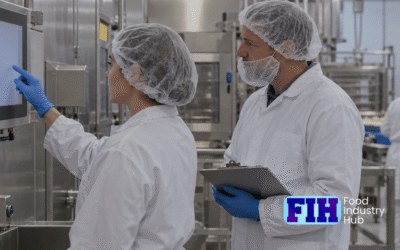
Stay informed about new resources, articles, tools and Food Industry Hub service developments.

Raise the standard for how food gets made.