
Quantity, Weight, Volume & Number Control Procedure
Part of Food Industry Hub’s FSQMS Policies and Procedures Suite.
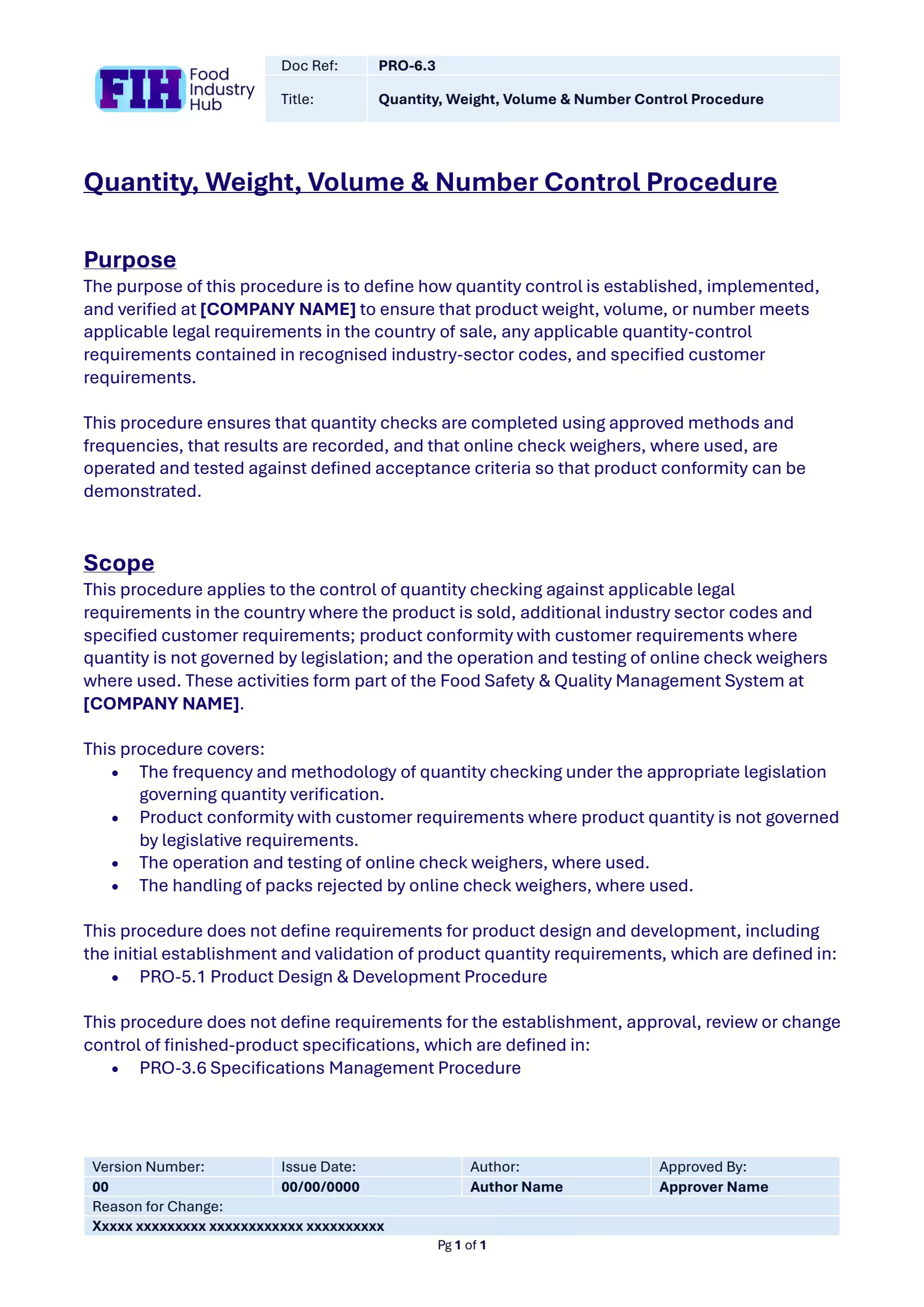
The Quantity, Weight, Volume & Number Control Procedure forms part of the Food Industry Hub FSQMS Policies and Procedures Suite.
It defines how quantity control is established, implemented and verified so that product weight, volume or number is assessed against applicable legal requirements in the country of sale, recognised industry-sector codes and specified customer requirements.
The procedure connects approved checking methods and frequencies with controlled specifications, manufacturing instructions, recorded results and defined responses when conformity cannot be demonstrated. Where online check weighers are used, it adds equipment-specific instructions, acceptance criteria, rejection challenges and controls for potentially affected product.
Control quantity against the requirement that actually applies
Technical / Quality Management confirms the quantity-control requirements for each product and country of sale and ensures that they are incorporated into the approved finished-product specification and the manufacturing instruction used for routine production.
Quantity limits and associated product requirements are established through the Product Design & Development Procedure. This procedure governs how the approved requirements are applied through quantity checking: Technical / Quality Management approves the checking method, frequency and acceptance arrangements before routine production, and the method and frequency must meet the applicable legislation governing quantity verification.
Where legislation does not govern product quantity, the approved customer quantity requirement becomes the basis for control. If an approved customer requirement is unavailable, or conformity cannot be demonstrated, the affected product is controlled through the Non-Conforming Product Control Procedure pending determination by Technical / Quality Management.
Define the response when quantity conformity cannot be demonstrated
Where a completed check shows that the approved quantity requirement has not been met, potentially affected product produced since the last satisfactory check is identified and controlled as non-conforming product pending determination by Technical / Quality Management. If no satisfactory check has been completed during the run, product from the start of the run is treated as potentially affected.
A missed check, or the absence of a reliable record showing that the check was completed and met the requirement, triggers the same product boundary. Production / Operations Management determines whether the operation may continue with subsequently produced product held, use a pre-defined alternative checking method authorised by Technical / Quality Management, or stop. If production continues, product produced until the next satisfactory check remains controlled.
The procedure therefore keeps the operational decision on continuation separate from the Technical / Quality Management decision on product status and authorised disposition where conformity cannot be demonstrated.
Define online check-weigher requirements for the equipment and product in use
Where online check weighers are used, approved instructions apply to the specific equipment and products concerned. Technical / Quality Management defines and approves the performance requirements and acceptance criteria for each check weigher and the products and packing conditions to which it is assigned.
The instruction defines operation and testing, including product-specific variations in settings, limits or test conditions where different products require them. Selection, installation, commissioning, integration and verification that the equipment meets its requirements before operational use are governed by the Equipment Management Procedure.
Challenge rejection performance and control failed tests
Routine check-weigher testing is completed under Production Supervision against approved acceptance criteria and at the defined frequency. Where testing includes the automatic rejection system, test packs match the product and pack format being produced and are prepared or configured to create each applicable reject condition so that correct detection and rejection can be confirmed.
Failed, missed or unverifiable tests place potentially affected product under non-conforming product control from the last satisfactory test, or from the start of the run where no satisfactory test has been completed. Equipment faults, repairs and return-to-service activities are managed through the Maintenance Management Procedure.
An affected operation may continue under an alternative quantity-checking method only where that method is already defined in the approved manufacturing instruction, has been authorised by Technical / Quality Management and continuation has been authorised by Production / Operations Management. Normal online check-weigher operation resumes only after performance has been restored and confirmed against the approved acceptance criteria.
Control rejected packs by product and pack format
The approved online check-weigher instruction defines how rejected packs are removed from accepted product and what handling is permitted for each product and pack format. Rechecking, repacking or returning contents to production is permitted only under conditions that protect product safety, legality, quality, allergen status and traceability.
Where a rejected pack or its contents cannot be handled safely under the approved instruction, or an authorised decision is needed on rework or disposal, the pack is controlled through the Non-Conforming Product Control Procedure.
Allocate authority across quantity control
Technical / Quality Management owns and maintains the quantity-control system, approves checking methods, frequencies and acceptance criteria, authorises any pre-defined alternative checking method and determines product status and disposition where conformity cannot be demonstrated. Production / Operations Management implements the approved controls and decides whether an affected operation may continue within the authorised arrangements.
Production Supervision ensures that checks and check-weigher tests are completed and reviewed as required and reports failures, missed checks, rejected packs and equipment abnormalities without delay. Engineering / Maintenance Management provides technical support where check-weigher condition or capability affects quantity control and manages repair and return-to-service activities.
Connect quantity control with the wider FSQMS
Product development establishes quantity limits; specifications and manufacturing instructions carry approved requirements into routine production; calibration governs measuring and monitoring devices; and document and record controls support current instructions and dependable quantity-check evidence. Non-conforming product control governs affected product where conformity cannot be demonstrated, while maintenance governs equipment faults and return to service.
These interfaces show how quantity control fits within the wider FSQMS while preserving the authority and mechanisms assigned to the supporting procedures.