Food Safety & Quality Management System Policy
Part of Food Industry Hub’s FSQMS Policies and Procedures Suite.
The Food Safety & Quality Management System Policy forms part of the Food Industry Hub FSQMS Policies and Procedures Suite.
It establishes the governance framework for a structured, documented and risk-based food safety and quality management system. The policy defines how controlled documents, dependable records, clear responsibilities, objective evidence, internal audit and corrective action work together to support products that are safe, legal, authentic and made to defined quality requirements.
Its value lies in bringing those elements into one management framework, so individual procedures and records operate as connected parts of the FSQMS rather than isolated controls.
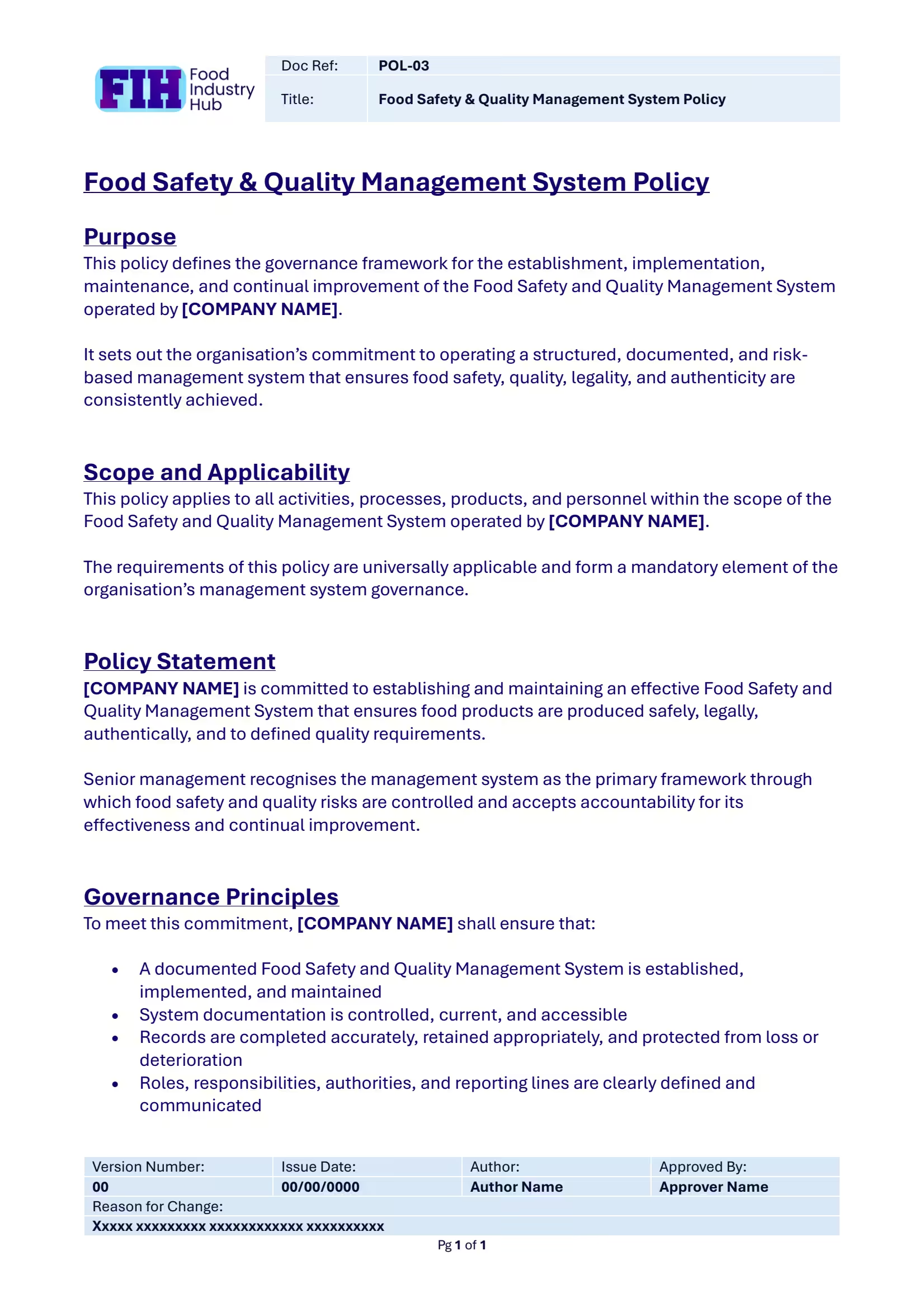
One management framework for connected controls
The policy requires the FSQMS to be established, implemented, maintained and continually improved across the products, processes, activities and personnel within its scope. It places accountability for the system’s effectiveness with senior management and gives the wider documented system a common purpose.
Within that framework, responsibilities, operating controls, records, verification, review and improvement are intended to work together. This provides a defined structure for managing food safety and quality risks and for showing how the organisation’s different controls contribute to the same system.
Controlled information, evidence and risk-based decisions
The policy requires documented information to remain controlled, current and accessible, while records are completed accurately, retained appropriately and protected from loss or deterioration. Together, those controls provide both the current requirements needed to operate the FSQMS and the evidence needed to review what has actually taken place.
It also establishes requirements for defined responsibilities and reporting lines, timely investigation and treatment of risks and non-conformities, monitoring through objective evidence and internal audit of system effectiveness. Complaints, incidents and deviations feed structured review and corrective action, while decisions affecting the FSQMS are based on risk assessment, objective evidence and consumer protection.
This gives the management system a consistent basis for moving from identified issues or performance information to investigation, decision, action and verification.
Responsibility for governing, operating and reporting the system
The policy defines responsibility at each level of the organisation. Senior management provides leadership and direction, makes human, financial and infrastructure resources available, approves system documentation and significant changes, reviews performance and supports corrective action and improvement.
Managers and supervisors are responsible for implementing FSQMS requirements within their areas, ensuring procedures are followed and records completed, and escalating risks, non-conformities and opportunities for improvement. Employees are required to follow the procedures relevant to their work and report anything that could affect food safety, quality, legality or authenticity.
That allocation creates a practical route from day-to-day operation to management attention and makes responsibility visible when the organisation reviews how an issue was detected, escalated and addressed.
System coherence and audit defensibility
The policy is supported by procedures for the FSQMS manual, document control, record completion and retention, internal audit, supplier approval and monitoring, corrective and preventive action, non-conforming product, complaints, traceability, and incident, withdrawal and recall management.
These interfaces connect policy with operating controls and evidence. Controlled documents define the expected arrangements; records show what occurred; internal audits test system effectiveness; and complaints, incidents, deviations and non-conformities provide inputs to investigation, review and improvement.
For technical and quality teams, this creates a management system that is easier to maintain, explain and defend under internal or external scrutiny because responsibilities, controls and evidence can be considered as connected parts of the same framework.
A central governance policy within the interconnected Suite
Within the Food Industry Hub FSQMS Policies and Procedures Suite, this policy provides a central governance point for the document-control, record, audit, supplier, corrective-action, product-control, complaint, traceability and incident arrangements developed elsewhere in the framework.
For a manufacturer reviewing an established FSQMS or developing its documented foundation, that connection provides a coherent basis for assessing how the individual policies and procedures work together as a management system.