Process Control Policy
Part of Food Industry Hub’s FSQMS Policies and Procedures Suite.
The Process Control Policy forms part of the Food Industry Hub FSQMS Policies and Procedures Suite.
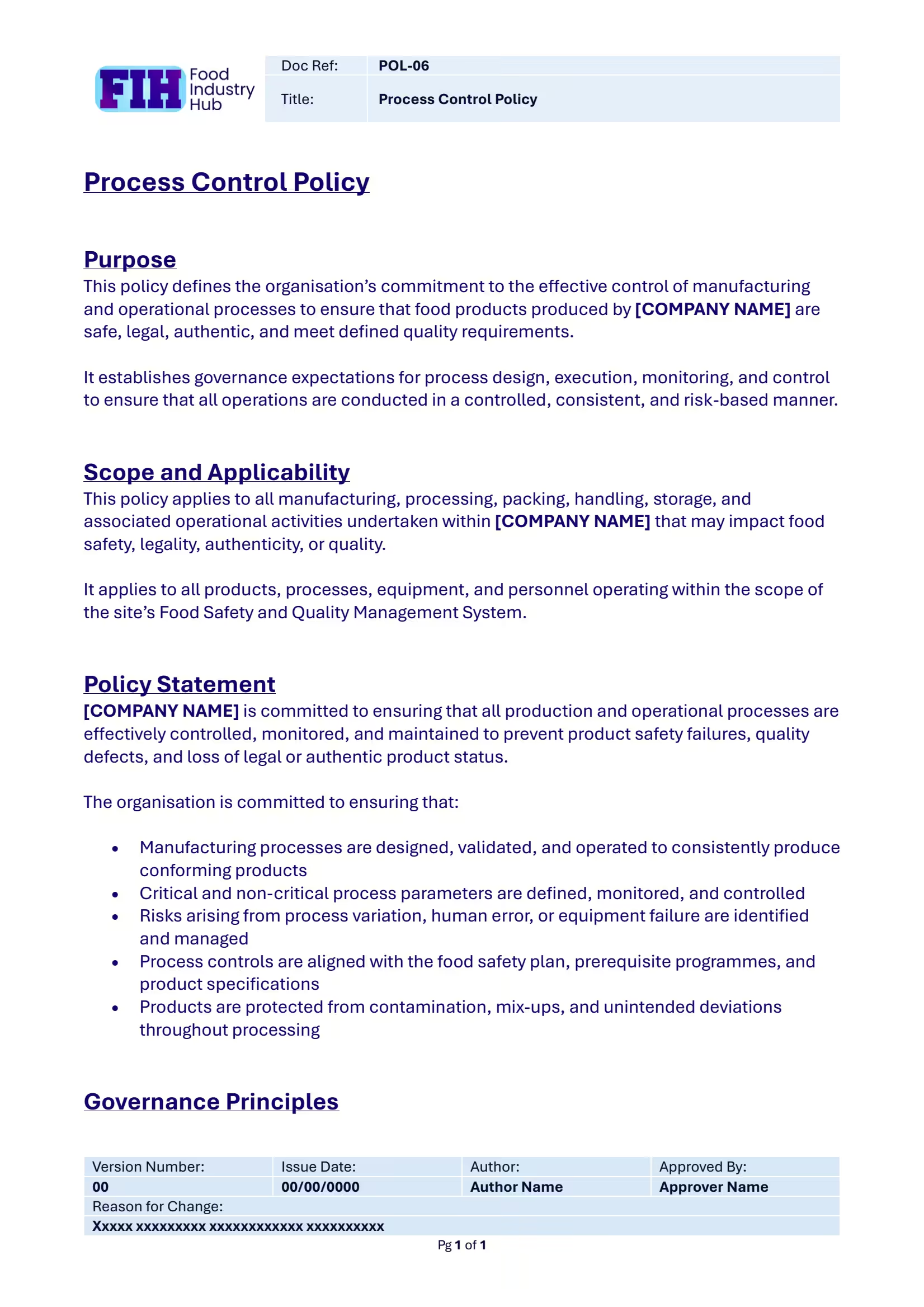
It establishes the governance expectations for the design, execution, monitoring and control of manufacturing and operational processes that may affect food safety, legality, authenticity or quality. Its scope extends across manufacturing, processing, packing, handling, storage and associated activities, together with the products, processes, equipment and personnel operating within the site’s Food Safety and Quality Management System.
The policy sets a clear organisational commitment: production and operational processes are to be effectively controlled, monitored and maintained, with defined parameters, managed process risks and controls aligned with the food safety plan, prerequisite programmes and product specifications.
Govern production through defined, risk-based controls
The policy requires manufacturing processes to be designed, validated and operated to consistently produce conforming products. Critical and non-critical process parameters are to be defined, monitored and controlled, while risks arising from process variation, human error or equipment failure are identified and managed.
Documented process controls are required for relevant operations, supported by monitoring systems capable of detecting loss of control in a timely manner. Measuring and monitoring equipment used for process control must be suitable, maintained and controlled, and proposed process changes are assessed for risk before implementation.
Decisions affecting process control are grounded in risk assessment, objective evidence and protection of the consumer. That governing position gives technical and operational teams a common basis for defining and reviewing controls without turning the policy itself into a detailed operating procedure.
Keep process control aligned with food safety and product requirements
Process control is not treated as an isolated production activity. The policy requires controls to remain aligned with the food safety plan, prerequisite programmes and product specifications, while products are protected from contamination, mix-ups and unintended deviations throughout processing.
Supporting procedures provide the operational detail beneath that governance. They include control of operations, labelling and pack control, quantity control, calibration and control of measuring and monitoring devices, and deviation, corrective-action and product-control procedures. The policy therefore defines the governing expectations and interfaces, while the related procedures determine how those controls are implemented, monitored, verified and reviewed.
Respond to loss of control through defined responsibility
The policy requires corrective action where process-control deviations occur and makes responsibility for identifying and handling abnormal conditions visible across the organisation. Management and supervisory staff are responsible for identifying, investigating and escalating process deviations and non-conformities, and for ensuring corrective actions are implemented and verified.
Employees are required to follow documented process instructions and controls, operate equipment within defined parameters and report any loss of control, deviation or abnormal condition that may affect product safety or quality. This gives day-to-day process performance a defined route into supervisory action and the wider FSQMS when control is challenged.
Place accountability from senior management to the production floor
Senior management provides leadership and accountability for effective process control. Its responsibilities include making adequate human, financial and infrastructure resources available, integrating process-control requirements into the FSQMS and reviewing process performance and trends through management review.
Management and supervisory staff implement and maintain process-control procedures within their areas and ensure personnel follow the applicable parameters and control requirements. Employees carry those controls into routine operation by following instructions, operating equipment as defined and reporting conditions that may compromise control.
This allocation connects governance, supervision and operational discipline without collapsing their different responsibilities. It also makes process control a management-system responsibility rather than a production task owned by one function alone.
Review whether process controls remain effective
Process-control effectiveness is reviewed through internal audit and management review, giving the organisation formal points at which performance, trends and the continued suitability of controls can be considered. Significant changes to processes, equipment, products or regulatory requirements also trigger review of the policy itself.
Together with the requirement to risk-assess process changes before implementation, these review mechanisms keep process-control governance connected to changing operating conditions and objective evidence rather than relying on controls remaining suitable by default.
A process-control policy within the interconnected Suite
Within the Food Industry Hub FSQMS Policies and Procedures Suite, this policy provides the governance layer for the procedures that put process control into practice. It connects documented operating controls, defined parameters, monitoring, measuring equipment, deviation management and management review within one policy position.
For technical, quality and operational teams, it provides a clear reference point for assessing whether manufacturing and associated activities are being governed in a controlled, consistent and risk-based manner across the FSQMS.